

While many casual viewers bypassed The Cloverfield Paradox upon its arrival, this title represents far more than just the third entry in a genre-bending anthology. When you hit play on this Netflix original, you aren’t just witnessing a high-stakes survival story set in deep space; you are observing a cultural artifact that fundamentally altered the cinematic landscape.
A Mission Beyond Space and Time
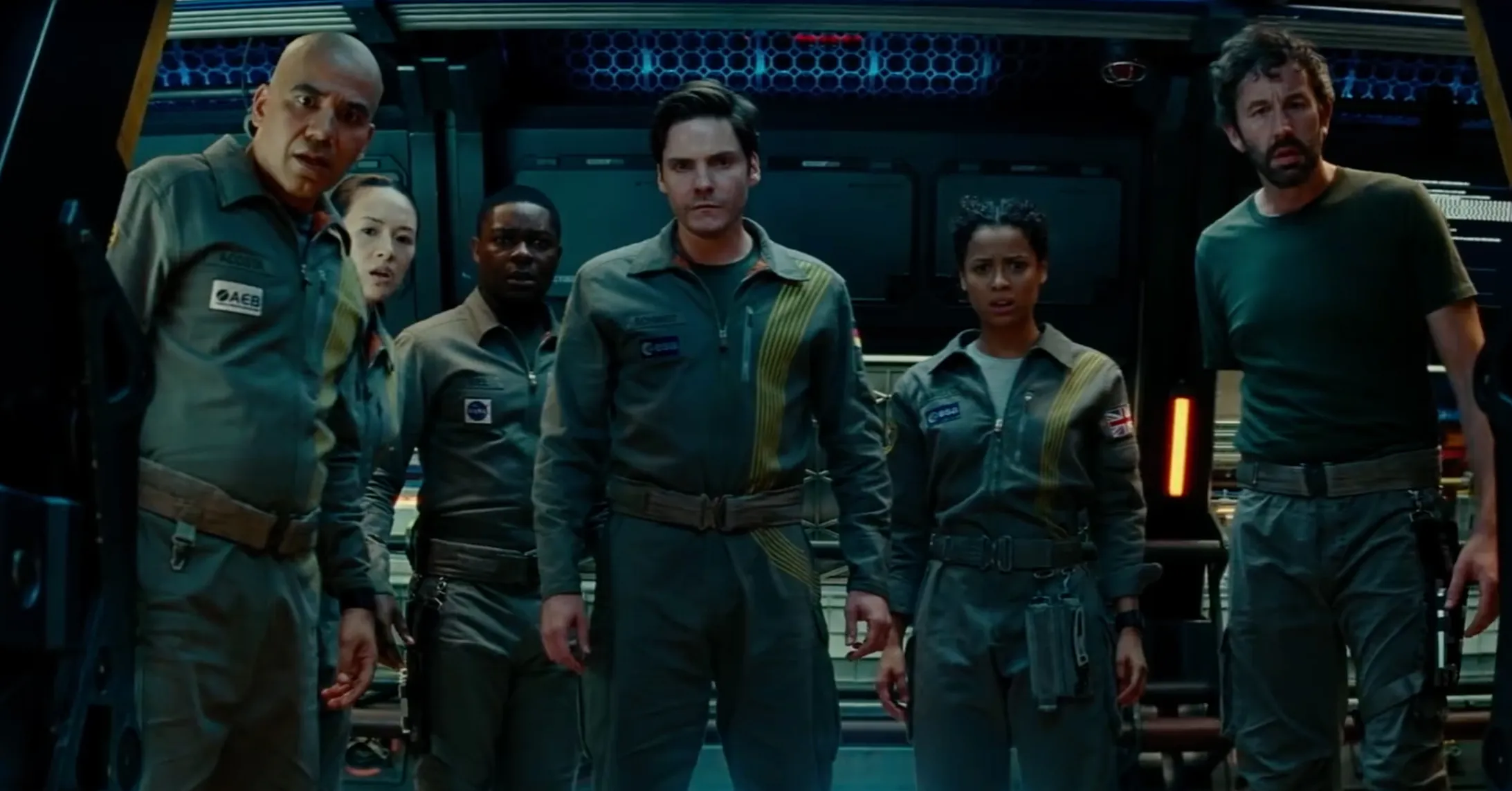
At its core, the narrative follows a desperate crew of international astronauts stationed on a dying Earth. Tasked with solving a global energy crisis, the team activates a particle accelerator, only to find that their planet has mysteriously vanished from reality. The resulting tension pushes the crew into a desperate fight for survival as they grapple with the unknown, hoping to find a path back to a world they no longer recognize.
From Spec Script to Cinematic Universe
One of the most intriguing aspects of the 2018 film is its origins. Unlike the 2008 original, Cloverfield, which featured a terrifying creature invasion, this installment wasn’t initially crafted for the franchise. It began as a standalone spec script titled God Particle by Oren Uziel. During development, producer J.J. Abrams recognized a unique opportunity to stitch the project into his growing “Cloververse.” This retrofitting strategy was also applied to its predecessor, 10 Cloverfield Lane, which was originally developed from a separate script called The Cellar.
A Talent-Laden Ensemble
The film boasts an impressive roster of acting powerhouses. While John Goodman provides a menacing, standout performance, the film also benefits from the gravitas of Mary Elizabeth Winstead. Her presence in this movie helped cement her status as a science fiction icon long before she took on roles in major galactic sagas.
The Revolution of the “Shadow Drop”
The true legacy of The Cloverfield Paradox lies in its revolutionary marketing strategy. Much like the original film, the production team utilized an elaborate viral campaign and augmented reality games to build lore and anticipation. However, they took it a step further during the Super Bowl.
Without prior warning, the film’s trailer premiered during the game, announcing its official title and the shocking news that it would be available on Netflix mere hours later. This “surprise drop” model effectively bypassed the traditional theatrical release window, providing an instantaneous experience for subscribers.
Shaping the Future of Distribution
Looking back, the surprise premiere of The Cloverfield Paradox acted as a harbinger for the streaming-dominated future we inhabit today. By proving that a major blockbuster could bypass traditional cinema chains and find massive success through immediate digital distribution, the film forced studios to rethink how they reach their audiences.
If you want to revisit the movie that proved the traditional film release model was becoming a relic of the past, dive into The Cloverfield Paradox on Netflix today.