


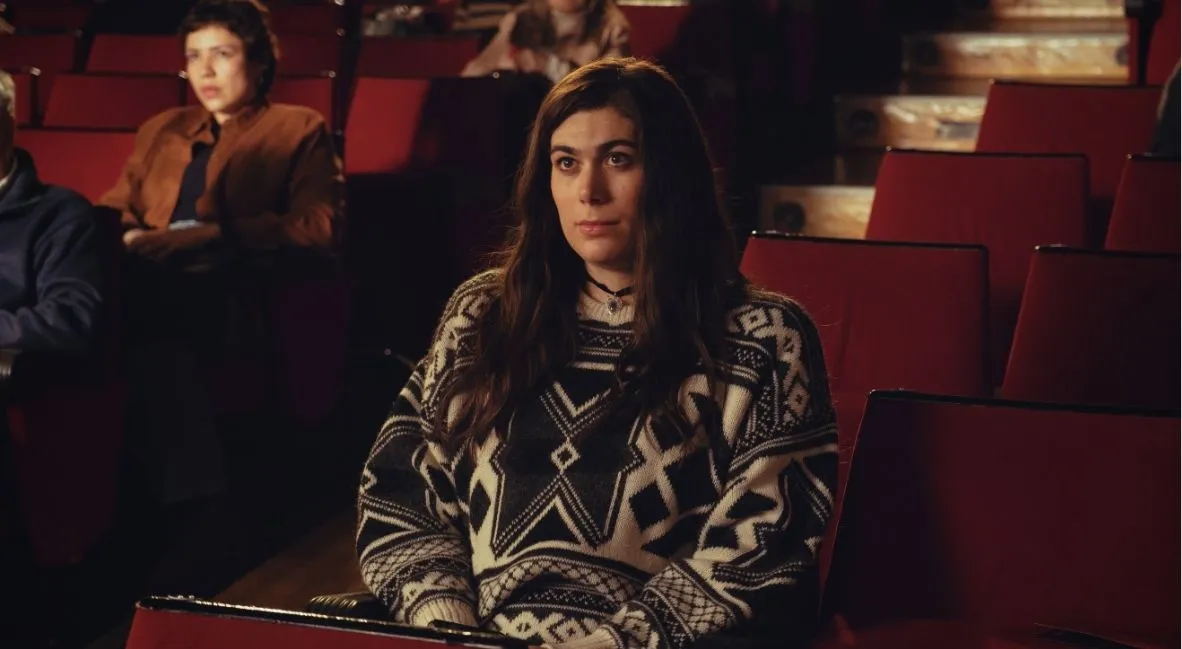
Arrived on Netflix, My Dearest Señorita (Mi Querida Señorita) is far more than a simple remake. This 2026 film enters into a rich dialogue with Jaime de Armiñán’s groundbreaking 1972 classic, recontextualizing its revolutionary story for a contemporary audience. While the original broke barriers as post-Franco Spain’s first major queer film, this version deepens the conversation around identity, authenticity, and the complex relationship between self and body, emerging as a powerful and essential cinematic experience in its own right.
Story
The narrative transplants the story to the cusp of the new millennium, 1999. We meet Adela (Elisabeth Martínez), a 25-year-old woman living a constrained life in a conservative home, teaching Sunday school and working in her father’s antique shop. She senses a profound difference within herself—her physical strength, her inability to conceive, the unexplained estrogen pills she’s taken since youth. Her confusion about her attraction to both a local boy and a woman, Isabel (Anna Castillo), is palpable. It’s only upon a family revelation that she seeks medical counsel and discovers she is intersex. The betrayal she feels from her parents and her own flesh is devastating.
The film then jumps forward, introducing us to A.D., the person Adela becomes after leaving her old life behind. In a new city, surrounded by a vibrant queer found family, A.D. embarks on an odyssey of self-acceptance. The plot masterfully balances the visceral pain of bodily dysphoria with the liberating joy of finding a community that provides support and understanding, making the struggle not just bearable, but transformative.
Performances
The film’s triumph is anchored by a breathtaking debut from Elisabeth Martínez. Her portrayal of Adela’s quiet anguish and A.D.’s tentative exploration is raw, nuanced, and deeply authentic. The supporting cast provides crucial texture: Paco León brings warmth and complexity to the role of the priest José María, and Anna Castillo is compelling as the object of Adela’s affection. The community A.D. finds is filled with wonderfully realized characters who feel fully formed, their interactions providing both dramatic heft and moments of genuine levity.
Behind the Lens
Director Fernando González Molina, working from a script by the original creator Jaime de Armiñán, makes several critical updates. The most significant is the casting of an intersex actor, which moves the film from observation to embodied experience. The film also navigates a delicate balance with its protagonist’s anatomy. It provides clear, matter-of-fact medical information to satisfy and normalize for the audience, while simultaneously drawing firm boundaries around the character’s privacy, refusing to fetishize or over-scrutinize.
The modernization extends to the plot, where side characters are fleshed out into richer roles. Their interactions with A.D. paint a fuller picture of his queer identity, creating higher stakes and a more engaging dramatic throughline that connects everyday challenges to existential ones.
Final Verdict
My Dearest Señorita is a story that desperately needed retelling. It honors its groundbreaking source material by expanding its wisdom with modern sensitivity and a crucial layer of authenticity. This is a powerful, heart-wrenching, and ultimately euphoric film about the ongoing journey to accept and be accepted for who you are. It is a profound ode to self-love and the life-saving power of community, guaranteeing that anyone who has ever felt at odds with their body or identity will find a piece of themselves reflected on screen. A resounding success and a must-watch on Netflix.