

The film begins with a deceptive sense of joy. We witness an Egyptian family sharing a lighthearted moment during a road trip, singing along to modern Arabic hip-hop. However, the atmosphere sours instantly when the mother, portrayed with a chilling, vacant intensity by Hayat Kamille, shuts down. This brief but haunting opening serves as a thesis for director Lee Cronin: the terrifying transformation of a mother who has lost her warmth. Beneath their rural home lies an ancient secret, and its awakening promises a heavy toll.
The Story
We shift our focus to the Cannons, an American expatriate family living in Cairo. Jack Reynor plays Charlie, a journalist, alongside his expectant wife Larissa, played by Laia Costa. Their lives are defined by the “temporary” nature of expat life, with a return to the United States always looming. Their daughter, Katie (Emily Mitchell), is lured away by a mysterious neighbor and a trail of sweets. During a chaotic sandstorm, she vanishes.
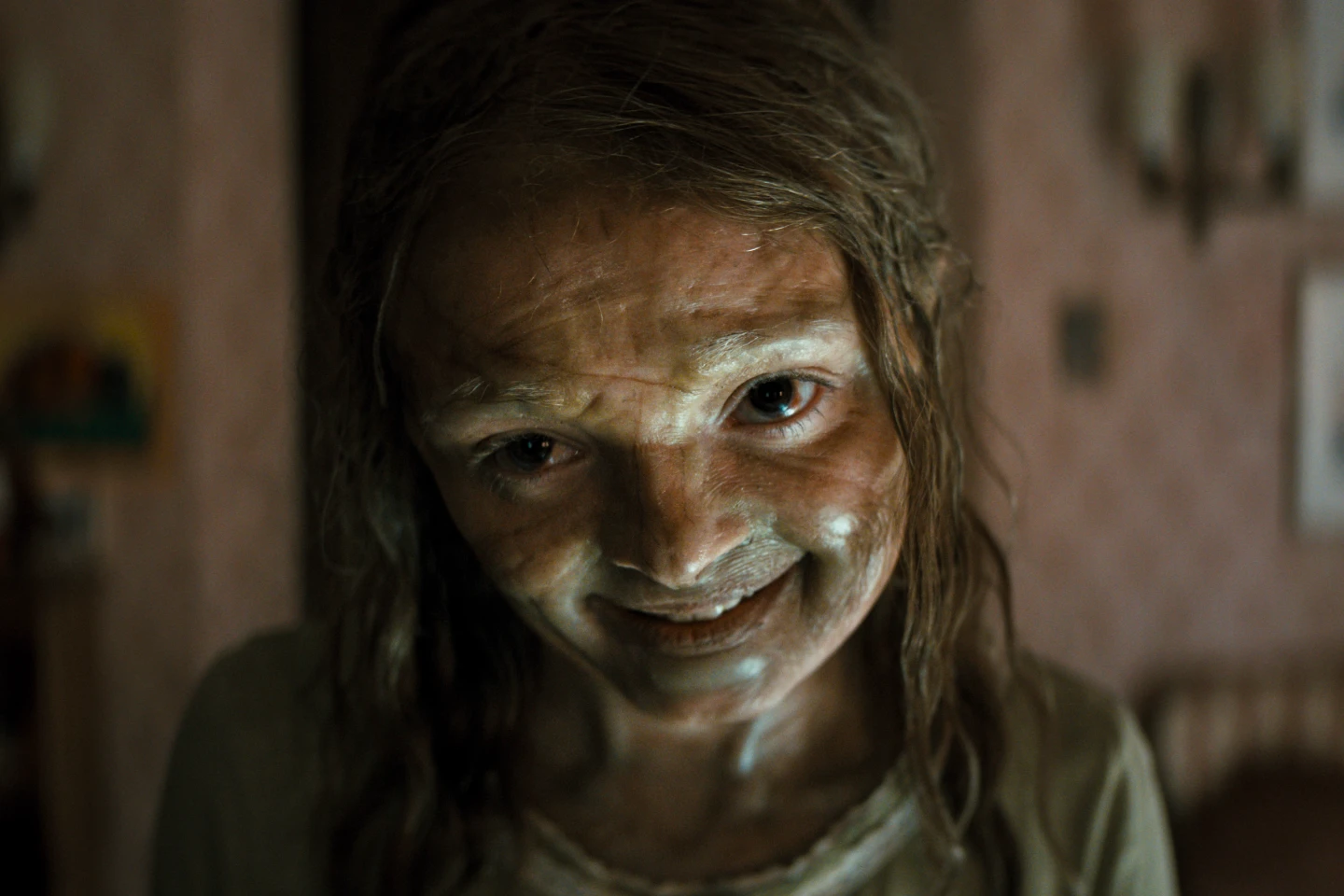
Fast forward eight years. The Cannons are now isolated in Albuquerque, joined by Larissa’s devout mother, Carmen (Verónica Falcón), and a younger daughter, Maud (Billie Roy), who exists in the shadow of a sister she never knew. The status quo is shattered when Detective Dalia Zaki (May Calamawy) calls from Egypt with impossible news: Katie has been found alive inside a 3,000-year-old sarcophagus salvaged from a plane crash. When Katie (now played by Natalie Grace) returns, she is a hollow, broken version of a human—emaciated, twisted, and physically decaying.
The heart of the narrative lies in the devastating weight of parental guilt. Cronin explores the friction between a father who seeks answers through obsession and a mother who attempts to force normalcy through sheer denial.
The Performances
Laia Costa delivers the film’s most grounded performance. Her portrayal of Larissa’s desperate “I can fix her” mentality provides the movie with its most human moments. On the other hand, Jack Reynor is tasked with maintaining a state of perpetual shock. While effective initially, the script leaves him with little room for emotional evolution, making his performance feel somewhat static by the final act.
Natalie Grace deserves immense credit for the physical rigors of playing the returned Katie. Clad in impressive, grotesque prosthetics, she moves with a disturbing, contorted grace. However, the script forces her to remain an enigma for too long, preventing the character from becoming truly frightening until the very end. May Calamawy provides a sharp, tense contrast in the Cairo-based investigation scenes, which often outshine the domestic drama in Albuquerque.
Behind the Lens
Visually, Dave Garbett drapes the film in a thick, mustard-toned gloom. While technically precise, the decision to make every room look inherently haunted from the start leaves little room for a gradual descent into darkness. The most inspired visual choice is the frequent use of split diopter shots, which physically separate Katie from her family within the frame, marking her as a literal distortion in their reality.
The technical MVP is undoubtedly the sound department. Peter Albrechtsen’s sound design is physically oppressive, working in tandem with Stephen McKeon’s dread-heavy score to create an atmosphere of ancient, encroaching rot. This aural experience carries much of the film’s tension, especially during the protracted 133-minute runtime. While Cronin eventually leans into his signature “Splatter-King” persona in a chaotic, Sam Raimi-inspired finale, the journey there is a slow burn that occasionally flickers.
Final Verdict
Lee Cronin’s The Mummy is a masterclass in “wet” body horror—think black bile, extracted teeth, and crumbling flesh. However, it struggles with the balance between being genuinely unsettling and merely unpleasant. At over two hours, the pacing feels inflated compared to the lean efficiency of Cronin’s previous work, Evil Dead Rise.
While the film flinches away from its deepest psychological questions about grief, it succeeds as a visceral, high-tension assault on the senses. It is a grim, stylish, and frequently disgusting exploration of a family being swallowed by a past that refused to stay buried.
Also Read:
A Bold New Chapter: Lee Cronin’s Twisted Vision for “The Mummy” Revealed in First Teaser