

The Invite offers a sharp, witty examination of married life as it settles into routine, using a dinner party with new neighbors to probe desire, fidelity, and drift. Olivia Wilde crafts a dinner-theater atmosphere where humor and unflinching honesty illuminate what remains once romance cools.
Synopsis
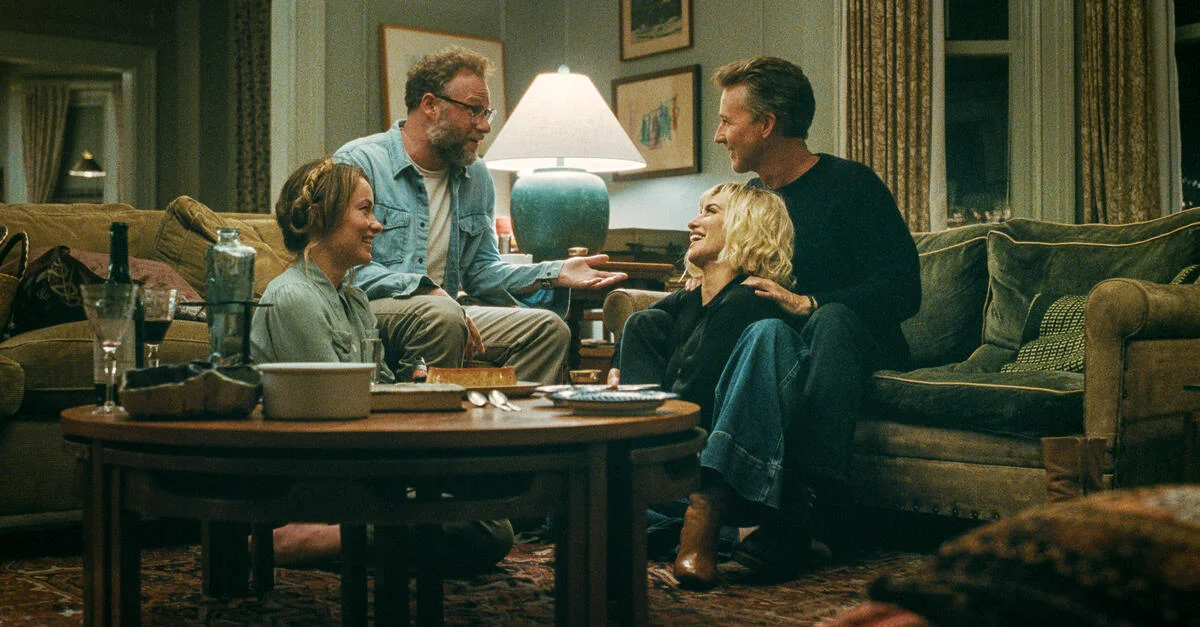
The film opens with Oscar Wilde’s cheeky maxim, positioning The Invite as more an inquiry into post-honeymoon life than a conventional romance. Joe (Seth Rogen) and Angela (Olivia Wilde) host a dinner for their new neighbors, a soirée that quickly spirals as culinary misfires collide with fragile emotions. The souffle burns while the couple argues, foreshadowing a night where plans unravel and vulnerabilities surface.
Pia (Penelope Cruz) arrives lactose-intolerant and vegan, turning Angela’s painstaking menu into a running joke about unmet expectations. What seems like a spontaneous gathering gradually reveals itself as a stage for conversations that should have occurred long before dessert.
Performances
Seth Rogen delivers a notably restrained turn, stepping away from his loud comic persona to reveal Joe as insecure, emotionally reactive, and unexpectedly funny in quiet moments. One standout involves the notion of another partner selecting him for intimacy—Rogen lands the line with precise timing that lands as both absurd and revealing. Edward Norton brings his characteristic poise, while Penelope Cruz adds radiant warmth, making every scene they share crackle with electricity. Their presence acts as a catalyst, forcing Joe and Angela to finally face years of unspoken tension.
Behind the Lens
Olivia Wilde helms with a deft, steady hand, optimizing a mostly single-location setting without dulling the film’s pace. The camera moves through the living room with a natural ease, turning the apartment into a stage where private truths unfold. A memorable moment finds a character speaking beside a floor lamp, framed as if under a spotlight—an economical, powerful visual cue that elevates raw confession into performative honesty.
The screenplay threads taboo topics—perimenopause, aging bodies, shifting desires, and the impact of parental assets—with a light touch that never sensationalizes. These themes don’t derail the narrative; they deepen it, giving the ensemble a sense of lived experience rather than mere scriptwork.
Final Verdict
The Invite is a mature, funny, and surprisingly candid look at how couples navigate life after the butterflies fade. It treats sex, attraction, and unconventional desire with care, avoiding voyeurism while inviting viewers to judge—or relate. Its strongest aspect is its ability to turn everyday disappointments into meaningful dialogue, making the evening feel honest and inevitable rather than contrived.
Where the film falters is the final act. After two hours of building tension and revelation, the climactic payoff feels undercooked relative to the exquisite tension established earlier. The core drift of Joe and Angela is clear and poignant, yet the emotional crescendo doesn’t fully satisfy the anticipation it builds.
Still, The Invite stands as a sharp, witty, and insightful entry into modern relationship cinema. It is less about sensational twists and more about the quiet, often uncomfortable, conversations couples postpone. For viewers seeking a film that blends humor with heartfelt honesty about love and marriage, The Invite offers plenty to discuss—and an invitation worth accepting.