

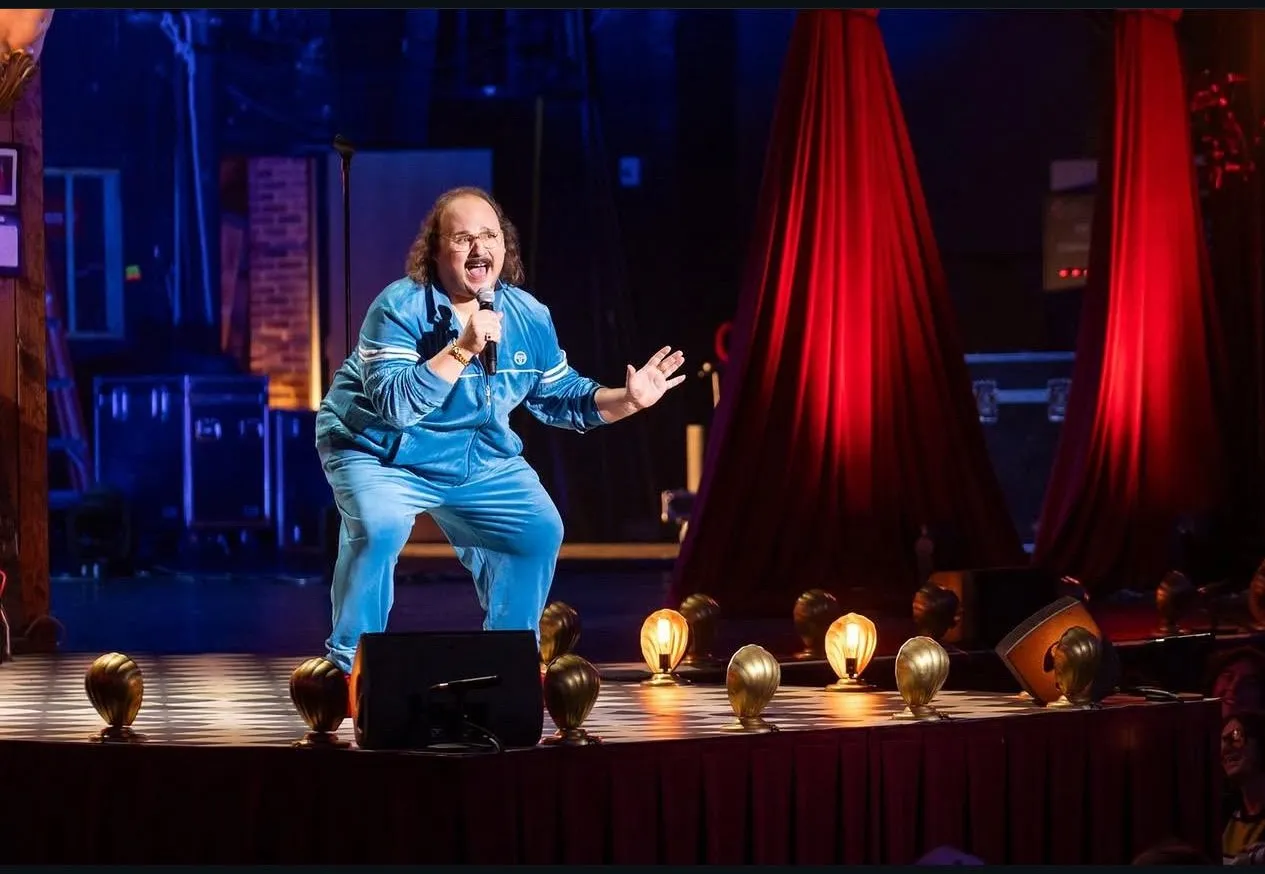
Stavros Halkias returns to the Netflix stage with Uncle Stav, a stand‑up special that blends personal confession with biting social commentary. Rather than a simple laugh‑track romp, the set weaves together weight‑loss struggles, critiques of privileged eating habits, political apathy, the environmental toll of artificial intelligence, and the shifting perspective that comes with becoming an uncle. Halkias delivers each thread with his trademark levity, turning serious topics into moments that provoke both chuckles and reflection.
Weight Loss, Recovery, and the Perils of Inspiration
The special opens with Halkias recounting his own battle with excess weight and a self‑destructive lifestyle. He describes hitting rock bottom and the painful climb back to health, but he quickly rejects the notion of positioning himself as a motivational beacon. For Halkias, presenting personal recovery as a public inspiration feels narcissistic—especially when the underlying privileges that enabled the turnaround remain unexamined. He argues that self‑correction is an intimate process, and broadcasting it as a universal lesson risks turning genuine growth into an ego‑driven performance. While he acknowledges the importance of healthy living, he urges audiences to trust medical professionals rather than emulate celebrity redemption arcs that often gloss over systemic advantages.
Food Privilege and the Capitalist Critique
Transitioning from personal health to societal inequities, Halkias highlights how “eating fresh” has become a luxury accessible mainly to the affluent. He notes that the special’s release coincided with a turbulent period in American food safety, underscoring the irony that the very conversation about nutrition is unfolding amid regulatory upheaval. By name‑dropping brands such as Mangione and Driscoll’s, he illustrates how corporate profit motives frequently outweigh public health concerns. Halkias calls for a collective push—what he colloquially terms “Mangione‑ing” the decision‑makers—to remind those in power that their wealth does not insulate them from the consequences of a broken food system. The bit is provocative, yet it lands because it ties personal dietary choices to broader structures of capitalism that prioritize profit over people.
Political Apathy, Free Speech, and the Firearms Paradox
Halkias then pivots to a hyperbolic comparison of French and American responses to unfavorable economic policies, joking that French citizens might kidnap politicians’ children while Americans merely chant “Don’t tread on me” and brandish guns without effect. Beneath the exaggeration lies a sincere observation: many Americans equate free speech with the right to utter hateful slurs, reacting with outrage when those utterances are challenged. This mindset, he argues, distracts from substantive civic engagement and fuels a culture where firearms are turned on marginalized groups but rarely on the wealthy elite responsible for systemic harm. The bit challenges the audience to reconsider where their passion for justice truly lies—whether it is limited to symbolic protests or extends to confronting the power structures that shape everyday life.
AI, Environmental Cost, and the Artist’s Dilemma
A standout segment tackles the rise of generative artificial intelligence and its hidden ecological footprint. Halkias expresses disappointment seeing celebrated filmmakers champion AI as a creative boon while massive data centers guzzle energy and emit heat, contributing to climate strain. He aligns himself with directors like Christopher Nolan and Guillermo del Toro who question the uncritical adoption of AI‑generated art, labeling the technology an anti‑intellectual shortcut that sacrifices depth for novelty. By inviting listeners to imagine living near a data center—where the constant hum drowns out personal thought—he makes the abstract impact of AI tangible, urging a more conscientious approach to technological consumption.
Unclehood Reflections: Legacy, Fear, and Hope
The heart of Uncle Stav lies in Halkias’s meditation on unclehood. Becoming an uncle reframes his anxieties about the future: education, job security, healthcare, food, and infrastructure all appear precarious. He muses that the classic interview question “Where do you see yourself in five years?” feels obsolete when the world itself feels unstable. Yet, this uncertainty also fuels a renewed sense of responsibility—to imagine a livable world for the next generation, even as societal distractions (online slurs, warmongering rhetoric) pull attention away from meaningful action. Halkias suggests that genuine progress begins when individuals redirect their energy from performative outrage toward tangible efforts that improve the material conditions for children everywhere.
Verdict
The only notable misstep in the special is a staged heckler segment intended to add experimental flair. While ambitious, the bit interrupts the flow of the performance and its payoff feels underwhelming, briefly dulling the momentum that Halkias has painstakingly built. Despite this hiccup, the remainder of Uncle Stav remains a compelling blend of humor, honesty, and hard‑hitting critique.