

The fourth installment of Star Trek: Strange New Worlds landed on Paramount+ on July 23, 2026, promising another round of voyages aboard the U.S.S. Enterprise under Captain Christopher Pike. After a third season that stumbled with an over‑complicated finale and the announcement of a truncated fifth outing, fans wondered whether the series could recapture the light‑hearted, episodic charm that made it a cult favorite. This review dives into the season’s narrative thrust, the strengths of its cast, the creative choices behind the camera, and ultimately whether the show manages to stay bold while circling back to familiar territory.
Synopsis
Season 4 follows the Enterprise crew as they tackle a series of self‑contained missions that range from noir‑inspired investigations to prehistoric survival tales. Each episode introduces a new aesthetic or genre trope while allowing the core ensemble to explore personal growth and interpersonal dynamics. The overarching arc remains subtle, focusing more on the crew’s collective optimism and the ways they confront both external threats and internal doubts. No major plot twists are revealed here; the emphasis stays on the joy of discovery and the camaraderie that defines Starfleet life.
Performances
Anson Mount continues to embody Captain Pike with a measured mix of authority and humility, knowing when to step forward and when to let his teammates shine. Ethan Peck delivers a nuanced Spock that honors Leonard Nimoy’s legacy while adding his own subtle warmth. Christina Chong’s portrayal of La’an Soong‑Hsu stands out, a path beyond her familial expectations, is both compelling and emotionally resonant.
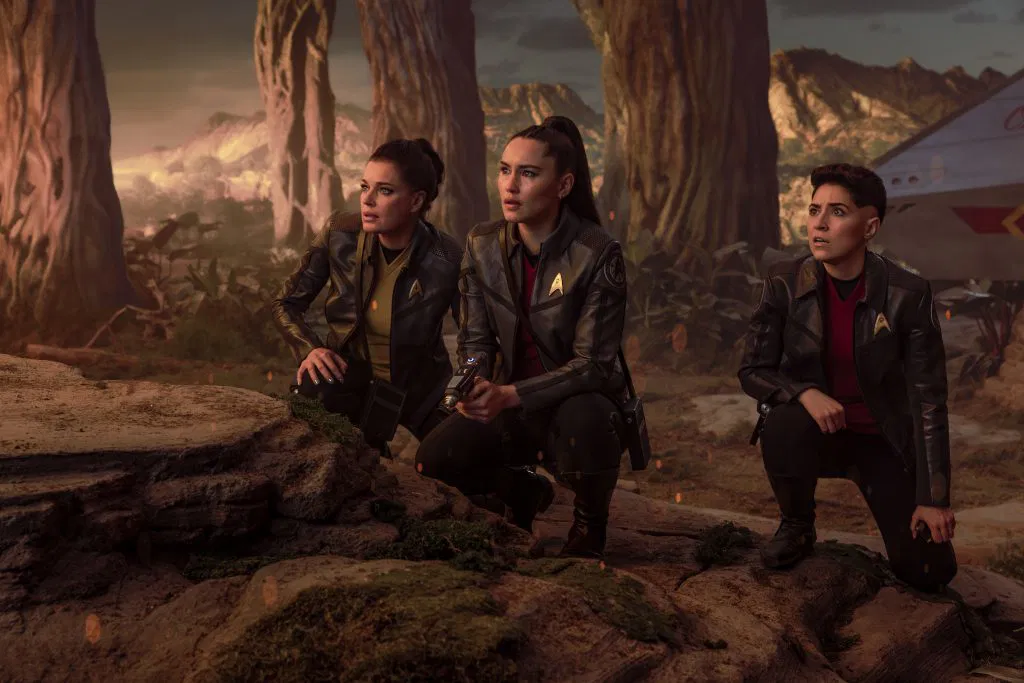
The supporting cast—Martin Quinn as Scotty, Melissa Navia’s Ortegas, Celia Rose Gooding’s Uhura, and Carol Kane’s Pelia—each bring distinct flavors to the ensemble, turning every scene into a showcase of chemistry and comic timing. The actors collectively keep the series buoyant, ensuring that even the more experimental episodes feel grounded in genuine character work.
Behind the Lens
The creative team leans heavily into the show’s trademark episodic format, allowing writers to experiment with disparate genres without being shackled by a season‑long mystery. Directors employ varied visual palettes—shadowy noir lighting for one story, bright, saturated hues for a puppet‑comedy romp—to keep the viewing experience fresh. Production design continues to honor the classic Starfleet aesthetic while introducing imaginative alien worlds that feel both fantastical and plausible.
Notably, the season steps back from lingering on Pike’s personal grief after his wife’s death, a choice that some may view as an overcorrection to season three’s heavier continuity, but it does free up space for the ensemble to explore lighter, character‑driven stories. The score, a blend of orchestral themes and eclectic motifs, adapts fluidly to each episode’s tone, reinforcing the series’ adventurous spirit.
Final Verdict
Star Trek: Strange New Worlds Season 4 succeeds in recapturing the fun, episodic vitality that first endeared audiences to the series. While the show occasionally sacrifices deeper continuity in favor of whimsical genre play, the result is a collection of tightly crafted, stand‑alone adventures that highlight the strengths of its talented cast. The season’s willingness to swing from horror‑tinged suspense to absurd puppet comedy demonstrates confidence in its formula, even if it sometimes feels like the crew is running on a treadmill awaiting the inevitable shift toward the original series’ status quo.
For viewers seeking thoughtful character moments wrapped in imaginative storytelling, this installment delivers plenty of satisfaction. If the series can maintain this level of enjoyment through its final episodes, the farewell will be bittersweet but ultimately rewarding.
Also Read:
The Ultimate Space Bromance Returns: Kirk & Spock Shine in “Strange New Worlds” Season 4