

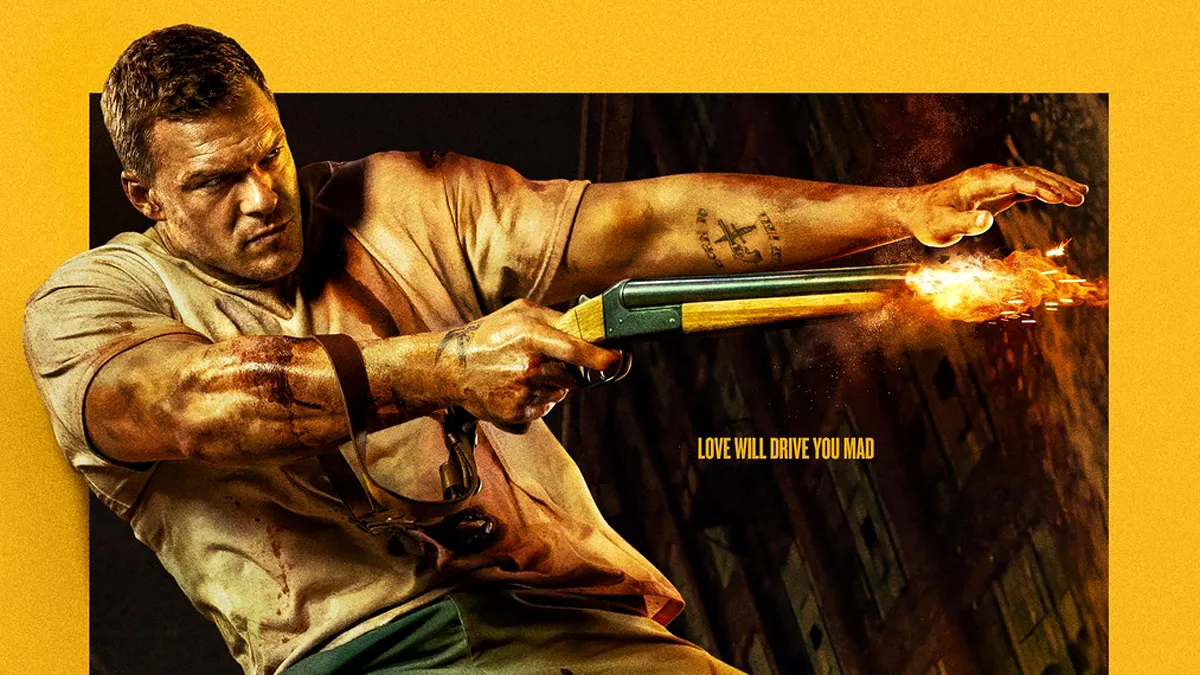
Alan Ritchson returns to the big screen in Motor City, a revenge‑driven action picture that deliberately shuns the on‑screen narration that has become a staple of contemporary blockbusters. Directed by Potsy Ponciroli, the film leans into a visual‑first language, letting set pieces, body language and period‑appropriate music do the heavy lifting. In an era where many action movies feel obliged to explain every plot point, Motor City feels like a quiet rebellion—a throwback to a time when filmmakers trusted viewers to piece together the story on their own.
Synopsis
John Miller (Ritchson) is a former cop whose life is shattered by a violent betrayal. Seeking retribution, he returns to a gritty, 1970s‑styled metropolis, navigating a web of corrupt officials, underground enforcers and old allies. As he hunts the perpetrators, each encounter reveals more about the city’s underbelly and the personal stakes that drive his vengeance, all without a single expository monologue.
Performances
Ritchson carries the film almost in silence, relying on a rugged posture, narrowed eyes and subtle gestures to convey a man haunted by loss. His lone line—delivered at the climax—sums up the entire emotional arc in three words, a testament to his physical storytelling.
Shailene Woodley provides a grounded counterpoint as the enigmatic waitress “Sophia,” whose presence is felt through fleeting glances and a nametag rather than dialogue. Pablo Schreiber and Ben McKenzie populate the film’s antagonistic side with a mixture of menace and weary authority; their characters are distinguished more by costume color, office layout and the way they interact with the environment than by name drops. Even Alfie Allen’s brief turn as a ruthless henchman is communicated through a single, brutal act that cements his role without a word of explanation.
Overall, the cast embraces the film’s restraint, allowing the audience to infer relationships and motivations from visual cues rather than spoken exposition.
Behind the Lens
Ponciroli’s direction is a masterclass in economical storytelling. Production design brims with period details—weathered neon signs, vinyl‑wrapped cars and grainy newspaper clippings—that act as narrative breadcrumbs. Tattoos, photographs on cracked walls, and the ever‑present ’70s soundtrack serve as silent narrators, guiding the viewer through the plot’s twists.
Cinematographer John Matysiak employs a palette of muted earth tones punctuated by occasional bursts of saturated color to highlight moments of heightened tension. The camera often lingers on a character’s hands or a reflective surface, inviting the audience to read the scene’s subtext.
The film’s editing is deliberately unhurried, allowing action sequences to breathe while still maintaining a relentless forward momentum. By refusing to cut to “explain‑the‑plan” moments, Ponciroli forces the audience to stay alert, mirroring the protagonist’s own need to stay one step ahead of his enemies.
In comparison, recent entries in the Mission: Impossible franchise or Netflix’s The Rip and Red Notice frequently pause for dialogue that spells out every betrayal and alliance. Motor City rejects that habit, opting instead for a visual shorthand reminiscent of Mad Max: Fury Road and the original John Wick, where world‑building emerges from costumes, rituals and environment rather than exposition.
Final Verdict
Motor City does not reinvent the revenge thriller, but it revitalizes a storytelling approach that has largely faded from mainstream action cinema. Its confidence lies in trusting the audience to observe, interpret and connect the dots. The plot is straightforward—a man hunting those who destroyed his life—but the way the story is delivered feels fresh in 2026.
The film succeeds because it believes Alan Ritchson can convey a complex emotional journey with a stare, a stance, and a perfectly curated soundtrack. It also proves that a camera, a well‑designed set and a disciplined cast can replace the need for constant verbal exposition.
While not every action film should be as spare, Motor City serves as a reminder that simplicity can be powerful. For viewers willing to engage actively with the visual language, the payoff is a satisfying, gritty revenge saga that feels both classic and contemporary.
Motor City rolls out to cinemas on Friday, July 24.