

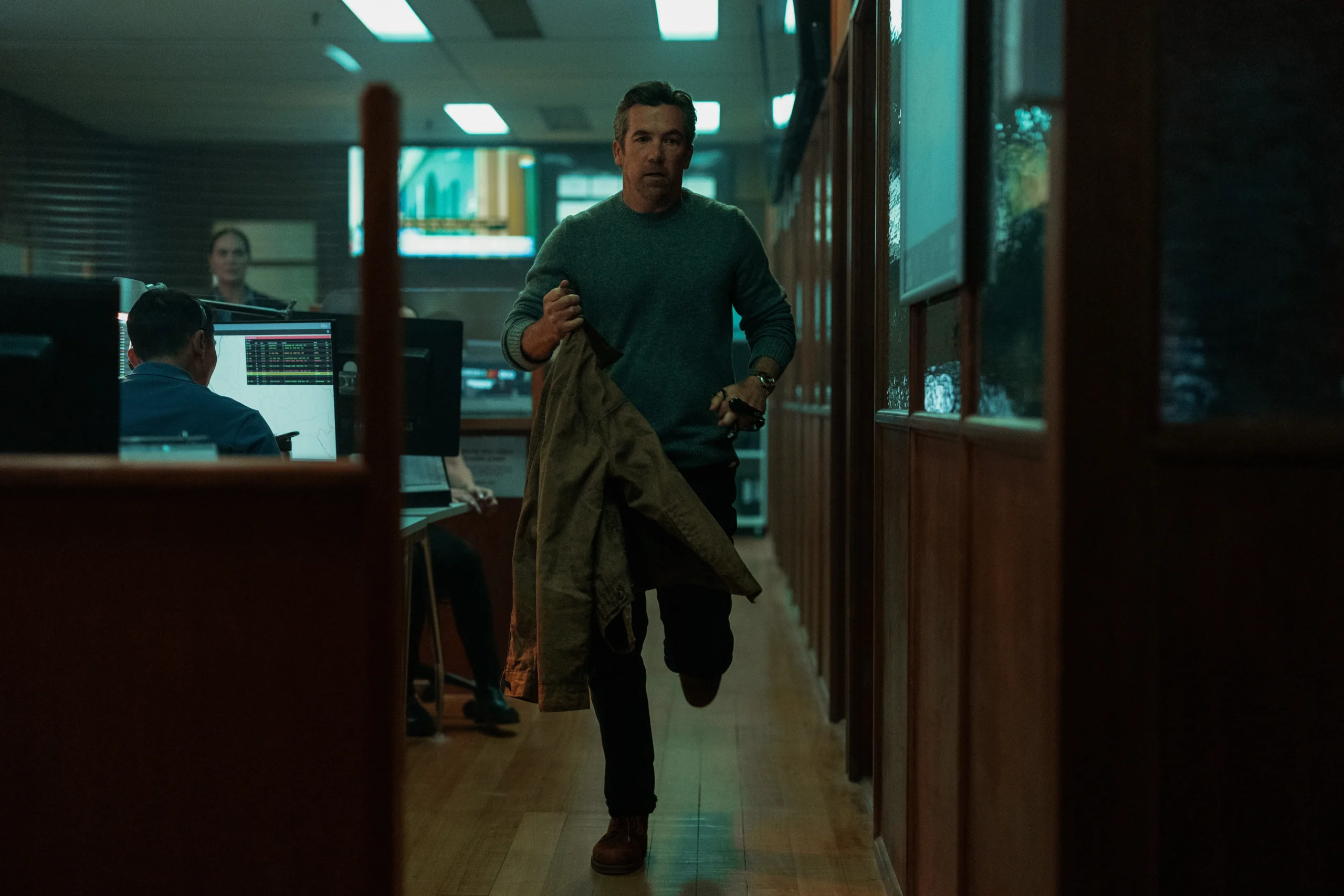
Apple TV+’s latest offering, Last Seen, arrives as a tightly wound psychological thriller that balances a missing‑person mystery with a raw portrait of parental anguish. Adapted from Ryan David Jahn’s novel “The Dispatcher” and directed by Christian Schwochow, the series places Patrick Brammall at the centre of a story that refuses to let its hero off the hook. Rather than delivering a conventional, steadfast dad on a relentless hunt, Brammall’s Ian Ridley is a fractured dispatcher whose coping mechanisms—sobriety, guilt‑driven recklessness, and obsessive rituals—propel the narrative into emotionally hazardous terrain. This review unpacks why the show resonates, where it stumbles, and what makes its performances a standout feature in today’s crowded streaming landscape.
Synopsis
Eleven years after his daughter Maggie vanished, Ian Ridley works as an emergency dispatcher, a job that forces him to hear other people’s crises while his own remain unresolved. The discovery of child remains in a nearby forest rekindles hope that closure might finally be within reach, only for DNA results to dash those expectations. A late‑night call from a troubled teenager nudges Ian to wonder whether Maggie could still be alive, sending him down a path where his professional duty clashes with personal desperation.
Parallel to Ian’s struggle, the series follows Debbie McGuire—his estranged partner—who is pregnant and attempting to rebuild her life, and a secondary thread involving Henry Reid, his wife Jenna, and their sheltered daughter Sarah, whose encounter with a cryptic flyer hints at a deeper connection to the central mystery. The show weaves these strands together, using grief as both motive and obstacle, without ever revealing the ultimate fate of Maggie in its early episodes.
Performances
Patrick Brammall delivers a nuanced turn that avoids the trap of the stoic, heroic father. His Ian oscillates between moments of startling clarity and bouts of self‑destructive impulse, making the character feel painfully human. Brammall’s ability to convey vulnerability beneath a veneer of irritation and addiction anchors the series’ emotional core. Jessica Wren as Debbie offers a counterpoint of restrained optimism; her portrayal of a woman trying to move forward while still tethered to the past feels authentic and never melodramatic.
Maxine Peake’s Jenna Reid is subtly intense, conveying a mother’s protective instincts through minimal dialogue, while Brendan Cowell’s Henry Reid remains an enigmatic presence whose silences speak louder than any exposition. Daniel Henshall’s Donald Reid adds depth with his own history of alcohol dependence, providing a rare empathetic lens through which Ian’s struggles can be viewed. Zahra Newman’s Isabel Pena and the supporting cast round out an ensemble that consistently elevates the material beyond standard thriller fare.
Behind the Lens
Christian Schwochow’s direction leans into atmospheric tension, using muted colour palettes and tight framing to amplify the sense of claustrophobia that accompanies Ian’s inner turmoil. The cinematography frequently isolates characters within empty hallways or dimly lit dispatch centres, visually echoing the isolation felt by those left behind after a disappearance.
Adapted from Jahn’s novel, the script balances procedural detail with lyrical moments—such as the recurring image of Maggie’s untouched bedroom—to remind viewers that the investigation is as much about memory as it is about evidence. The sound design deserves special mention: the relentless buzz of police radios, the occasional muffled heartbeat, and the stark silence during phone calls all serve to heighten the viewer’s anxiety, making each ring feel like a potential lifeline or a false alarm.
Final Verdict
Last Seen succeeds where many thrillers falter by refusing to let its mystery overshadow the human cost at its centre. The series understands that grief does not expire with time; instead, it mutates, influencing decisions, relationships, and even professional judgment. Patrick Brammall’s layered performance ensures that Ian’s flaws are not mere plot devices but integral to the story’s emotional truth. While some viewers may crave faster answers, the deliberate pacing serves the show’s thematic goal: to illustrate how hope can be as tormenting as despair. Overall, Last Seen stands as a compelling, well‑acted drama that balances suspense with sincere character study, making it a worthwhile addition to Apple TV+’s growing catalogue of prestige television.