

Netflix’s latest venture, The New Stanford Prison Experiment, invites viewers into a meticulously constructed social drama rather than a pure replication of history. While borrowing the infamous 1971 study’s name for instant recognition, the series deliberately diverges by embedding itself within a functioning Georgian correctional facility. Over six episodes, thirty volunteers—split into guards and prisoners—navigate a two-week simulation where the producers actively manipulate conditions, transforming passive observation into directed exploration of authority’s fluidity.
Methodology Behind the Madness
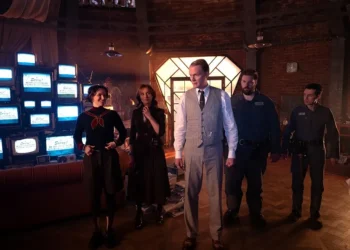
The show’s core mechanism lies in its phased interventions. Rather than allowing organic development, Netflix introduces scheduled shifts: hierarchy establishment, role reversals, and controlled self-governance attempts. These aren’t passive watched moments; they’re deliberate disruptions designed to prevent equilibrium. Labeling them “phases” lends an air of scientific rigor, yet functionally, they serve the classic reality TV purpose—jostling viewer understanding by unsettling emerging alliances and expectations. Concurrently, an off-site monitoring room features behavioral psychologist Alison Wood Brooks, corrections expert Michael Cantrell, and journalist Trymaine Lee. Their triangulated analysis aims to bridge theory, institutional practice, and raw participant experience. However, their commentary often merely validates visible power struggles rather than unveiling deeper layers, inadvertently shielding viewers from forming independent interpretations through relentless expert framing.
Ethics Anchored in Volition
Crucially, the series addresses the elephant in the room: ethical responsibility. Unlike Zimbardo’s halted study, robust protections are foregrounded. Participants undergo psychological screening and possess an unambiguous exit—uttering the safeword “Pineapple”—exercised by several. This isn’t merely a dramatic safety net; it’s an ethical imperative. Borrowing nomenclature from a notorious experiment necessitates ensuring continued participation remains unequivocally voluntary. The production correctly acknowledges that no format owns a person’s distress, and retaining this opt-out preserves the boundary between entertainment and exploitative pseudoscience.
Living the Simulation
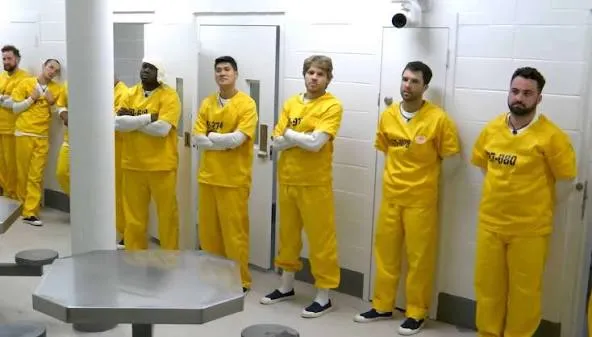
Physical immersion intensifies the psychological stakes. During intake, ambient sounds from actual inmates permeate the space. Standard issue yellow jumpsuits, institutional meals, bunk beds, and rigid routines ground the experience in tangible reality—not mere costume play. Yet, inherent inequalities persist: guards retreat to hotels between shifts while prisoners remain confined. This asymmetry breeds genuine frustration and resentment, heightened by the ever-present theoretical exit unavailable to real incarcerated individuals. Ambient voices from elsewhere in the facility lend unsettling authenticity, reminding viewers this simulation exists adjacent to, but distinctly separate from, enduring systemic realities.
Voices Beyond the Uniform
Where the series transcends its framework is in participant testimony that complicates its central query about power’s corruption. Anthony Terry, a Black man, contextualizes his guard interactions through the lens of American racial dynamics—where defiance carries tangible lethal risks. His cooperation reads not as blank submission but as a calculated response forged long before donning a uniform. Reducing his stance to mere obedience ignores the profound lived experience he brings. Conversely, Teacher Pete Zaremba seeks refuge from responsibility, craving disruption via pranks—a stark contrast revealing divergent prisoner motivations: some test boundaries, some crave order, others just wish to endure quietly. This internal prisoner dialogue—where peers enforce norms—makes group pressure as impactful as direct edicts from above. Guard dynamics further enrich the tapestry: Chris Lee prioritizes relationship-based teamwork, while Chet Hudson leans on stern discipline, creating palpable shift-to-shift tonal variations.
The Self-Governance Paradox
Later phases exploring self-organization offer compelling viewing—participants revising tactics, discovering collaborative potential, and moving beyond pure punishment/resistance binaries. Yet, a significant caveat lingers: self-governance isn’t emergent; it’s Phase Four, pre-scheduled by producers. Volunteers’ budding capacity to self-manage unfolds strictly within another producer-defined container, underscoring the ever-present directorial hand guiding even seemingly autonomous moments.
Assessment: Insight Framed by Format
The New Stanford Prison Experiment excels when it spotlights personal narratives that defy reductive theorizing—like Terry’s account grounding compliance in specific lived history. Its commitment to participant withdrawal rights is commendable and necessary. The latter episodes’ shift toward warmer, cooperative exploration provides valuable dimensionality. However, the series’ ambition is frequently hampered by its own structure. Repetitive expert commentary loops back to obvious power struggles, selective editing elevates certain voices while rendering much of the cast indistinct, and the relentless re-engineering of conditions means we’re often watching reactions to producer-designed stimuli rather than organic social evolution. Ultimately, it delivers engaging television ripe with interpersonal friction—and occasional revelation—but struggles to sustain broader claims about human nature when its very methodology constantly reshapes the landscape it purports to study. Its greatest strength remains showcasing how authority is perceived and enacted through individual histories; its limitation lies in mistaking carefully scheduled disturbances for universal truths.
Also Read:
Netflix’s Bold New Reality Series “The New Stanford Prison Experiment” Sparks Heated Debate