


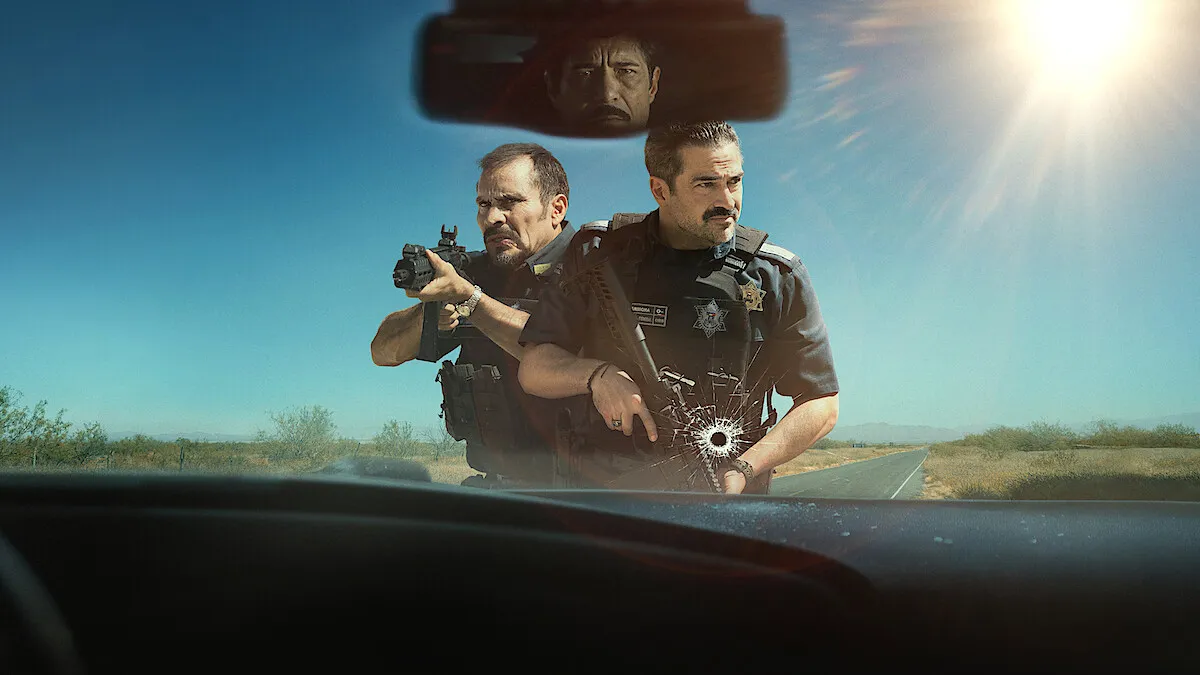
Netflix has expanded its library of cartel-focused dramas with a fresh perspective that shifts the spotlight away from the infamous drug lord. The film Facing El Chapo, a ninety-one-minute crime thriller, centers on the incredible true story of the two law enforcement officers responsible for his final arrest. Released globally on August 21, 2026, the movie offers a highly focused, intense look at an event the public thought they knew inside and out, framing it through the eyes of ordinary citizens wearing badges.
Instead of glorifying the criminal mastermind, the story highlights the highway patrolmen who found themselves face to face with the fugitive during a routine shift. This creative direction has sparked widespread discussion among viewers and film critics, leading many to wonder how closely the cinematic climax matches the historical events that unfolded in early 2016.
An Unexpected Highway Encounter
The screenplay of Facing El Chapo (also known in some regions as The Capture) introduces us to Arturo Carmona and Hector Rosales. These two highway patrol officers are paired up for what they assume will be a quiet night shift along a quiet northern highway. However, their routine morning takes a dramatic turn when they pull over a stolen sedan, only to discover the country’s most wanted fugitive sitting inside.
The film is helmed by director Chava Cartas, with a script penned by Bernardo Esquinca and Hector de Mauleon. This cinematic adaptation is deeply rooted in investigative journalism, drawing heavily on real-world accounts published in a major national newspaper by Hector de Mauleon. Alfonso Herrera portrays the principled officer Arturo Carmona, while Noe Hernandez plays his seasoned partner, Hector Rosales.
The Real History Behind the Screenplay
The cinematic narrative is inspired by the historic events of January 8, 2016. Following a high-stakes military raid on a safe house in the city of Los Mochis, the drug lord and his chief lieutenant managed to escape through an underground drainage system. After emerging on the street, they hijacked a vehicle to flee the area.
Their escape route intersected with two unsuspecting highway patrol officers. For actor Alfonso Herrera, the chance to portray one of these officers was deeply meaningful. He noted that the project was a vital opportunity to celebrate real-life national heroes—ordinary men and women who perform their duties with absolute honesty and bravery, far away from public praise.
The Motel Standoff and the Rejected Millions
The second half of Facing El Chapo builds immense suspense around a single question: Will the officers succumb to corruption, or will they hold their prisoner? In the movie, as in real life, the officers’ absolute refusal to accept a bribe seals the kingpin’s fate. They rejected astronomical offers of wealth, including fifty million dollars and corporate ownership, choosing instead to uphold their oaths.
To evade heavily armed rescue squads, the officers acted on instructions from their superiors and hid the high-profile detainees in room fifty-one of a nearby hourly-rate motel. This colorful, pink-and-purple-themed room became an unlikely holding cell while they waited for backup.
The Aftermath and Private Recognition
While the movie focuses heavily on the psychological tension inside the motel room, the real-world resolution involved a coordinated security effort. Federal, state, and naval forces eventually descended on the motel to secure the area and transport the prisoners to a military airfield.
Following the arrest, the fugitive was extradited to a maximum-security prison in the United States in early 2017, where he was eventually sentenced to life imprisonment. Meanwhile, the two real-life officers have remained entirely anonymous for their own protection. Although their identities are classified, records show they were privately decorated and promoted for their incredible integrity and bravery.
A Slow-Burn Thriller That Divides Critics
Critics have shared mixed opinions on the movie’s deliberate, slow-burn pace. Some reviewers praise the film for avoiding Hollywood-style explosions in favor of a realistic, tense atmosphere, where simple moments—like a ringing phone or a knock on the door—carry immense weight. Others argue that the film’s deep respect for its real-life subjects sometimes limits the dramatic pacing of the story.
Ultimately, Facing El Chapo stands out as a unique addition to the true-crime genre. By choosing restraint over sensationalism, the film honors the real-life integrity of two highway patrolmen who chose duty over unimaginable wealth.