

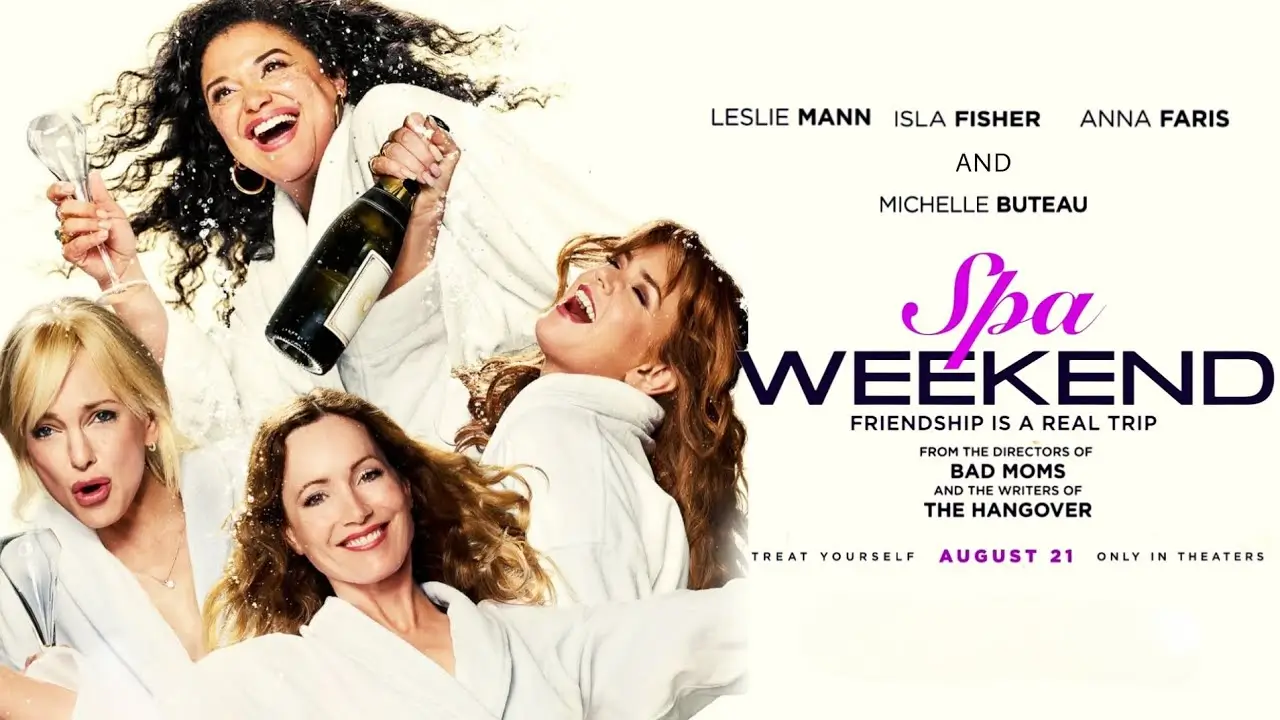
When Spa Weekend opened in North American theaters on August 21, 2026, distributed by Black Bear Pictures, it promised a breezy birthday getaway that quickly spirals into comic mayhem. The film follows three longtime pals whose luxury‑resort retreat is upended by an uninvited, high‑energy fourth friend. While the premise leans on broad slapstick, the review below argues that the movie’s strongest laughs emerge not from the frenetic set‑pieces but from the quiet, character‑driven exchanges that allow the cast to shine.
Spoiler‑Free Synopsis
Three best friends—Jane, Sophie, and Coco—arrive at an upscale spa for a birthday celebration. Their plans for relaxation are derailed when Mel, a wild‑spirited acquaintance from the past, shows up unannounced. Her presence transforms meditation, goat yoga, and even a leisurely golf cart ride into opportunities for chaotic humor. As the day progresses, each woman is nudged into a familiar comic role, and the group must navigate both the absurdity of Mel’s antics and the underlying tensions that have been simmering beneath their friendship.
Performances
The quartet of leads delivers distinct comic rhythms that keep the film afloat. Isla Fisher’s Mel is a force of nature; she crashes each controlled spa activity with relentless physicality, turning serene moments into slapstick opportunities. Her confidence fuels early laughs, though the repetitive nature of her disruption eventually limits her comedic range.
Anna Faris counters Fisher’s intensity with Sophie’s hesitant, wide‑eyed passivity. Faris excels at delivering delayed reactions that make a simple pause funnier than a punchline, providing a vital counterweight to Mel’s frenzy.
Leslie Mann’s Jane finds a looser groove through a flirtatious connection with the resort’s yoga instructor, Kai, allowing her to step out of her usual competence‑driven persona and react more organically.
Michelle Buteau’s Coco channels sharp, attack‑driven humor, particularly in scenes with her ex‑husband Roger, where her anger becomes interpersonal rather than abstract.
Individually, each actress creates a memorable pulse, but the screenplay frequently pulls them back into prescribed archetypes, preventing the ensemble from achieving the overlapping, lived‑in chemistry that a long‑standing friendship would demand.
Behind the Lens
Director and writer (Jon Lucas and Scott Moore) favor a structure that alternates between high‑energy set pieces and brief, intimate dialogues. The film’s visual language emphasizes the resort’s immaculate calm—crisp lines, muted palettes—against which Fisher’s disruptive energy pops. Cinematography uses tight close‑ups during the quieter exchanges, allowing the audience to read the subtle timing between Faris and Fisher.
The editing leans on repetition: each new activity is introduced with the same question—“How will Mel wreck this?”—which initially feels fresh but soon becomes a predictable rhythm. This pattern reinforces the comedic premise but also hinders emotional growth, leaving the sentimental turn in the final act feeling under‑earned.
Production design deserves mention for transforming typical spa amenities into props for chaos—broken crystals during meditation, a golf cart repurposed as a party vehicle—showcasing how the setting itself becomes a character in the comedy.
Final Verdict
Spa Weekend showcases a talented cast capable of mining humor from a glance, a pause, or a perfectly timed reaction. Isla Fisher brings unmatched physical vigor, while Anna Faris offers a masterclass in restrained, reactive comedy. Leslie Mann and Michelle Buteau add valuable texture, though their roles remain somewhat confined by the script’s reliance on defined comic positions.
The film’s biggest strength lies in those quieter moments where the actresses let silence speak, creating a sense of history that the screenplay spends far too much time explaining elsewhere. Unfortunately, the narrative’s insistence on returning each character to a fixed label undermines the potential for a genuinely resonant friendship arc.
Overall, Spa Weekend delivers enough laughs to keep the audience engaged, but its emotional payoff lacks the weight needed to make the concluding reconciliation feel wholly satisfying. For viewers who enjoy situational comedy anchored by strong performances, the movie is an enjoyable, if imperfect, ride.