

In September 1992, the Football Association delivered a verdict that would linger as one of the most puzzling disciplinary decisions in English football history. Vinnie Jones, the hard-man midfielder who had just helped Wimbledon secure their place in the newly formed Premier League, found himself staring down a record £20,000 fine and a six-month suspension. The charge was not connected to any aggressive challenge on the pitch. Instead, the FA took issue with a video presentation in which Jones narrated techniques that had defined his playing style. The ban was suspended, quietly expired, and never enforced—leaving football fans and historians questioning what the governing body actually intended to achieve.
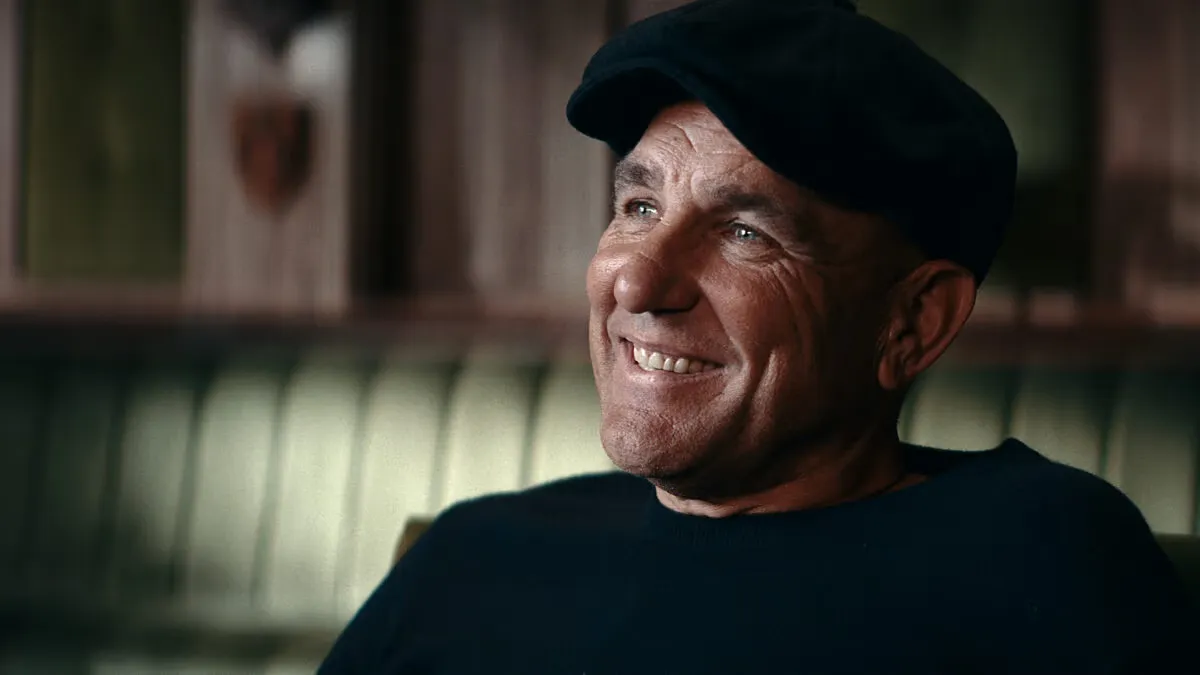
Netflix’s latest documentary entry in the Untold UK series pulls back the curtain on this bizarre episode. Directed by Ben Nicholas and David Tryhorn through Pitch Productions, the film examines a disciplinary action that English football has never fully come to terms with—or perhaps never wanted to. What emerges is not simply a profile of a controversial figure, but an indictment of institutional hypocrisy during the Premier League’s formative years.
The documentary centers on Jones’s 1992 video release, Soccer’s Hard Men, which compiled footage of legendary hard-tackling players including Graeme Souness, Bryan Robson, Nobby Stiles, Norman Hunter, Jack Charlton, Steve McMahon, Tommy Smith, Peter Storey, Ron Harris, and Billy Bremner. Jones provided commentary explaining the methods behind their physical approach to the game. The tape became the second-best-selling sports video during the pre-Christmas shopping season, yet it also sparked outrage among those who had previously celebrated the very toughness it documented.
Sam Hammam, Wimbledon’s chairman during the Crazy Gang era, famously dismissed Jones as a “mosquito brain” and prohibited the cassette from being sold in the club shop. Meanwhile, none of the players whose tackling techniques Jones described on the tape faced any disciplinary action. The man who simply explained the system on camera became the target while the system itself remained untouched.
The film constructs its case through testimonies ranging from Jones himself to John Fashanu, Dave Bassett, Bobby Gould, Sam Hammam, and Piers Morgan. Each perspective offers a different angle on the original tribunal proceedings. Fashanu and Bassett witnessed the Wimbledon dressing room culture that converted the Crazy Gang into a marketable brand years before the video controversy. Gould managed the 1988 FA Cup final where Wimbledon defeated Liverpool, while Hammam both owned and subsequently disowned that same brand on camera. Morgan, who edited The Sun’s sports pages during the controversy, oversaw the headlines that fueled public outrage and profited from it simultaneously.
Rather than following the predictable arc of rise-and-fall storytelling, Nicholas and Tryhorn structure their documentary around a different trajectory. The narrative moves from Wembley triumph through FA tribunal to abandoned enforcement, treating Jones’s subsequent Hollywood career, his cancer diagnosis, and his personal grief after losing his wife Tanya not as redemption but as evidence of what happens when a player’s marketable persona becomes his only remaining asset after the institution that once punished him moves on.
The directors’ previous work, including the Netflix distributed Pelé documentary and the Liverpool installment of this same Untold UK series, demonstrates their commitment to archival integrity. Their approach favors extended interview segments paired precisely with corresponding historical footage, running at approximately one-to-one duration rather than relying on brief cutaways. This deliberate pacing evokes long-form magazine journalism more than typical sports documentary compilations.
The editorial philosophy extends beyond storytelling technique into cultural criticism. The documentary addresses an English anxiety that has persisted unresolved: the cognitive dissonance of a nation that spent two decades celebrating physical football while being asked to pretend shock when that same approach was documented and described. Soccer’s Hard Men did not introduce new behaviors but rather catalogued inherited culture. The FA prosecuted the description because description was the element visible to international audiences, while the on-field economy of intimidation that built Wimbledon’s FA Cup success and underpinned the new BSkyB broadcast deal escaped examination entirely.
The selection of subjects across the three Untold UK installments tells its own story. Jamie Vardy represents an outsider’s triumph, Liverpool’s 2005 Champions League victory depicts institutional miracles, and Vinnie Jones embodies institutional embarrassment. Placing Jones as the series finale after a redemptive opener and romantic middle installment constitutes deliberate scheduling—the very installment the Premier League could never incorporate into its brand marketing because it implicates the league’s first commercially successful decade in questions about selective enforcement.
That Netflix rather than ITV, the BBC, or Sky serves as the platform for this investigation carries particular significance. Each of those broadcasters holds commercial stakes in early Premier League mythology, making them unlikely candidates to interrogate that era’s contradictions. The institution being examined could not have produced this documentary about itself.
Yet the film deliberately avoids converting its critique into outrage. Interviews are not adversarial, and Jones is not invited to apologize—nor does he offer one. Other witnesses are not asked to recant past positions. The directors trust their procedural reconstruction to accomplish what explicit polemic would foreclose: presenting charge, evidence, testimony, verdict, and subsequent history for viewer evaluation.
The documentary leaves its central question unanswered because answering it remains impossible. If on-pitch violence was not the actual offense—and the suspended ban that never took effect suggests, based on the FA’s own evidence, that it was not—then the £20,000 penalty was imposed for speech itself. The video described tackling techniques that the league had been broadcasting and occasionally celebrating for twenty years. Netflix has reopened this case for public consideration. Whether the Football Association that originally pursued it will respond lies beyond the documentary’s purview.
Untold UK: Vinnie Jones spans 77 minutes and premiered on Netflix as the concluding entry in the Untold UK series, following Untold UK: Jamie Vardy and Untold UK: Liverpool’s Miracle of Istanbul.