

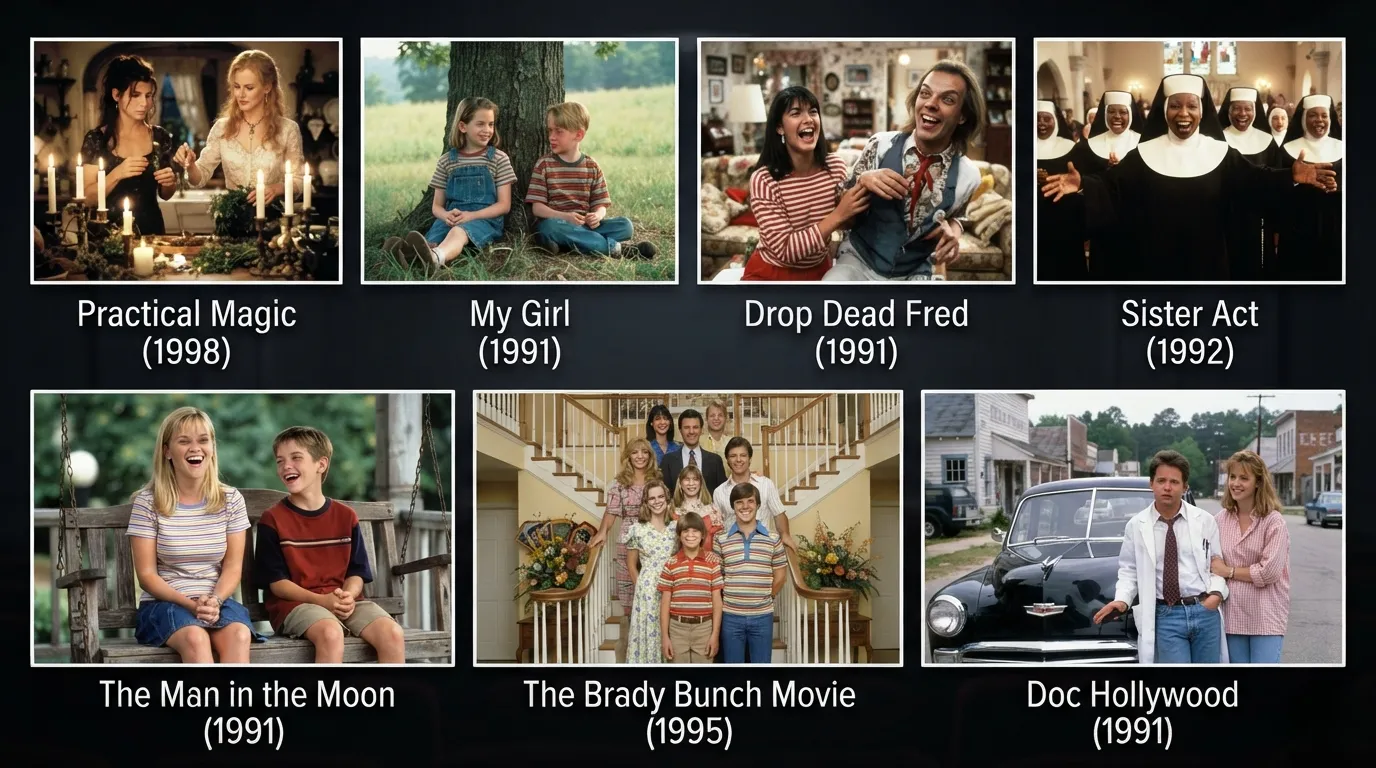
The 1990s delivered a wave of cinema that still feels fresh today. While blockbusters dominated the box office, a handful of titles pushed genre boundaries, blended tones, and explored themes that would only gain mainstream appreciation years later. This listicle revisits ten standout films from the decade that were genuinely ahead of their time, explaining why they continue to resonate with modern audiences and why they deserve a fresh look.
Practical Magic (1998)
When Griffin Dunne adapted Alice Hoffman’s novel, he created a genre‑bending tale that mixes domestic‑abuse drama, romantic comedy, supernatural fantasy, and a coming‑of‑age story about sisterhood. Sandra Bullock and Nicole Kidman portray the Owens sisters, whose magical abilities serve as a metaphor for resilience. Although the film underperformed commercially upon release, it has since garnered a devoted cult following. Praise from stars such as Reese Witherspoon, Julianne Hough, and Michelle Branch helped cement its status, and a long‑awaited sequel—Practical Magic 2—is slated for fall 2026, with the first teaser dropped on April 20, 2026 and the full trailer premiered June 24, 2026. The upcoming sequel promises to recapture the whimsical spirit that made the original a midnight‑margarita favorite for many.
My Girl (1991)
Howard Deutch’s poignant coming‑of‑age drama follows Vada Sultenfuss (Anna Chlumsky), an eleven‑year‑old coping with her mother’s death while living in a funeral home alongside her father and grandmother. Chlumsky’s heartfelt debut opposite Macaulay Culkin’s loyal friend Thomas Jay captures the raw, unfiltered reality of childhood grief. The film refuses to sugarcoat loss, yet balances it with the wonder and innocence of youth. Though a sequel, My Girl 2, arrived later in the decade, it never quite matched the original’s lightning‑in‑a‑bottle magic. Still, both entries offer a sincere look at how early loss shapes identity, making them essential viewing for anyone who appreciates nuanced portrayals of adolescence.
Drop Dead Fred (1991)
A riotous blend of fantasy and psychological insight, Drop Dead Fred stars Rik Mayall as the titular imaginary friend who helps Lisa (Phoebe Cates) rediscover joy after years of emotional repression. The film tackles mental health, toxic relationships, and self‑rediscovery while delivering nonstop laughs. Mayall’s manic performance paired with Cates’ grounded presence creates a tonal balance that feels remarkably modern—addressing interior struggles through an external, whimsical lens. Though initially dismissed as mere silliness, the movie’s underlying message about confronting inner demons has earned it a reevaluation among fans of off‑beat 90s comedy.
Don’t Tell Mom the Babysitter’s Dead (1991)
Christina Applegate’s breakout role as Sue Ellen, a teenager forced to become the head of her household after the babysitter’s sudden death, remains a hallmark of 90s workplace comedy. Sue Ellen’s transformation—complete with power suits, makeup, and a corporate job—delivers both satire and genuine empowerment. The film’s quotable line, “I’m right on top of that, Rose!” has endured in pop culture, and Applegate’s sensitive performance grounds the farcical premise in authentic emotion. Though initially labeled a flop, the movie has gained a strong cult following, proving that its blend of humor and heart was truly ahead of its time.
Sister Act (1992)
Whoopi Goldberg shines as Deloris Van Cartier, a lounge singer placed into a convent after witnessing a mob murder who enters witness protection and is hidden in a convent. What begins as a culture clash evolves into a joyous celebration of music, community, and self‑acceptance as Deloris revitalizes the struggling choir. The film’s infectious soundtrack and Goldberg’s award‑winning performance turned Sister Act into one of the decade’s most beloved comedies. Its sequel, Sister Act 2: Back in the Habit (1993), received a cooler critical reception initially but has since cultivated its own cult fanbase, underscoring the lasting appeal of the original’s message about finding one’s voice in unexpected places.
Father of the Bride (1991)
Steve Martin’s portrayal of the over‑protective yet loving George Banks offers a warm, humorous look at wedding‑day chaos. Adapted from a 1949 novel, the film feels distinctly 90s thanks to its light‑hearted tone, the chemistry between Martin, Diane Keaton, and newcomer Kimberly Williams, and its focus on the parent‑child bond rather than merely the nuptials. The sequel, Father of the Bride Part II, continues the franchise’s tradition of blending slapstick with sincere family moments, highlighted by a legendary hospital‑car scene that showcases Martin’s physical comedy at its finest.
Dolores Claiborne (1995)
Based on Stephen King’s novel, this intense drama stars Kathy Bates as Dolores, a housemaid accused of murdering her wealthy employer, and Jennifer Jason Leigh as her estranged daughter Selena. Rather than relying on horror tropes, the film delves into generational trauma, abuse, and the lengths a mother will go to protect her child. Bates and Leigh deliver performances so powerful that many fans still wonder why they were overlooked by the Academy. The narrative’s exploration of hidden pain and quiet strength makes Dolores Claiborne a timeless study of resilience that feels just as relevant today as it did in the mid‑90s.
Doc Hollywood (1991)
Michael J. Fox is most famous for Back to the Future and Family Ties, but I’ve always considered Doc Hollywood to be his standout work. He portrays a brash, city‑savvy physician who finds himself stranded in a quiet town and learns that ambition doesn’t automatically equal purpose. Though the premise might remind you of a Hallmark film turned upside‑down, the movie possesses an intangible charm that’s tough to pin down. Doc Hollywood is a soft‑spoken story that asks the viewer: what do you truly seek in life, and why? In today’s climate of relentless hustle and burnout, a tale about pausing to nurture genuine connections feels especially timely.
The film boasts an impressive ensemble. Besides Fox, who delivers his trademark likable performance in any role, the cast features Woody Harrelson, Julie Warner, Barnard Hughes, David Ogden Stiers, Frances Sternhagen, and Bridget Fonda.
The Man in the Moon (1991)
Reese Witherspoon’s first on‑screen appearance is a poignant coming‑of‑age drama that has largely flown under the radar. Set in rural Louisiana during the late‑1950s, it follows sisters Maureen and Dani as they navigate the bittersweet realities of first love and loss. The narrative is straightforward and sincere, and the acting is remarkable—Witherspoon dominates every scene she inhabits. Revisiting it recently resurrected the emotions I felt as a child watching it in the 1990s. While the film tackles unsettling subjects, it handles them with sensitivity, allowing us to experience the story through young Dani’s perspective.
The Brady Bunch Movie (1995)
The enduring popularity of The Brady Bunch stems from its status as a beloved, genuinely funny sitcom. What The Brady Bunch Movie gets right is that, despite being a satirical take on the series, it was crafted with affection and reverence for the original. It drops the Bradys—exactly as they existed in the 1970s—into the cynical landscape of the 1990s, sustaining the joke throughout the entire runtime.
The picture has aged remarkably well. In 2026, when many wish to pretend the world isn’t as harsh as it actually is, this film feels more relevant than ever. Fun tidbit: Laurice Elehwany, who penned the screenplay for My Girl,co‑wrote The Brady Bunch Movie with series creator Sherwood Schwartz and Rick Copp.
Why These 90s Movies Still Resonate
What unites these titles is their willingness to experiment with genre, tone, and subject matter at a time when mainstream cinema often played it safe. They tackled complex issues—domestic violence, grief, mental health, family dynamics, and systemic abuse—while delivering entertainment that appealed to broad audiences. Their innovative storytelling paved the way for many of the thematic blends and character‑driven narratives we see in contemporary film. As streaming platforms and nostalgia‑driven remakes bring these works back into the spotlight, new generations are discovering the originality that made them stand out three decades ago.
The Bold Voices of 90s Film
From the spellbinding sisterhood of Practical Magic to the heart‑wrenching realism of My Girl, the anarchic fun of Drop Dead Fred, the empowering comedy of Don’t Tell Mom the Babysitter’s Dead, the uplifting harmony of Sister Act, the warm family antics of Father of the Bride, and the gritty resilience of Dolores Claiborne, these 90s films proved that creativity need not wait for the right moment—it can create the moment itself. Revisiting them offers not only a trip down memory lane but also a reminder of how forward‑thinking cinema can shape cultural conversations for years to come.