

The Witch Farm lands on BBC platforms in late November 2026, offering a haunted-house thriller that attempts to translate a nine-part paranormal podcast into a four-episode television event. Guided by Danny Robins’s distinctive apparatus for testing testimony, the series reconfigures a chilling real-life case into a drama that privileges atmosphere and character over strict mystery. The result is a measured, occasionally provocative blend of domestic drama and supernatural modulation, anchored by a Welsh setting that gives the story its own texture amid a crowded genre.
Synopsis
In 1989, Bill Rich and his partner Liz relocate from London with Bill’s teenage son Jonathan to a derelict farmhouse in the Brecon Beacons. Bill hopes distance will steady his struggles with alcoholism and rekindle his artistic ambitions, while Liz yearns for a fresh start and autonomy away from a complicated past. The house appears to reject their efforts from the outset: damp plumbing, odd electrical bills, and an uncanny sense that someone else occupies the space alongside them.
The nocturnal disturbances begin softly—unexplained drafts, cold spots, a corridor echo that feels almost personal—and soon escalate into direct, intimate threats. Liz experiences pregnancy-related terror culminating in a frightening confrontation with an unfamiliar woman within the confines of a bedroom. The couple’s uncertainty deepens as they encounter a procession of eerie phenomena that feel tethered to the history whispered about in the local legends and to the land itself. As fear grows, so does their dependence on each other, and on Jonathan, who wrestles with a sense that his own emotions might be amplifying the disturbances. The tension between protecting the family and facing an unexplainable force becomes the heart of the drama, even as the tangible shocks multiply.
Performances
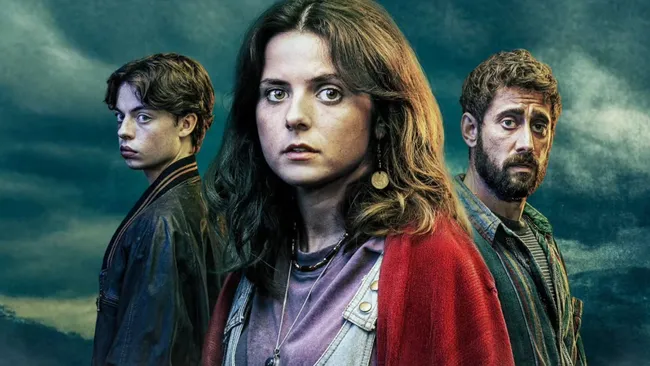
Gabrielle Creevy anchors the emotional core as Liz, delivering a performance that makes the house feel personal before anything supernatural is shown. Her fear is rooted in responsibility—her newborn child, the possibility of harm, and the sense that the home’s history has a claim on her family. Creevy’s portrayal grounds the series, allowing the audience to feel the weight of each decision Liz makes under pressure.
Michael Socha has the trickier task of balancing warmth with fragility in Bill. His character’s self-assured exterior can melt into stubborn denial whenever the family reports unsettling events. Socha’s performance evolves from affable provider to a man scrambling to contain a crisis that his own choices may be nurturing. His chemistry with Creevy reads as authentic, with their partnership providing the human terrain on which the supernatural events land.
Jonathan, portrayed by Lewin Lloyd, is the hinge of the family’s dynamic—introspective, intelligent, and unsettled by the prospect that his own emotions might be stirring something beyond the ordinary. The actor’s quiet intensity helps translate the boy’s inner turmoil into a credible portal for the show’s rising dread.
The show’s supporting cast, including a standoffish local farmer played by Robert Pugh, strengthens the texture of rural life and helps the narrative avoid generic horror trappings. Creevy’s Liz is the season’s moral center, a grounded, reactive presence who carries the weight of the family’s safety and belief in what they are experiencing.
Behind the Lens
The production leans into its Welsh landscape to carve out a distinctive atmosphere. The derelict stone structure and its flooded cellar become more than a set piece; they function as a living artifact of the land’s stubborn history. The local legends—voicing Gwrach y Rhibyn-like warnings—are invoked with reverence rather than spectacle, giving the drama a folklore backbone that distinguishes it from more procedural scares. The house is almost a character in its own right, its walls steeped in memory as much as moisture and mold.
The BBC’s choice to adapt Robins’s audio investigation into four televised episodes marks a deliberate curatorial step. The series retains some of the podcast’s investigative spirit, yet the moving pictures move at a brisker tempo, often trading ambiguity for a sharpened rhythm of shocks. This shift is both a strength and a limitation: viewers gain immediacy and clarity, but the sense of unknowable mystery—the heart of the original experience—receives less room to breathe.
Creevy’s performance gives the production a steady moral gravity that helps the show maintain tension even when the spectral imagery becomes more explicit. The visual palette—dim lighting, practical effects, and restrained camera motion—serves the claustrophobic mood without leaning into gratuitous jump scares. When the drama allows a quieter beat—an electrician’s tale of anomalous power bills, or a moment of grief rooted in past losses—the horror lands with surprising resonance.
The adaptation raises questions about source fidelity and ethical storytelling. While Liz’s perspective anchors the narrative, the transformation from testimony to televised spectacle risks reconfiguring real accounts into entertainment, potentially blurring the line between witness and showpiece. The script walks this line with care in some passages, but the brisk episodic pacing occasionally compresses the complexity of the original testimonies into a sequence of increasingly visible apparitions.
Final Verdict
The Witch Farm earns its keep by granting a place for haunted-house drama on BBC television, bolstered by Liz’s grounded presence, its distinctly Welsh milieu, and the family’s credible, lived-in struggles. Yet the adaptation sacrifices a portion of the original’s unsettling ambiguity. Recurrent apparitions and more overt shocks tend to supersede the subtler tremors of human vulnerability—the very elements that made the true story so disquieting.
Despite its flaws, the series succeeds in delivering a solid, atmospheric thriller that respects its real-world roots while offering accessible, single-sitting drama. The BBC’s venture into converting a famous audio haunting into a television format demonstrates promising potential: with more faith in the listeners’ imaginations and less drive toward explicit scares, such adaptations could produce a richer and more enduring kind of horror.
Also Read:
Terrifying 1980s Welsh Haunting: BBC Drops Debut Trailer of “The Witch Farm”