


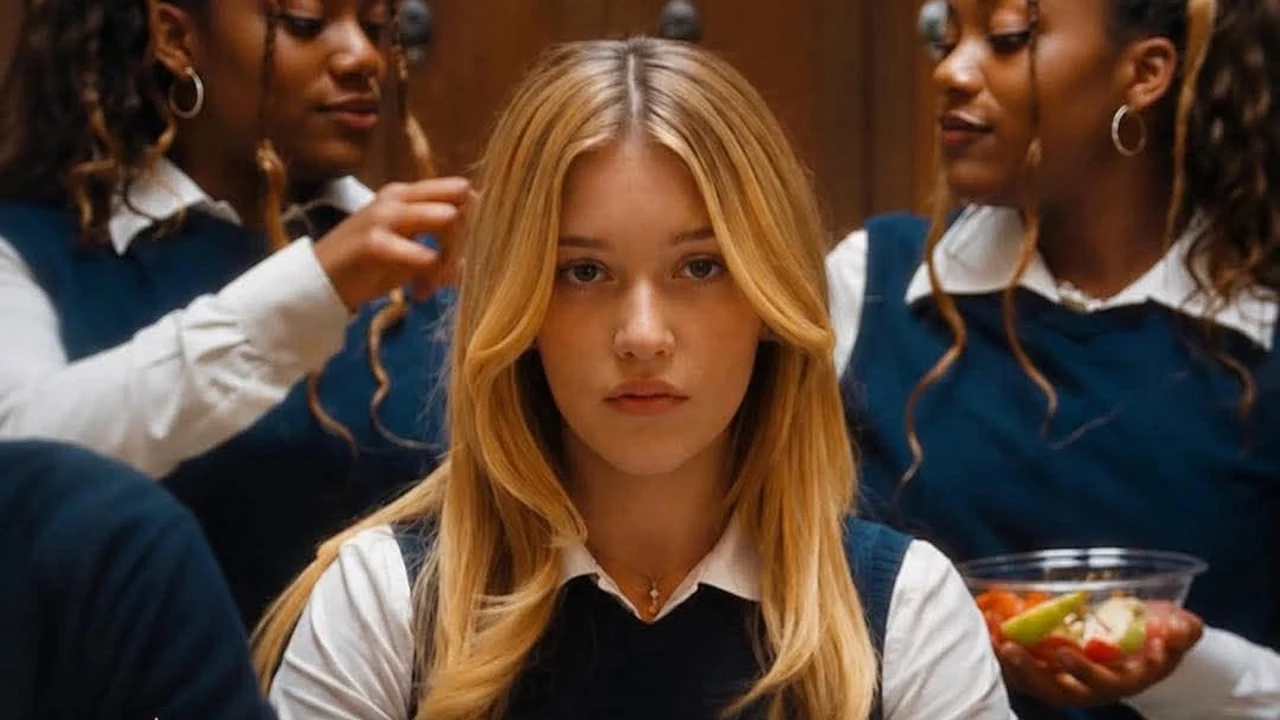
Netflix’s latest horror-thriller drama, The Body, arrives with an unusual proposition. Directed by Quinn Shephard, Gina Gammell, and Kevin Phillips, the eight-episode series runs roughly 50 to 60 minutes per instalment and centres on students at a Catholic convent school. Rather than relying solely on jump scares, the show attempts to weave religious horror into the messy fabric of teenage desire, envy, and social exclusion. The result is a production that feels bold and strange, though it occasionally stumbles under the weight of its own ambitions. For viewers who appreciate psychological unease over traditional fright, The Body offers a distinctive, if uneven, viewing experience.
Synopsis
At a strict Catholic school, a dance squad called the Lions dominates the social hierarchy. Anya leads the group with apparent confidence, while Lisbeth, an outsider from a conservative religious family, desperately seeks acceptance. Elise completes the core trio, adding further complexity to their shifting alliances. When a party ritual takes a dark turn, the girls begin to experience visions and unexplained noises. As faith, guilt, and hidden attractions surface, their friendships fracture under pressure, leaving audiences to wonder whether the haunting is supernatural or a manifestation of their own fractured psyches.
Performances
The cast is undoubtedly the strongest element of The Body. Kristina Bogic delivers a layered portrayal of Anya, balancing outward confidence with inner vulnerability. Geena Meszaros brings unpredictability to Lisbeth, making her motivations difficult to read and her desperation palpable. Sara Boustany rounds out the central trio as Elise, contributing emotional depth to a relationship built on manipulation and mutual resentment.
Supporting turns from Sofia Wylie, Shirley Chen, Jackson Kelly, Louisa Krause, and Nnamdi Asomugha reinforce the oppressive atmosphere of the school. Because the story focuses so tightly on these relationships, the chemistry among the leads carries much of the narrative weight, even when the characters themselves are difficult to like.
Behind the Lens
Visually, The Body avoids the glossy aesthetic common to many teen dramas. Oppressive lighting, shadow-heavy cinematography, and disturbing sound design create a mood that feels claustrophobic and unsettling. However, some sequences are so dimly lit that the action becomes difficult to follow. Pacing is another concern; eight hour-long episodes sometimes feel stretched, with repetitive arguments that fail to advance character growth. Thematically, the series tackles queer identity, body image, and sexual awakening within a framework of Catholic guilt. While the supernatural plotline and the psychological drama occasionally operate on separate tracks, the show’s willingness to connect paranormal events with adolescent emotion remains its most compelling feature.
Final Verdict
The Body is an intriguing addition to Netflix’s horror catalogue, anchored by strong performances and a fresh perspective on teenage horror. It succeeds most when examining how religion, guilt, and the need for belonging can distort young relationships. At the same time, inconsistent pacing, an overcrowded script, and underdeveloped supernatural elements prevent it from reaching its full potential. Fans of psychological horror will find enough to appreciate, though they may wish for tighter writing and more satisfying resolution. Ultimately, The Body is worth watching for its boldness, even if it does not always stick the landing.
Also Read:
“The Body” Gets a November Premiere – Everything You Need to Know About Netflix’s New Teen Thriller
Netflix Unveils “The Body”: A Haunting Blend of Teen Angst, Prophecy, and Catholic Horror