

When a washed‑up tennis prodigy is forced to swap his powerful serve for a delicate dink, the result is a surprisingly tender comedy that finds humor in the clash between brute force and subtle skill. Josh Greenbaum’s The Dink premiered on Apple TV on July 24, 2026, and lands as a light‑hearted sports‑comedy that nevertheless probes deeper questions about identity, legacy, and the quiet joy of recreation.
With Jake Johnson leading a capable ensemble that includes Mary Steenburgen, Aaron Chen, and a cameo‑laden John McEnroe, the film balances slapstick with sincere moments, making it a pleasant watch for fans of both sports satire and character‑driven comedy.
Synopsis
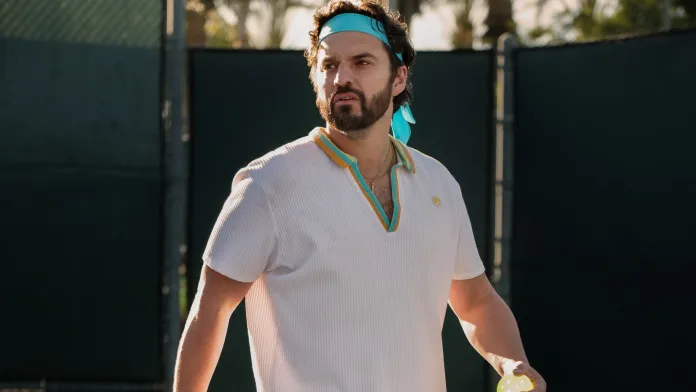
Dusty Boyd (Jake Johnson) once ruled the junior tennis circuit as “The Hammer,” but a broken wrist—and a lingering grudge against Andy Roddick—has left him teaching disinterested kids at his father’s struggling club. When his father Chuck (Ed Harris) threatens to replace the tennis courts with more pickleball space, Dusty must enter a pickleball tournament to prove his worth, save the club, and finally confront the myth that has defined his life. Along the way he meets Candace (Mary Steenburgen), a seasoned pickleball player whose calm mastery forces Dusty to rethink what it means to win. The story follows his journey from loud, aggressive play to learning the soft, precise art of the dink, all while navigating family expectations and a budding, tentative romance.
Performances
Jake Johnson shines as the flawed yet likable Dusty, delivering a performance that swings between bluster and vulnerability with effortless timing. His physical comedy—especially the exaggerated reactions when a pickleball invades his tennis turf—highlights the character’s internal chaos.
Mary Steenburgen brings a relaxed authority to Candace, her understated charm making every scene feel lived‑in; she never overplays the mentor role, instead letting her quiet confidence speak louder than any lecture.
Aaron Chen’s PJ serves as the film’s comedic anchor, his unwavering belief in Dusty’s tall tales turning devotion into a running gag that lands with genuine warmth.
Ed Harris embodies Chuck’s rigid disappointment with a gravitas that makes his anti‑pickleball rants both hilarious and poignant, while John McEnroe’s commentator cameo—complete with ever‑growing bites of food—adds a layer of absurd visual humor that feels both spontaneous and perfectly timed.
The supporting cast, though occasionally thinly drawn, supplies enough texture to keep the world feeling lived‑in, particularly Patton Oswalt’s earnest Skip, who treats court allocation like a civic crusade.
Behind the Lens
Director Josh Greenbaum opts for bright, clean cinematography that lets the comedy breathe. The film’s rhythm is easygoing, allowing actors to linger on reactions and letting jokes land without feeling rushed. Production design contrasts the pristine, manicured tennis courts with the slightly ramshackle, community‑centric pickleball area, visually reinforcing the thematic clash between old‑school aggression and new‑school inclusivity.
The soundtrack leans on light country tunes during Dusty and Candace’s practice scenes, reinforcing the film’s affection for low‑key, genuine moments. While the screenplay leans on familiar sports‑comedy beats—underdog protagonist, paternal disapproval, a climactic match—Greenbaum’s direction ensures the execution feels fresh, particularly in the way he uses food as a recurring visual gag during McEnroe’s commentary.
The film’s 102‑minute runtime matches the length of a traditional sports narrative, yet its dramatic density remains light, reflecting the recreational spirit at its core.
Final Verdict
The Dink succeeds as a genial, feel‑good comedy that finds laughs in the contrast between power and precision. Jake Johnson and Mary Steenburgen deliver performances that are both funny and heartfelt, while the supporting cast adds layers of charm and satire.
The film’s affection for its characters sometimes softens its bite, preventing it from delivering the sharper social commentary it hints at, but that very warmth makes it an inviting watchable to enjoy a game, or simply that skill doesn’t always need to roar, The Dink offers a pleasant reminder that sometimes the softest touch wins the day.