


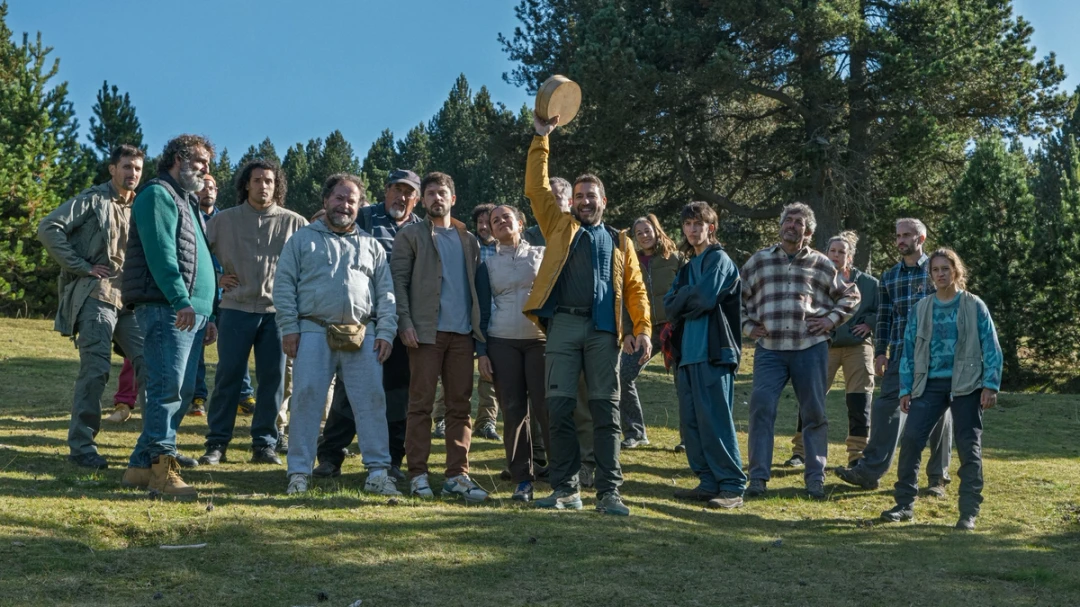
Go Team! arrives on Netflix as a Spanish‑language comedy that attempts to mine humor from the absurdities of corporate team‑building exercises. Directed by Diego Núñez Irigoyen, the film places a beleaguered cheese‑factory workforce in an isolated village where a seemingly innocuous retreat quickly devolves into a high‑stakes survival game. With a runtime of 93 minutes, the film promises a blend of workplace satire and character‑driven comedy. This review examines whether the premise translates into a memorable viewing experience or falls short of its potential.
Synopsis
When the struggling dairy conglomerate announces a mandatory team‑building weekend, employees anticipate trust‑falls and motivational talks. Instead, they discover that the retreat is a covert evaluation designed to decide who will keep their jobs. As challenges escalate, alliances shift, personal insecurities surface, and the line between collegiality and rivalry blurs. The narrative follows Olga, a manager returning from maternity leave, and Domingo, a long‑time employee nearing retirement, whose contrasting perspectives illuminate broader themes of job security, ageism, and workplace expectations.
Performances
Alexandra Jiménez delivers a nuanced portrayal of Olga, balancing vulnerability with a steely determination to reclaim her professional footing after maternity leave. Her ability to convey frustration without resorting to melodrama makes Olga’s arc relatable and emotionally resonant. Pedro Casablanc shines as Domingo, the seasoned worker whose confidence erodes as the company’s machinations expose his hidden anxieties. Casablanc’s comic timing—particularly during moments of explosive temper—provides many of the film’s loudest laughs.
Supporting turns from Maribel Verdú as Pepa and Raúl Tejón as Marco add texture to the ensemble, though several characters remain underutilized, serving more as comic foils than fully realized individuals.
Behind the Lens
Director Diego Núñez Irigoyen adopts a brisk visual style, using the remote village setting to contrast the sterile office environment with raw, unpredictable landscapes. Cinematography emphasizes wide, desolate shots during the physical challenges, heightening the sense of isolation and stakes. The editing alternates between rapid‑cut competition sequences and slower, dialogue‑driven scenes, attempting to mirror the oscillation between frantic fun and contemplative tension.
While the production design effectively conveys the cheese factory’s mundane interior versus the rugged retreat grounds, the screenplay occasionally leans on exposition to explain thematic points, which can dampen the comedic momentum. The score, a mix of upbeat motifs and subdued undertones, underscores the film’s dual tone but does not leave a lasting impression.
Final Verdict
Go Team! succeeds in presenting an intriguing premise: the darkly comic twist on corporate team‑building that forces employees to confront the fragility of their livelihoods. The cast, led by Jiménez and Casablanc, brings authenticity and humor to their roles, delivering several genuinely amusing moments. However, the film struggles to deepen its social commentary. Topics such as motherhood in the workplace, ageism, and corporate exploitation are introduced but never fully explored, remaining largely as punchlines rather than substantive critiques. The pacing falters as well, with bursts of energy followed by lulls that hinder the comedic rhythm.
Ultimately, Go Team! is an enjoyable, watchable satire that showcases solid performances and a clever concept, yet it leaves the audience wishing the filmmakers had invested more heavily in the rich material at their disposal. For viewers seeking a lighthearted office comedy with a bite, it offers sufficient entertainment; for those hoping for a sharper, more incisive take on modern work culture, it may feel like a missed opportunity.