

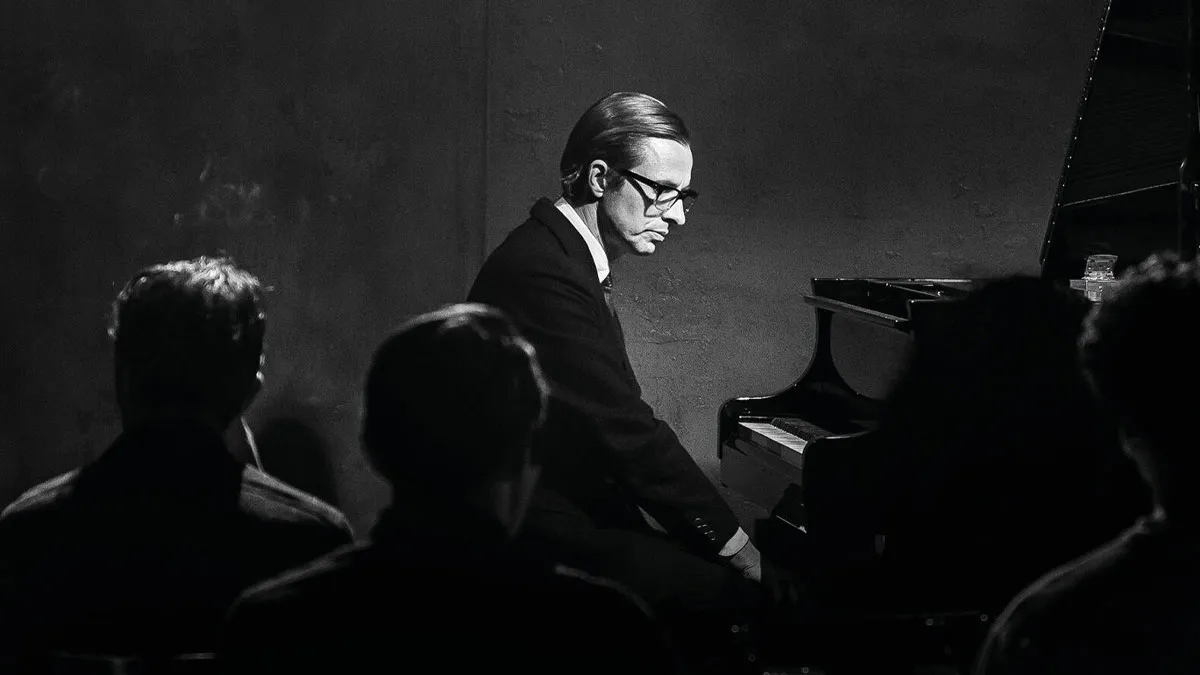
Everybody Digs Bill Evans arrives as a striking biopic that condenses the tumultuous life of pianist Bill Evans into a tight, 20‑day shoot. Directed by Grant Gee—known for the acclaimed Radiohead documentary Meeting People Is Easy—the film balances reverence for Evans’ musical genius with an unflinching look at his heroin addiction, fractured relationships, and the relentless pull of tragedy. Shot largely in West Cork, Ireland, the production ingeniously substitutes the landscape for New York and Florida, delivering a visually arresting portrait that feels both intimate and epic.
Production & Setting
Despite a minuscule budget, the crew’s resourcefulness shines. Cinematographer Piers McGrail crafts a bleached‑out Florida aesthetic using Irish locations, while the black‑and‑white palette dominates the opening scenes at the legendary Village Vanguard in 1961. The decision to shoot in just three weeks forces a brisk pacing; some dialogue‑heavy moments feel stilted, yet the overall visual language remains cohesive. The film’s modest scale becomes an asset, allowing the audience to focus on the subtleties of performance rather than grandiose set pieces.
Narrative & Performances
Anders Danielsen Lie embodies Evans with a restrained intensity. His portrayal captures the pianist’s consummate devotion to music—evident in a wordless exchange with bassist Scott LaFaro (whose tragic death haunts the latter half of the film). Lie’s nuanced facial expressions convey a man torn between transcendent creativity and self‑destructive habit. Valene Kane as Elaine, Evans’ longtime partner, delivers a poignant performance that underscores the emotional toll of addiction on loved ones. Bill Pullman and Laurie Metcalf appear as Evans’ parents, offering a blend of sternness and quiet support that grounds the protagonist’s tumultuous journey. Barry Ward’s turn as Harry, Evans’ brother, provides a contrasting vision of domesticity that highlights the pianist’s alienation from conventional life.
Visual Style & Music
The film oscillates between stark monochrome and occasional colour flash‑forwards, a structural choice adapted from Owen Martell’s 2013 novel Intermission. These colour interludes—each tied to a tragic theme—serve as emotional punctuation marks, reminding viewers that love, addiction, jealousy, and talent can consume individuals beyond their control. The soundtrack, naturally, leans heavily on Evans’ own compositions. The opening sequence, set to a rendition of “Waltz for Debby,” intercuts a sublime piano duet with images of a car crash, creating a visceral contrast between beauty and devastation. The use of the Village Vanguard recording Sunday At The Village Vanguard later in the film reinforces the idea that Evans’ artistry endures despite personal turmoil.
Themes & Impact
At its core, Everybody Digs Bill Evans interrogates the price of artistic brilliance. The film refuses to descend into a pity party; instead, it celebrates Evans’ contribution to jazz while acknowledging the shadows that trailed him. The recurring motif of characters being “devoured by forces bigger than themselves” underscores a universal struggle: the tension between inner drive and external constraints. By concluding with a quiet, reverent moment as Evans and his parents listen to the Village Vanguard album, the film leaves audiences with a lingering sense of wonder—a testament to the enduring power of Evans’ music.
Verdict
Everybody Digs Bill Evans is a minor miracle of indie filmmaking. Its brisk production schedule yields occasional rough edges, yet the director’s assured vision, strong central performance, and evocative cinematography elevate the work above its limitations. For jazz aficionados and general audiences alike, the review affirms that the film is less a cautionary tale and more a love letter to a pianist whose sound continues to resonate long after the final frame.