

Netflix’s latest limited series Murder in Galicia refuses to play by the usual true-crime rulebook. Instead of inviting viewers to solve a mystery, it confronts them with something far more unsettling: the slow, grinding failure of institutions meant to protect victims. Based on real events surrounding the 2015 Isabel Fuentes case, this three-part drama arrives after a documentary on the same subject, choosing a fictional lens to examine why justice was delayed rather than who committed the crime. The result is a tense, disturbing watch that trades shocking twists for bureaucratic frustration.
Synopsis
In the quiet village of Pazos, a woman is brutally attacked inside her own home by masked intruders posing as robbers. Civil Guard sergeant Elías quickly suspects her husband, Aniceto, but translating suspicion into action proves nearly impossible. As the victim fights for her life in a hospital, Elías battles rigid procedures, unanswered warnings, and a lack of urgency among authorities. The story follows his desperate attempt to force the system to act before it is too late, offering a glimpse into the human cost of procedural failure without revealing the outcome.
Performances
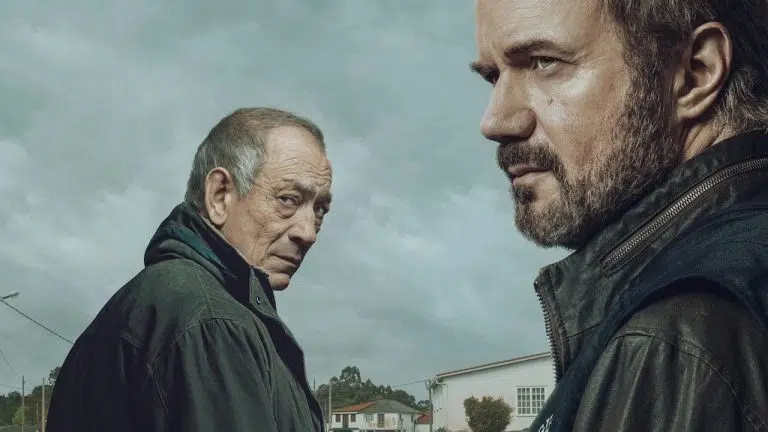
Tristán Ulloa anchors the series as Elías, delivering a restrained yet emotionally charged performance that captures the exhaustion of an officer who knows the truth but cannot compel others to see it. His desperation becomes the audience’s desperation, making every ignored lead feel personal. Opposite him, Miguel Borines portrays Aniceto with a quiet menace that grows increasingly disturbing as the investigation probes his relationship with the victim. The supporting ensemble, including Carlos Blanco, Fer Fraga, Luisa Merelas, Tatán, Isabel Garrido, Verónica Sánchez, Eduardo Soto, and Nacho Fresneda, grounds the narrative in a believable small-town setting where everyone knows more than they admit.
Behind the Lens
Director Carlos Sedes adopts a deliberately restrained approach, allowing the tragic circumstances to generate their own tension. There are no manufactured shocks or exaggerated melodrama; instead, suspense builds through fragmented conversations, investigative minutiae, and the suffocating sense of time slipping away. By rejecting the whodunit format, the series forces attention onto structural breakdowns within law enforcement and the judiciary. This slower pace may disappoint viewers seeking fast-paced thrills, but it lends the production a respectful realism that avoids sensationalizing a heartbreaking, preventable tragedy.
Final Verdict
Murder in Galicia stands apart because it prioritizes systemic critique over narrative puzzle-solving. It is not designed to entertain in the conventional sense but to provoke discomfort and reflection. The knowledge that the central failure was preventable makes the viewing experience genuinely heartbreaking. While its methodical rhythm will not appeal to every thriller fan, those willing to engage with its sobering message will find a powerful, unforgettable drama. The series is available to stream on Netflix.
Also Read:
“Unprotected: Murder in Galicia” Review – A Harrowing Look at Domestic Violence and Systemic Neglect