

A Fresh Chapter in a Familiar Universe
BBC’s latest espionage drama, Honey, arrives as a prequel to the acclaimed series Killing Eve, yet it manages to step out of that shadow with confidence. While launching four years after the parent show’s final episode might seem like risky timing, this six-part thriller demonstrates that it does not need to lean heavily on its predecessor to succeed. Its connections to Killing Eve are deliberately minimal, allowing newcomers to dive in without prior knowledge of the original narrative. In many ways, the series is stronger when presented simply as a period spy thriller rather than as an extension of an established franchise.
Espionage in Divided Berlin
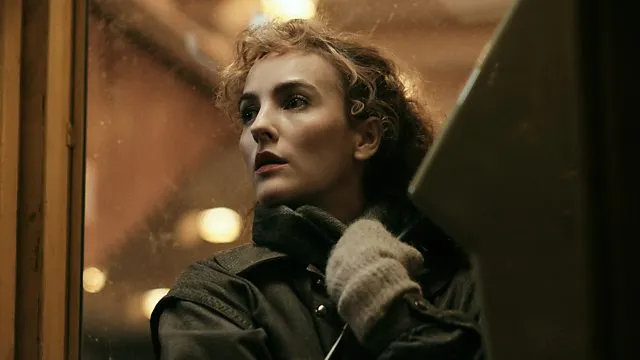
Written by Emma Moran, the creator of Extraordinary, the story transports viewers to East Berlin in 1982. It is a city defined by surveillance, paranoia, and the ever-present reach of the Stasi, where ordinary citizens serve as informants and trust is a rare commodity. At its center is Carolyn Martens, played by Ann Skelly, a twenty-four-year-old MI6 agent operating deep undercover as Martha Schmitt. Skelly portrays her as talented, ambitious, and deeply frustrated by being reduced to bait used to seduce intelligence targets.
Her handler, Graham Anderson, is portrayed by Rory Kinnear, who brings his familiar blend of poise and restraint to the role of a seasoned British spymaster. The dynamic between them captures the tension of fieldwork, especially when Martens declares that she no longer wants to be the “sexy little maggot at the end of the string,” but rather the fisherman pulling the lines. Kinnear’s performance recalls his screen work as Bill Tanner in the James Bond films, though the series is quick to distance itself from that particular brand of fantasy, with one character insisting outright that this is not like Bond.
Alliances, Accents, and Dangerous Chemistry
The plot thickens when Martens is paired with Aaron Neeland, a reckless CIA operative played by Nate Mann. Their forced partnership, which requires them to pose as a couple, generates much of the series’ charm through flirtatious banter and clashing personalities. Mann, previously seen in Masters of the Air and Apples Never Fall, delivers a suave and charismatic turn, and the chemistry between him and Skelly provides an entertaining counterpoint to the increasingly dangerous business of espionage.
Complicating matters further is Friedrich Baumann, the new head of Stasi counter-espionage, portrayed by Jannis Niewöhner. He shifts effortlessly between disarming charm and cold menace, adding another layer of peril to the protagonist’s mission. Niewöhner stands out as one of the production’s strongest supporting players, bringing both humour and iciness to every scene.
Ann Skelly anchors the entire production with a lively and spirited performance. While she inevitably invites comparisons to Fiona Shaw’s earlier portrayal in Killing Eve, and occasionally resembles Jodie Comer, she establishes Martha as an engaging figure defined by youthful impetuosity, intelligence, and vulnerability. Certain imagery in the opening episode deliberately recalls the predecessor, yet Skelly makes the character her own.
Style, Tone, and a Confident Voice
Toby MacDonald’s direction keeps the pacing brisk, supported by a sharp, witty script from Moran and an atmospheric, synth-infused score that evokes the 1980s. The series knows when to embrace playful absurdity and when to ground itself in the genuine dangers of Cold War espionage. At its strongest, Honey mirrors the blend of wit, sex appeal, and sudden violence that made Killing Eve compelling, yet it avoids the uneven pacing and confusing plot turns that affected the latter half of the original show.
Though it may not reach the startling originality of Killing Eve at its peak, Honey possesses enough personality to make such comparisons feel increasingly unnecessary. It is a smart, stylish, and thoroughly enjoyable drama that deserves an audience beyond existing fans.
Verdict and Release
Honey does not need to erase the memory of Killing Eve’s disappointing conclusion. Judged on its own merits, it is an immensely watchable piece of television. The series premieres on Saturday, 14 November, on BBC One and BBC iPlayer.