

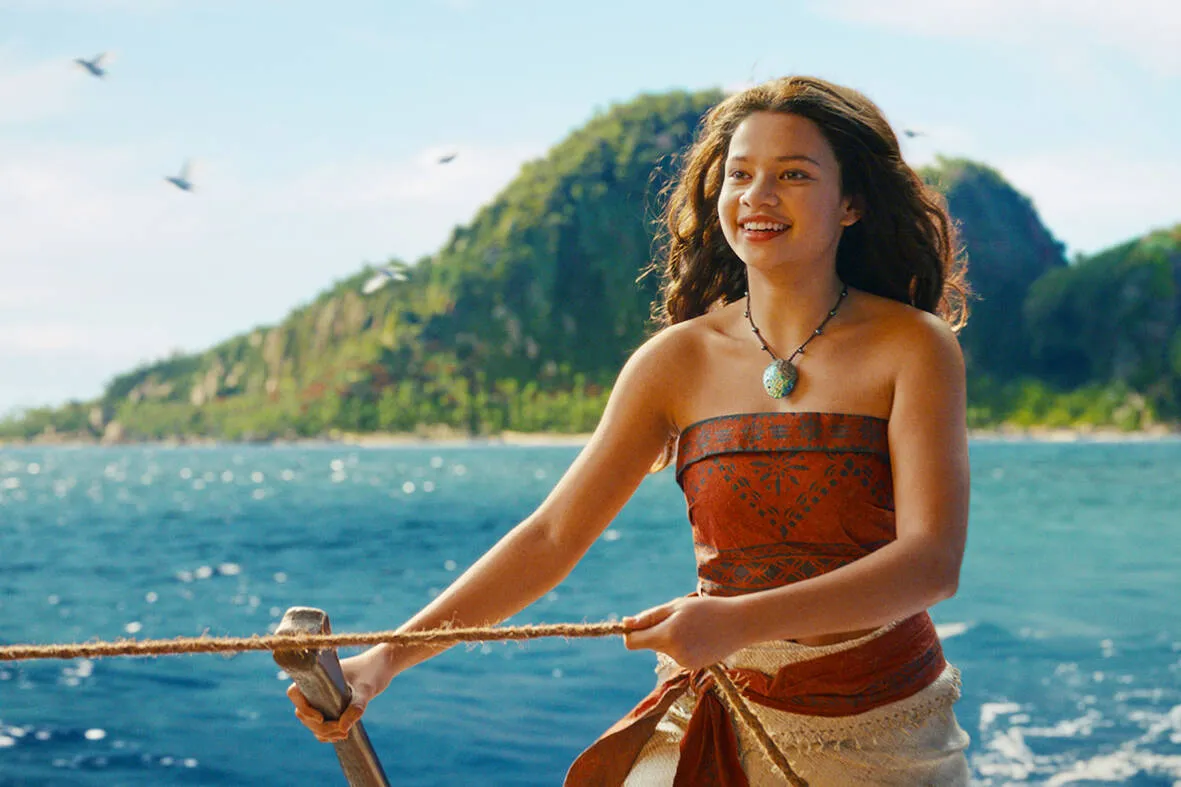
Disney’s much-anticipated live-action adaptation of the beloved 2016 animated feature arrives with all the subtlety of a sledgehammer to the wallet. This 2026 reimagining starring Catherine Lagaʻaia in the titular role and Dwayne Johnson reprising his voice turn as the demigod Maui proves to be yet another example of corporate nostalgia mining at its most transparent. The film hits theaters on Friday, July 10, but audiences may want to think twice before diving in.
Synopsis
The narrative follows a young Polynesian chiefdom heir named Moana who embarks on a perilous ocean voyage to restore peace to her island nation. Guided by the legendary demigod Maui, she must cross the vast Pacific Ocean to return the stolen heart of the goddess Te Fiti and save her people from darkness. Along the way, she encounters formidable challenges including a gigantic coconut crab and ancient ocean creatures, ultimately discovering her own identity and leadership potential. The journey tests her courage, tests her faith in tradition, and forces her to reconcile the expectations of her village with her own adventurous spirit. While the core storyline remains largely unchanged from its animated predecessor, the live-action treatment strips away much of the original’s magic and wonder.
Performances
Catherine Lagaʻaia makes her screen debut as Moana and delivers a remarkably assured performance that occasionally threatens to elevate the entire production. She successfully captures the duality of a young leader torn between duty and destiny, bringing genuine emotional weight to key moments. However, her authentic presence ultimately serves as a stark contrast to the artificial environment surrounding her.
Dwayne Johnson’s return as Maui presents the remake’s most significant casting challenge. While the animated version featured a dynamic shapeshifter who moved with fluid energy, the actor’s physical presence on screen reveals the inevitable gap between voice and body. His weathered appearance and measured movements slow the film’s pacing considerably, robbing the character of the manic energy that made the original so memorable. The performance feels like watching a retired athlete trying to recapture former glory.
Jemaine Clement returns to voice the scene-stealing coconut crab Tamatoa, and while his comedic timing remains sharp, the CGI rendering fails to capture the same charisma as the animated original. The decision to rely heavily on computer-generated imagery for central characters raises questions about why this format was chosen at all when the technology produces such flat results.
Behind the Lens
Director Thomas Kail, making his narrative feature debut following his celebrated work on the Broadway phenomenon Hamilton, serves as little more than a vessel for Disney’s corporate directive. The film was greenlit shortly after Bob Iger’s dramatic return to executive leadership, embodying the company’s current strategy of capitalizing on established intellectual property rather than pursuing original storytelling.
Cinematographer Óscar Faura’s visual approach produces mixed results at best. Ocean sequences occasionally capture genuine beauty, but much of the footage resembles the type of polished nature documentaries showcased on electronics retail floors. The uncanny valley effect pervades the production, particularly during interaction scenes between human performers and CGI creatures.
The technical execution falls remarkably short of expectations given the reported $200-250 million budget. Many action sequences and character designs rely so heavily on digital enhancement that the live-action label feels increasingly meaningless. The production essentially amounts to a high-budget table read against AI-generated backgrounds, missing entirely the tactile authenticity that practical filmmaking could have provided.
The musical numbers present another disappointment. Unlike classic Disney animations that often featured professional singers enhancing famous voices, these performances lean heavily toward sung-through monologue territory. The final showstopping number featuring Clement’s rendition of “Shiny” replicates the animated version almost shot-for-shot, yet somehow loses all its original sparkle.
Final Verdict
While the original Moana remains a streaming powerhouse on Disney+, this unnecessary remake fails to justify its existence beyond pure commercial motivation. The story that once inspired young viewers to embrace their inner strength now simply inspires parents to reach for their wallets.
The film maintains a baseline entertainment value simply because the underlying narrative and Lin-Manuel Miranda’s memorable songs remain fundamentally solid. However, the creative ceiling has collapsed so thoroughly that viewers may feel suffocated by the lack of imagination on display. What could have been a meaningful tribute to the original has become a hollow shell designed to extract maximum revenue from nostalgic audiences.
For those seeking authentic storytelling magic, the animated original remains readily available and vastly superior. This live-action adaptation serves as a cautionary tale about the dangers of prioritizing brand recognition over artistic integrity. Disney has produced a film that younger generations will likely forget almost immediately, while simultaneously irritating the millennials who actually remember what made the source material special in the first place.