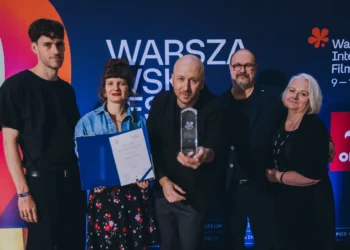


The Visionary Behind the Story
Danish author and academic Luise Noring brings an exceptionally analytical mindset to the realm of dystopian fiction with her political thriller Hidden, a speculative survival narrative unfolding in a near-future New York where established institutions begin to crumble and the fundamental agreements binding society come under unprecedented pressure. Her academic credentials, including a Ph.D. from Copenhagen Business School, have informed a unique approach to storytelling that privileges structural understanding over conventional narrative techniques.
Throughout her career as a researcher, Noring devoted substantial attention to examining urban governance frameworks, economic mechanisms, and the underlying architectures that shape contemporary societies. Her scholarly investigations deeply explores urban financial operation models, the evolution trajectory of public institutions, and the shifting functional positioning of cities within the global economic landscape. This rigorous analytical foundation has seamlessly translated into her fiction, where speculative scenarios serve as investigative tools for examining the inherent vulnerabilities within political and social systems.
Beyond her academic pursuits, Noring’s advisory engagements have taken her through numerous international institutions and urban centers, where she has addressed complex governance challenges and development dilemmas facing modern societies. This hands-on experience with the practical functioning—and dysfunction—of governmental and civic structures has enriched her fictional work with an authenticity that distinguishes her from purely imaginative storytellers.
In recent years, Noring has increasingly turned her scholarly attention toward fiction, employing speculative narrative techniques as a sophisticated lens for exposing the fragility of established political and social arrangements. Her literary portfolio now includes Hidden, Unsettled, and Abandoned — three interconnected works that collectively examine the mounting tensions reshaping contemporary democracies and illuminate how concentrated power and strategic information control profoundly influence human destinies. Her nonfiction work Rotten offers a piercing investigation into the gradual erosion undermining Denmark’s legislative system, demonstrating her continued commitment to understanding institutional decay across different contexts.
With its character-driven approach and robust political undercurrents, Hidden currently occupies a promising position as intellectual property actively seeking feature film adaptation, representing exactly the kind of sophisticated material that attracts filmmakers interested in meaningful genre work.
When Institutions Begin to Crumble
Many citizens operate under the assumption that the legal, financial, and social frameworks governing their lives rest upon coherent and rational foundations designed to ensure stability and fairness. The uncomfortable reality, however, reveals that numerous institutional structures prove far more precarious than popular consciousness acknowledges. When these foundational systems start to fracture, the downstream consequences fundamentally reshape how individuals navigate daily existence, pursue survival strategies, and exercise whatever power remains accessible within changing circumstances.
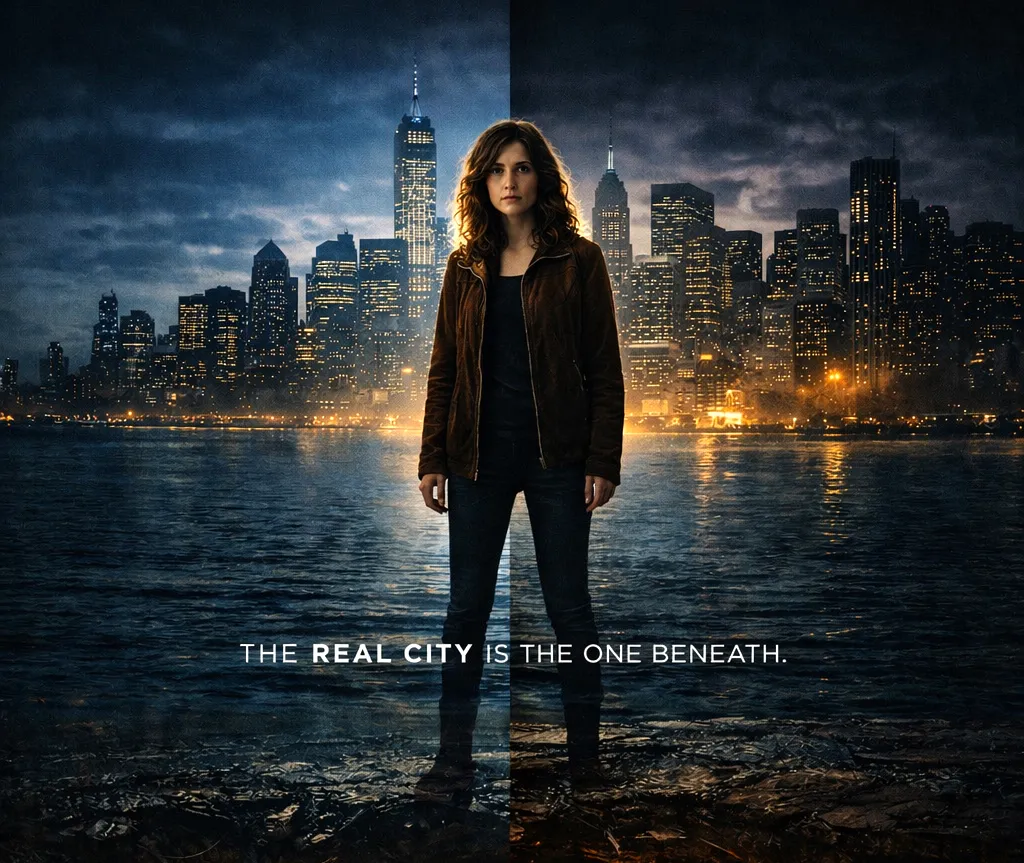
This tension between assumed institutional reliability and actual structural vulnerability served as the foundational Starting Point for Hidden. The narrative envisions a world where established institutions progressively erode while power becomes increasingly maintained through strategic opacity and careful manipulation of information flows. The protagonist Saskia’s journey embodies this awakening process, transforming from a trusting participant in societal arrangements to someone who discovers the uncomfortable truth that previously trusted systems operate according to very different principles than official narratives suggest.
The thematic concerns resonating throughout Hidden reflect broader patterns of institutional uncertainty increasingly evident across numerous societies worldwide. Escalating living costs, persistent economic insecurity, and widening inequality gaps collectively complicate efforts to maintain the stability that previous generations often took for granted. These material pressures encourage growing numbers of citizens to seriously question whether the institutional frameworks ostensibly designed to generate opportunity and provide protection continue serving their intended purposes in an era of rapid transformation.
Simultaneously, sweeping technological and economic transformations are fundamentally reshaping the world as previously understood. Artificial intelligence technologies are radically altering definitions of productive work, globalized financial architectures are concentrating wealth in unprecedented ways, and existing political frameworks frequently struggle to maintain relevance amid accelerating change. When institutional structures prove incapable of adapting to emerging realities, ordinary citizens bear the immediate consequences through diminished services, restricted opportunities, and eroding trust in systems that increasingly appear designed to serve narrow interests rather than collective welfare.
A Mother’s Instinct Amid Institutional Collapse
Centralizing the narrative around Saskia’s experience as a mother represented a deliberate creative choice that returns the story to one of humanity’s most primal and universally recognizable drives: the imperative to protect one’s children at all costs. This artistic decision creates a productive tension between the deeply immediate, emotionally grounded impulses of maternal love and the abstract, often impersonal demands imposed by institutional structures upon individual lives.
A mother’s protective instincts operate on an immedIately human register, driven by visceral emotional connections that transcend bureaucratic rationality. In stark contrast, the surrounding institutions frequently manifest as coldly bureaucratic entities that process human needs through standardized procedures lacking sensitivity to individual circumstances. Through Saskia’s carefully constructed perspective, readers experience the unsettling speed with which society’s moral frameworks can shift when circumstances render conventional survival strategies inadequate.
The narrative compellingly illustrates how institutional failures—whether through active malfeasance or passive dysfunction—force ordinary individuals into genuinely impossible choices. When the structures formally meant to provide protection instead become sources of threat or indifference, people find themselves navigating moral terrain for which no preparation exists. Saskia’s journey crystallizes these dilemmas, transforming abstract questions about institutional reliability into deeply personal matters of survival and family preservation.
Envisioning the Cinematic Possibilities
The adaptation vision for Hidden positions the material as a character-driven political thriller unfolding within a speculative yet immediately recognizable world. Rather than retreating into the safe distance of conventional dystopia, the cinematic interpretation would present a society that feels uncomfortably proximate to contemporary realities — close enough to provoke reflection while maintaining sufficient separation to enable meaningful dramatic exploration.
The central tension derives not from spectacular catastrophe but from gradual erosion of institutional trust and the widening chasm separating those adequately protected by existing power structures from those marginalized or actively expelled beyond their reach. This approach emphasizes psychological authenticity over visual spectacle, grounding the narrative in recognizable human experiences rather than relying on dystopian aesthetics to carry thematic weight.
Visually, the production would prioritize grounded realism that emphasizes texture and atmosphere over blockbuster formalism. The world depicted above ground would feel charged with political tension, shaped by continuous news cycles, social media dynamics, and official messaging campaigns where authentic information becomes increasingly difficult to distinguish from strategic manipulation. In deliberate counterpoint, the underground environments would convey improvisational quality and systemic fragility, revealing populations effectively rendered invisible by the very structures positioned above them.
At narrative center remains Saskia’s odyssey as she develops survival capabilities within a collapsing system, driven fundamentally by maternal imperative to protect her children from escalating dangers. This character-focused approach ensures that speculative elements serve human story rather than overwhelming individual experience with world-building concerns.
Bringing Hidden to screen execution would require creative teams comfortable operating at the productive intersection of speculative fiction, politically engaged storytelling, and sophisticated psychological drama. The material transcends simple dystopian categorization, remaining firmly anchored in recognizable social realities while maintaining intense focus on emotional experiences of individuals caught within failing systems. Optimal creative partners would approach speculative frameworks as instruments for examining present circumstances rather than escapist alternatives from contemporary complexities.
At its essential core, Hidden interrogates human choices — examining how ordinary individuals navigate truth, power, and survival when surrounding structures begin catastrophic disintegration. This thematic foundation offers rich possibilities for cinematic exploration that could resonate powerfully with contemporary audiences increasingly attuned to questions of institutional reliability and individual resilience.