

The enduring legacy of Little House on the Prairie has captivated American audiences for nearly a century. Laura Ingalls Wilder first shared her childhood memories of pioneer life in the 1860s and 1870s during the 1930s, creating a cultural touchstone that has spanned multiple generations. Now, Netflix brings this beloved story to life once again with their 2026 adaptation, offering a fresh perspective while honoring the heart of the original works. This new interpretation introduces audiences to familiar characters while tackling historical contexts that were previously unexplored in mainstream adaptations.
Synopsis
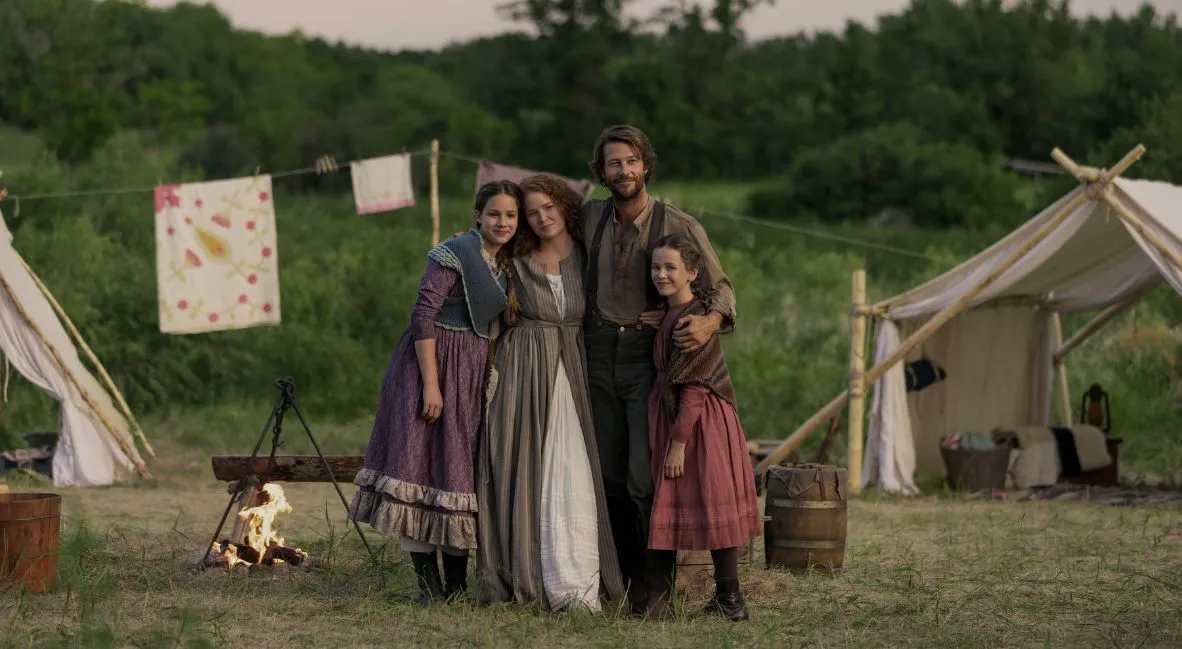
The story follows the Ingalls family as they leave Minnesota behind, traveling by covered wagon to establish a new life on the Kansas prairie near the developing town of Independence. Young Laura and her practical older sister Mary find excitement in the adventure ahead, discovering joy in simple girlhood pleasures like crafting flower crowns and singing songs together. Their father Charles, an eternal optimist, convinces his more cautious wife Caroline that the untamed frontier represents opportunity and possibility. However, Caroline worries about the hardships of rebuilding from nothing in a location lacking basic necessities like churches, schools, or post offices. As the family settles into their new surroundings, they encounter complex relationships with neighboring indigenous communities, particularly the Osage people whose lands they now inhabit.
Performances
The casting choices in this adaptation prove remarkably successful across the board. Alice Halsey delivers a luminous performance as Laura, embodying the curious and warm-hearted spirit that has made this character beloved for generations. Her chemistry with Luke Bracey, who portrays Charles Ingalls, creates a convincing father-daughter dynamic that forms the emotional core of the series. Bracey brings nuance to Pa Ingalls, portraying him as a romantic dreamer whose enthusiasm sometimes borders on recklessness, yet remains fundamentally sympathetic. The actor captures the character’s iconic status without simply mimicking previous performances.
Crosby Fitzgerald offers strong support as Caroline, grounding the family dynamics with practical wisdom, though the writing occasionally sidelines her character in favor of Charles’s storyline. Skywalker Hughes brings depth to Mary, particularly in her storyline involving a romantic interest in an orphan taken in by a local shopkeeper. The ensemble cast includes Warren Christie as the mysterious Mr. Edwards, who leaves a lasting impression as an uncle-like figure to the children. While supporting characters like the town doctor and general store owner demonstrate lovely chemistry, the series introduces so many residents that several remain underdeveloped.
Behind the Lens
The production team demonstrates admirable commitment to historical accuracy and cultural sensitivity. Consultants including language expert Talee Redcorn and cultural consultant Julie O’Keefe worked closely with creators to ensure authentic representation of Osage culture and history. This careful approach proves particularly important given the series’ decision to address the forced displacement of indigenous peoples, specifically the Osage tribe, from their ancestral lands.
The creative vision, led by showrunner Rebecca Sonnenshine, weaves additional historical context into narratives that previously focused primarily on settler experiences. A female-led roster of directors, including Sarah Adina Smith, brings thoughtful perspective to the portrayal of female relationships and girlhood. Production designer Jonah Markowitz crafted the Ingalls’ log cabin with inviting authenticity, though some other sets carry a somewhat artificial quality that detracts from the rough-and-tumble pioneer aesthetic the story demands.
The visual presentation occasionally undermines the narrative’s optimistic tone. Desaturated color grading leaves Independence appearing washed out in filtered grays and browns, failing to match the vibrancy that Charles’s enthusiasm for new beginnings would suggest. The polished appearance of costumes and hairstyling also seems at odds with a story about starting over with minimal resources.
Final Verdict
This 2026 reimagining of Little House on the Prairie succeeds as a meaningful contemporary adaptation. While it cannot replace the cultural impact of the original 1970s series, it offers something equally valuable by contextualizing historical experiences that earlier adaptations overlooked. The addition of Osage perspectives and the forced displacement narrative enriches the source material without abandoning the family heart that defines the franchise.
The series premiered on Netflix on July 9, 2026, and received renewal for a second season months before its debut, indicating confidence in its storytelling and audience appeal. For viewers seeking a heartfelt family drama that acknowledges historical complexity while celebrating resilience and connection, this adaptation delivers exactly what’s needed. It represents a thoughtful evolution of classic material, making it a delightful choice for both longtime fans and newcomers discovering the Ingalls family story for the first time.
Also Read:
“Little House on the Prairie” Adaptation: Showrunner Assures Fans It’s a Labor of Love