

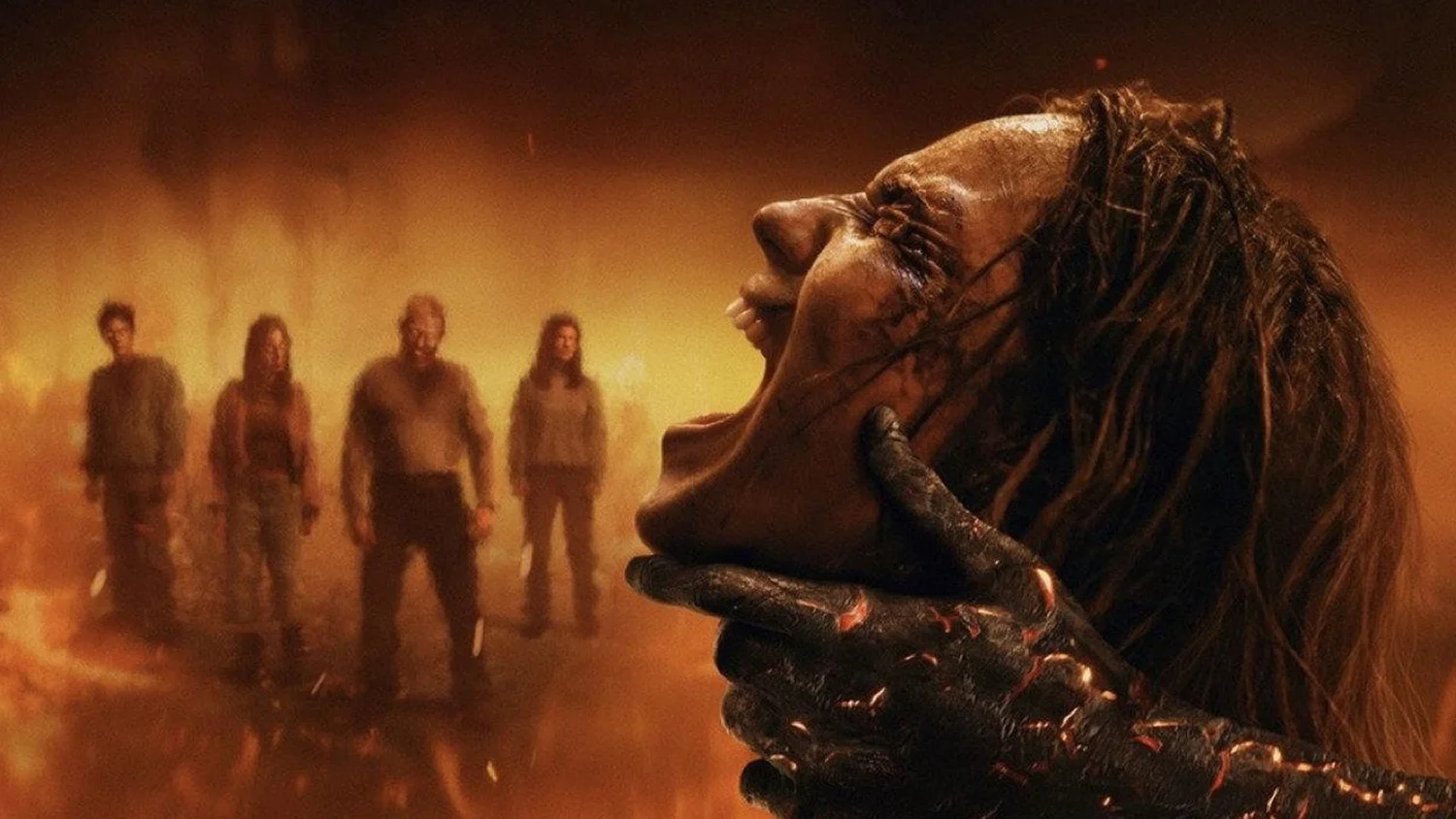
The sixth instalment in the long‑running Evil Dead saga arrived in theatres on July 10, 2026, promising audiences an exclusive theatrical experience before it migrates to other platforms. Titled Evil Dead Burn, the film marks a deliberate shift in tone and visual language. While previous entries celebrated a riotous blend of slapstick cruelty and gore, director Sébastien Vaniček strips the franchise of its carnival spirit, opting for a colder, more restrained approach that foregrounds grief, familial resentment, and visceral violence.
This new chapter follows a grieving widow who visits her late husband’s estranged family at a remote woodland home, only to find the gathering descend into a nightmarish fight for survival as the relatives transform into demonic entities. The result is a fascinating cultural mutation of the series—one that retains the core horror mechanics while reshaping them into a more contemplative, emotionally weighted experience.
Synopsis
Alice, a French widow with pink‑hair and an independent streak, attends the funeral of her husband, Will, who died in a tragic accident linked to a prior Deadite assault. Reluctantly, she joins Will’s family—his rigid mother Susan, volatile father Edgar, resentful brother Joseph, his girlfriend Thya, and elderly grandmother Polly—at their deteriorating lakeside retreat. The family’s fragile unity fractures as Alice’s refusal to conform to their expectations sparks tension. When the ancient evil awakens, the relatives are possessed one by one, turning the secluded home into a blood‑soaked battleground. Alice must rely on her wits and stamina to survive a relentless onslaught of supernatural tormentors, all while confronting the buried resentments that the demonic forces weaponize against her. The story remains tightly focused on the struggle for survival, keeping the supernatural mythology in the background until the final act.
Performances
Souheila Yacoub delivers a compelling portrayal of Alice, capturing the character’s emotional exhaustion and quiet defiance. Her performance thrives on subtlety: the tension in her shoulders when confronting Susan, the ragged breath that betrays fear, and the raw anger that lingers long after her husband’s death. Yacoub avoids the trope of the invincible “final girl,” instead presenting a heroine whose panic and fatigue accumulate over the film’s runtime.
Erroll Shand’s Edgar is a unsettling blend of nervous aggression and latent menace, his obsession with knives foreshadowing the violence that erupts once possession takes hold. Tandi Wright’s Susan radiates cold authority, turning the family’s claim of unity into a weapon of exclusion. Maude Davey’s Polly provides moments of dark comedy, though the jokes sometimes clash with the film’s more serious thematic undertones. The ensemble effectively conveys a family already fractured by internal wounds, making the horror feel like an extension of pre‑existing trauma rather than an external invasion.
Behind the Lens
Sébastien Vaniček, known for the tense apartment horror of Infested, brings a distinctly European sensibility to Evil Dead Burn. His direction favors long, tactile takes and a fascination with texture—wet wood, mud, flesh, and industrial tools occupy the same visual plane, creating a sense of oppressive realism. The film’s pacing leans toward the slower, more atmospheric style of art‑horror, yet the frequent bursts of graphic violence maintain a grindhouse edge.
Practical effects are undeniably impressive. The Deadites are rendered with a slick, writhing physicality, and the sequence inside a confined car demonstrates Vaniček’s skill at using space as a weapon—every door, seatbelt, and sunroof becomes an instrument of mutilation. However, the mythology surrounding the demonic objectives arrives in rushed exposition, leaving the rules of the supernatural world vague. The absence of the iconic chainsaw, replaced by a weed whacker and a jackhammer, underscores the film’s intent to distance itself from the franchise’s comedic roots.
The cinematography emphasizes winter gloom and claustrophobic interiors, turning the remote property into a character in its own right. Vaniček’s decision to linger on the aftermath of each violent act—allowing the camera to study the weight of a wound—creates a melancholic rhythm that contrasts with the frenetic energy of earlier entries. While this approach yields memorable set pieces, it also leads to occasional pacing snags, as the film oscillates between European art‑horror deliberation and the relentless escalation fans expect.
Final Verdict
Evil Dead Burn is a bold, if uneven, evolution of the Evil Dead franchise. It succeeds in reimagining the series as a meditation on inherited trauma and familial dysfunction, anchored by Yacoub’s gritty performance and Vaniček’s meticulous eye for practical horror. The film’s strongest moments—the car‑fight sequence, the tactile gore, the evocative use of space—demonstrate a director who understands how environment shapes violence.
On the downside, the hurried introduction of the supernatural lore and the tonal clash between slow‑burn dread and grindhouse carnage may alienate purists seeking the franchise’s signature grin. Additionally, the screenplay provides only fragmented insight into Alice’s past, leaving her emotional arc feeling underdeveloped despite Yacoub’s best efforts.
Overall, Evil Dead Burn offers a chilling, culturally resonant entry that expands the franchise’s horizons while sacrificing some of its playful charm. For viewers craving a more psychological, physically intense horror experience, this instalment delivers. It stands as a testament to the adaptability of the Evil Dead legacy, even if it leaves the iconic chainsaw untouched.
Also Read:
Terrifying Return: “Evil Dead Burn” Trailer Unleashes Fresh Nightmare Fuel for Horror Fans