

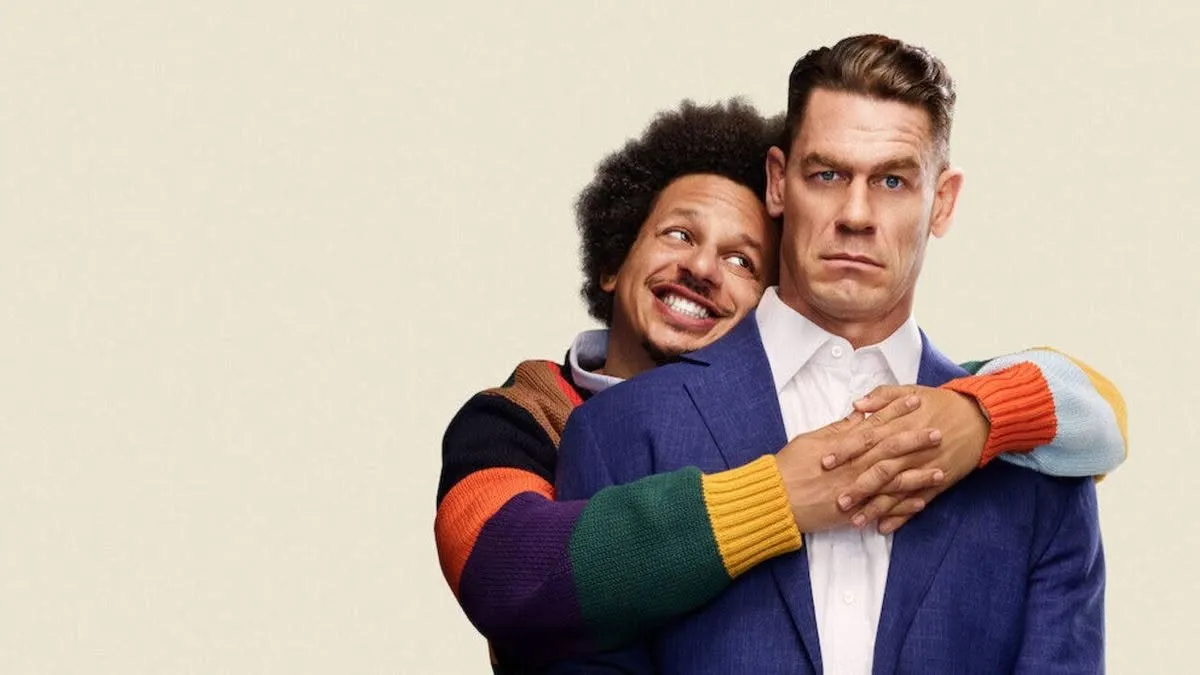
Earlier this year, screenwriters Andrew Mogel and Jarrad Paul returned to the streaming spotlight with the Netflix series Free Bert. The pair have now reunited with the platform, joining forces with director Matt Spicer to launch the feature comedy Little Brother. The film pairs John Cena—renowned for his evolving comedic chops—with Eric André, a veteran of absurd, slap‑stick humor. On paper, the combination promises a vibrant, laugh‑filled ride, yet the final product feels like a missed opportunity that struggles to generate genuine amusement. This review dives into the story, the casting choices, the creative forces behind the camera, and ultimately delivers a verdict on whether the movie deserves your weekend viewing time.
Synopsis
Little Brother introduces viewers to Rudd (John Cena), a high‑profile real‑estate broker who also headlines a reality‑TV series. His meticulously balanced life is thrown into chaos when his childhood “little brother,” Marcus (Eric André), reappears after years of absence. Marcus’s uninhibited, chaotic energy disrupts Rudd’s professional poise, his romantic relationship, and his overall stability, turning everyday situations into escalating disasters. The narrative follows Rudd’s desperate attempt to maintain control while the world around him unravels, offering a familiar “fish‑out‑of‑water” premise that, despite its potential, never ventures beyond conventional comedic territory.
Performances
John Cena’s portrayal of Rudd is intended to embody the straight‑laced, earnest real‑estate mogul, a role that asks him to deliver deadpan lines while the surrounding mayhem erupts. While Cena has proven himself capable of witty timing in previous comedic outings, casting him as the straight man here results in a muted performance that feels more like a missed cue than a deliberate choice. His natural charisma is constrained, leaving audiences longing for the more playful persona he usually brings to the screen.
Eric André, famed for his eccentric, high‑energy style, is handed the role of Marcus—an unpredictable, almost jackass‑like character. André’s comedic instincts are undeniably sharp, but the script gives him little grounding, essentially turning his character into a revolving series of stunts that rarely connect to the story’s core. The lack of a coherent character arc makes his performance feel like a series of isolated gags rather than a meaningful contribution to the film’s narrative.
The pairing of Cena and André, while intriguing in theory, ends up highlighting miscasting rather than synergy. The film would likely have benefited from swapping their roles, allowing Cena to unleash his comedic flair and André to explore a more restrained persona. As it stands, the chemistry fails to spark the laughs the premise promises.
Behind the Lens
Director Matt Spicer collaborates once again with writers Andrew Mogel and Jarrad Paul, the trio having previously delivered Free Bert for Netflix. Their script attempts to blend reality‑TV aesthetics with conventional comedy, leveraging the meta‑aspect of a real‑estate reality show within the plot. The concept—showing a polished professional dealing with an unruly relative—could have been a fresh, high‑concept twist, especially when paired with Netflix’s platform. However, the execution falls short, relying heavily on tired stereotypes and predictable setups.
The writing team’s strength lies in their ability to craft clever dialogue, yet here the script appears constrained, offering few opportunities for the cast to showcase their full comedic range. The film’s pacing drags, and the jokes feel forced, lacking the sharp wit that defined their earlier work. Additionally, the decision to model Rudd’s character after the likes of Selling the OC’s Gio Helou—an attractive, serious professional—while giving Marcus a chaotic, over‑the‑top persona, creates an imbalance that hampers the film’s overall coherence.
Final Verdict
Little Brother arrives on Netflix with a promising premise and an intriguing cast, but it ultimately succumbs to weak scripting and misaligned casting choices. The film’s attempts at humor fall flat, and its reliance on familiar tropes prevents it from delivering the laughs it strives for. While John Cena and Eric André each have moments of cleverness, the overall result feels like a missed opportunity rather than a triumphant comedy. For viewers seeking a fresh, laugh‑out‑loud experience this weekend, Little Brother does not quite hit the mark.