

Netflix continues to expand its Korean content library with compelling titles that blend suspenseful narratives with profound emotional storytelling. Notes from the Last Row emerges as a distinctive addition to this collection, presenting audiences with a thought-provoking exploration of narrative obsession and creative inspiration. The series masterfully intertwines the lives of a disillusioned literature professor and a talented engineering student, creating a dynamic that challenges conventional mentor-student relationships while examining the thin boundary between reality and fiction.
The Korean drama adapts elements from a Spanish theatrical production, transforming them into a contemporary narrative that resonates with modern viewers. At its core, the series delves into the seductive power of storytelling, a theme that pervades every episode and elevates the material beyond typical thriller conventions. The production benefits significantly from the involvement of seasoned performers who bring depth and nuance to their respective characters, transforming potentially melodramatic moments into compelling dramatic sequences.
Synopsis
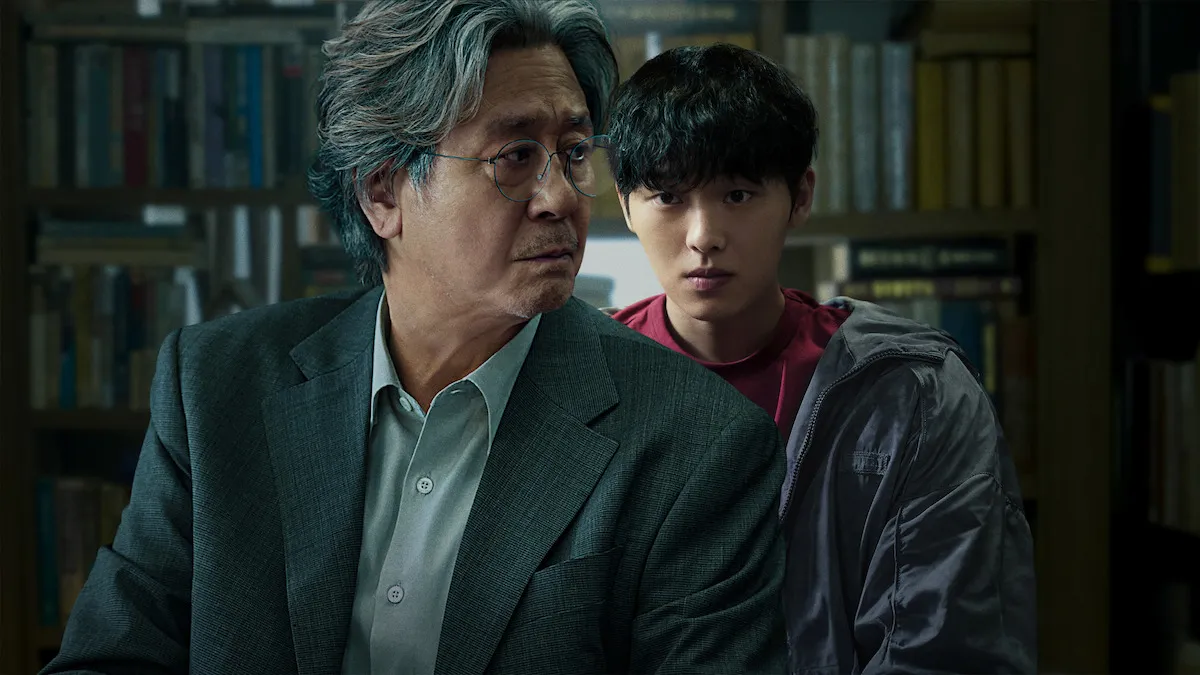
The narrative centers on Heo Mun-oh, a literature professor at a prestigious university who has long abandoned his creative aspirations following the disappointing reception of his debut novel decades ago. His professional dissatisfaction manifests through harsh criticism of his students and tension in his marriage to Jo Hyeon-suk. The catalyst for transformation arrives in the form of Lee Kang, an engineering student who challenges the professor’s dismissive attitude during a classroom confrontation.
What begins as a typical academic mentorship evolves into an obsessive relationship with Kang’s creative work. The young student shares a compelling narrative about infiltrating an affluent family, drawing inevitable comparisons to acclaimed films in the genre. As Mun-oh becomes increasingly absorbed in Kang’s story, the boundaries between mentor and student blur significantly. The professor finds himself prioritizing the next chapter of Kang’s narrative over his personal responsibilities, creating rifts in his professional and personal life.
The plot weaves additional complexity through the introduction of Kim Su-hun, a successful novelist and former classmate whose career success contrasts sharply with Mun-oh’s creative failure. The presence of Ahn Eun-joo, whom Mun-oh has never quite forgotten, further complicates the emotional landscape. The series maintains suspenseful momentum while exploring themes of jealousy, obsession, and the ethical boundaries of creative inspiration.
Performances
Choi Min-sik delivers a commanding performance as the conflicted professor, channeling decades of acting expertise into a character defined by bitterness and eventual obsession. His portrayal captures the internal struggle of a man who has sacrificed his creative dreams for academic stability, rendering his transformation into a story-obsessed reader both tragic and compelling. The actor’s nuanced approach prevents the character from becoming merely unlikeable, instead generating sympathy even during his most irrational moments.
Choi Hyun-wook provides excellent support as the mysterious student whose hidden talents drive the narrative forward. His interpretation of Kang balances youthful confidence with mysterious depth, keeping viewers guessing about the character’s true motivations. The chemistry between the two leads creates magnetic screen presence that sustains audience engagement throughout the series.
Jin Kyung delivers understated excellence as the long-suffering wife, providing emotional grounding to the more theatrical elements of the story. The ensemble cast, including Huh Joon-ho as the successful rival and Kim Yun-jin as the unrequited love interest, contributes to the production’s overall richness.
Behind the Lens
The series benefits from thoughtful direction that balances literary introspection with genre conventions. The production design effectively contrasts academic environments with the opulent settings described in Kang’s narrative, creating visual distinctions that reinforce thematic contrasts between reality and fiction.
The adaptation successfully translates theatrical sensibilities into cinematic television language, though the series occasionally succumbs to melodramatic excesses that undermine its more sophisticated elements. The writing demonstrates awareness of narrative theory, incorporating themes of unreliable narration and the ethics of creative borrowing. The pacing maintains momentum through strategic revelations while allowing character development breathing room.
Technical aspects including cinematography and sound design enhance the viewing experience, with particular attention paid to sequences depicting Mun-oh’s growing obsession. The series benefits from editing choices that mirror the protagonist’s fragmented mental state during crucial turning points.
Final Verdict
Notes from the Last Row succeeds most powerfully when examining the psychological dimensions of storytelling obsession. The series offers intelligent commentary on the relationship between creators and their muses, questioning where inspiration ends and appropriation begins. While occasional melodramatic detractions slightly diminish the overall impact, the production remains largely successful in achieving its thematic ambitions.
Choi Min-sik’s performance alone justifies watching, as he navigates the character’s descent from academic bitterness to creative obsession with remarkable skill. The final verdict positions Notes from the Last Row as a worthy addition for viewers seeking substantive Korean drama content that prioritizes character psychology over conventional action sequences.