


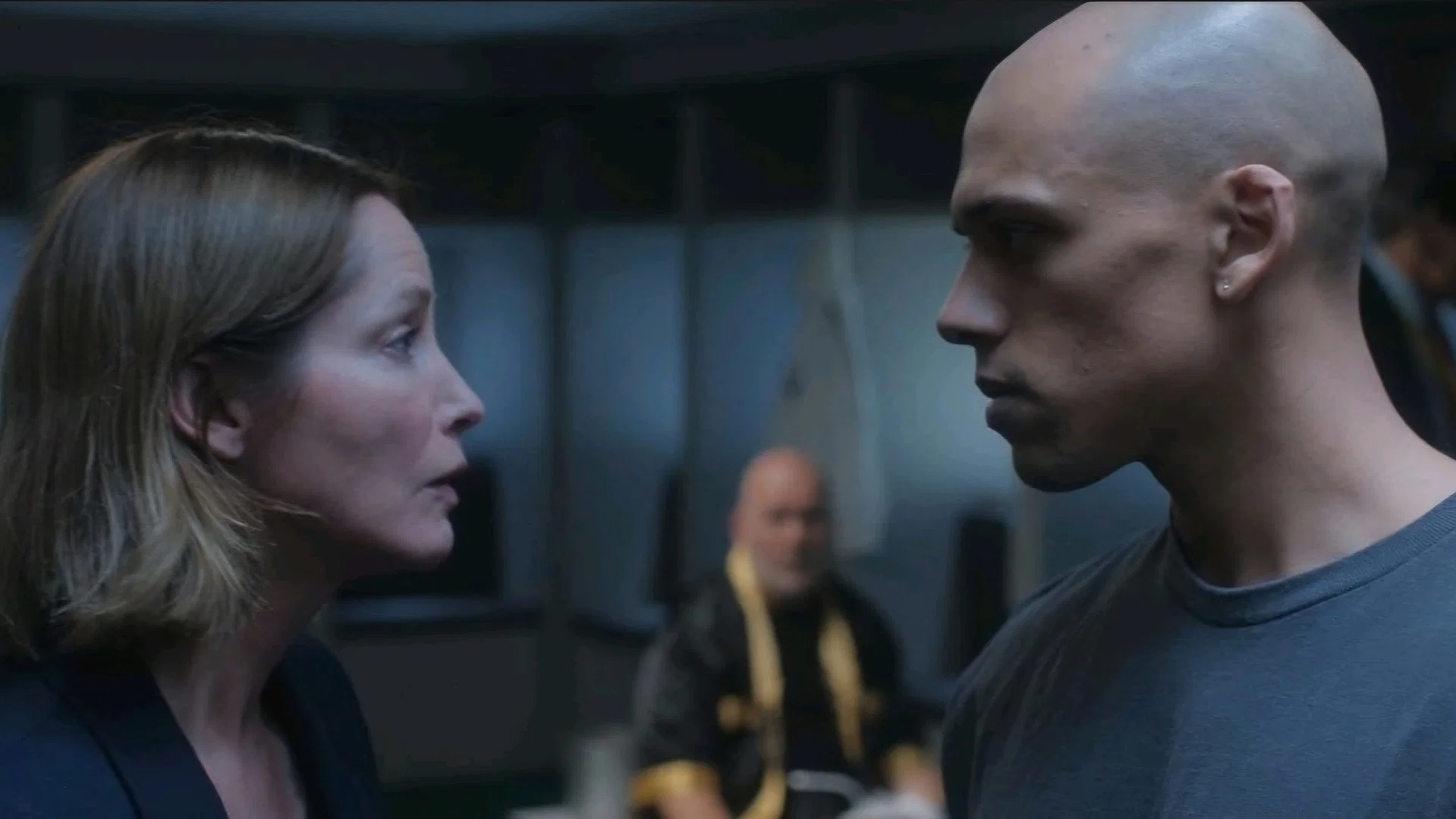
When a film manages to turn a single, cramped room into a pressure‑cooker of emotion, suspense and moral conflict, it deserves attention. Heavyweight does exactly that, delivering a British sports drama that feels less like a traditional boxing picture and more like an intimate character study where every glance, sigh and whispered threat carries weight. Written and directed by Christopher M. Anthony – best known for his work on music videos and visual effects for Marvel – the movie marks his feature‑film debut and announces a fresh voice capable of squeezing maximum tension out of minimal resources.
Synopsis
Derek “Diamond” Douglas (Jordan Bolger) is a rising talent plucked from the lower ranks to replace an injured champion on the eve of a career‑defining bout. As fight night looms, Derek’s manager (Nicholas Pinnock) and the promooter (Jason Isaacs) reveal how much they stand to gain—or lose—if he wins. Confined largely to a single locker‑room‑style setting, the narrative follows Derek’s internal battle between self‑doubt and external pressure, exposing the fragile loyalties and hidden agendas that simmer beneath the sport’s glittering façade.
Performances
Jordan Bolger delivers a star‑making turn as Derek, capturing the fighter’s volatile mix of bravado and insecurity with a physicality that feels both authentic and unsettling. His eyes flicker between fear and determination, allowing the audience to feel every pulse of his anxiety. Nicholas Pinnock matches Bolger’s intensity as the pragmatic manager whose loyalty is constantly tested; their verbal sparring crackles with sarcasm, menace and an undercurrent of dark humor that keeps scenes electric despite the static setting. Jason Isaacs, though present for less screen time, exudes a chilling promoter’s charm that makes his manipulations feel both slick and sinister. The supporting cast—though limited in number—serves the story well, each cameo adding a layer of pressure that pushes Derek closer to his breaking point.
Behind the Lens
Christopher M. Anthony leverages his background in visual storytelling to turn a confined space into a visual metaphor for entrapment. Tight framing, shallow depth of field and a restrained colour palette that shifts from cool blues to harsh, sweat‑slicked amber mirror Derek’s rising tension.
The screenplay avoids exposition dumps, letting revelations surface through subtext and the characters’ body language; a shattered mirror, a hastily bandaged hand, a lingering stare—all become narrative punchlines. Anthony’s direction proves that a modest budget need not impede impact: the film’s rhythm is driven by sharp dialogue and precise editing, creating a propulsive pace that belies its single‑room setting.
The sound design deserves special mention—every breath, every whispered insult reverberates, amplifying the claustrophobic atmosphere and making the audience feel as if they are sharing the same stale air as the fighters.
Final Verdict
Heavyweight is a knockout in every sense of the word. It transforms a simple premise—an underdog boxer on the brink of his biggest fight—into a tense, character‑driven thriller that lingers long after the credits roll. Bolger’s breakthrough performance, Pinnock’s steady counterpoint, and Anthony’s assured direction combine to deliver a film that is both emotionally raw and viscerally gripping. For anyone who appreciates a story where the true fight happens inside the mind as much as in the ring, Heavyweight is essential viewing. Catch it now on digital platforms, video‑on‑demand, or in select theaters beginning July 21st.