

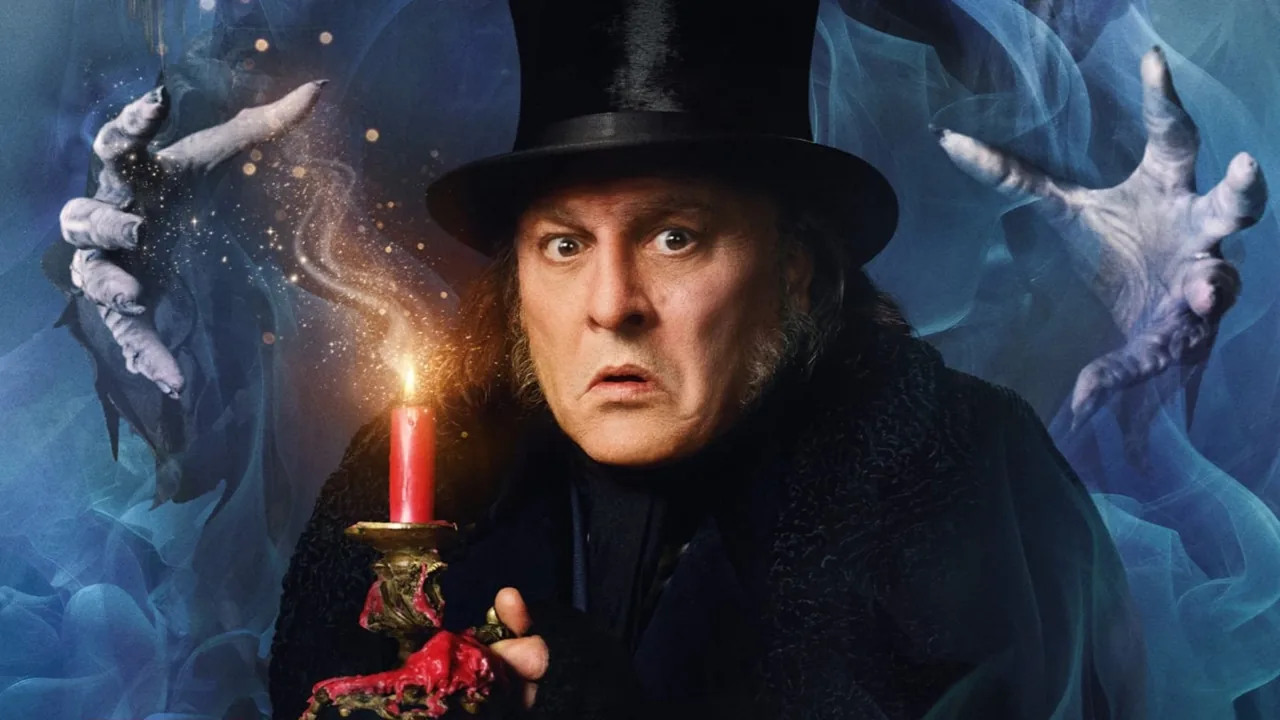
The holiday season invites storytellers to revisit old ghosts, and director Ti West answers that call with Ebenezer, a supernatural fantasy drama that premiered in theaters across the United States and the United Kingdom on November 13, 2026. This latest cinematic reimagining of Charles Dickens’s A Christmas Carol places the miserly Victorian businessman Ebenezer Scrooge once again at the center of a Christmas Eve reckoning. With Johnny Depp in the lead and Ian McKellen returning as the haunted Jacob Marley, the film promises frost, chains, and a chance at redemption. Does West’s atmospheric take deliver emotional warmth, or does it leave audiences out in the cold? This review examines the performances, direction, and lasting impact of Ebenezer.
Synopsis
Set in fog-choked London, Ebenezer follows a wealthy but joyless businessman who has closed his heart to kindness and human connection. On Christmas Eve, the ghost of his former partner appears, followed by three spirits who guide him through scenes from his past, present, and possible future. The journey forces him to face the cost of his isolation and decide whether he can change before time runs out. The film is currently showing exclusively in movie theaters nationwide.
Performances
Johnny Depp portrays Scrooge with sharp, irritable energy. His grimaces, sudden flinches, and rapid movements give the character a comic edge, yet they also keep Scrooge’s inner tenderness at arm’s length. Depp makes the miser’s defenses visible, but the man beneath them remains harder to grasp.
Ian McKellen delivers the film’s most haunting work as Jacob Marley. Wrapped in chains and speaking with the weariness of someone who understands his mistakes too late, McKellen turns Marley’s warning into a painful reminder of lost time. His brief scenes give the story its emotional gravity.
Andrea Riseborough appears as the Ghost of Christmas Past, pale and unsettling, turning memory into a physical presence that Scrooge cannot escape. Tramell Tillman brings robust vitality to the Ghost of Christmas Present, feasting in a public house and embodying abundance even as he reveals the grim figures of Ignorance and Want. Rupert Grint grounds the story as the underpaid clerk Bob Cratchit, while Sam Claflin and Ellie Bamber provide glimpses of the family and generosity Scrooge has rejected.
Behind the Lens
Ti West directs with a cold, controlled hand. The visual palette favors gray skies, thick fog, and gauzy textures that make the past feel close yet unrecoverable. The spirits are presented as bodily, invasive figures rather than ethereal wisps, giving the supernatural elements a physical chill.
Nathaniel Halpern’s screenplay adapts Dickens with some sharp modern edges. Scrooge’s suspicion of charities is validated by depictions of corrupt advocates and false claimants, which narrows the film’s call for compassion. The final act moves quickly through a series of reparations, from donated money to a holiday bird and gifts for the Cratchit household. While these actions prove the character’s conduct has changed, the speed of the repairs crowds out the vulnerability of asking forgiveness from people he has hurt. The church gathering and Silent Night montage offer devotional comfort, but they arrive before Scrooge has fully earned the easy reconciliation they suggest.
Final Verdict
Ebenezer is most powerful when it forces its characters to confront time they cannot regain. McKellen’s remorse and Depp’s restless fear carry more conviction than Scrooge’s eventual generosity. The film offers beauty and seasonal atmosphere, but its rush to tidy every wrong weakens the harder, more honest work of reconciliation. For viewers who enjoy moody holiday fantasies, Ebenezer is worth a theatrical visit, though it softens some of Dickens’s sharpest lessons.