

The party‑comedy sub‑genre has been a reliable source of laughs for decades, from the raucous antics of Animal House to the slick misadventures of The Hangover. Yet, as audiences have seen countless variations on the same formula, the novelty has waned. 72 Hours arrives on Netflix hoping to rekindle that spark by placing a weary advertising executive in the middle of a Miami bachelor‑party gone awry. With a cast led by Kevin Hart and Marcello Hernandez and direction by Tim Story, the film promises high‑energy chaos. Does it deliver genuine laughs, or does it merely recycle well‑worn beats? This review breaks down the story, performances, direction, and overall impact to help you decide whether the trip is worth taking.
Synopsis
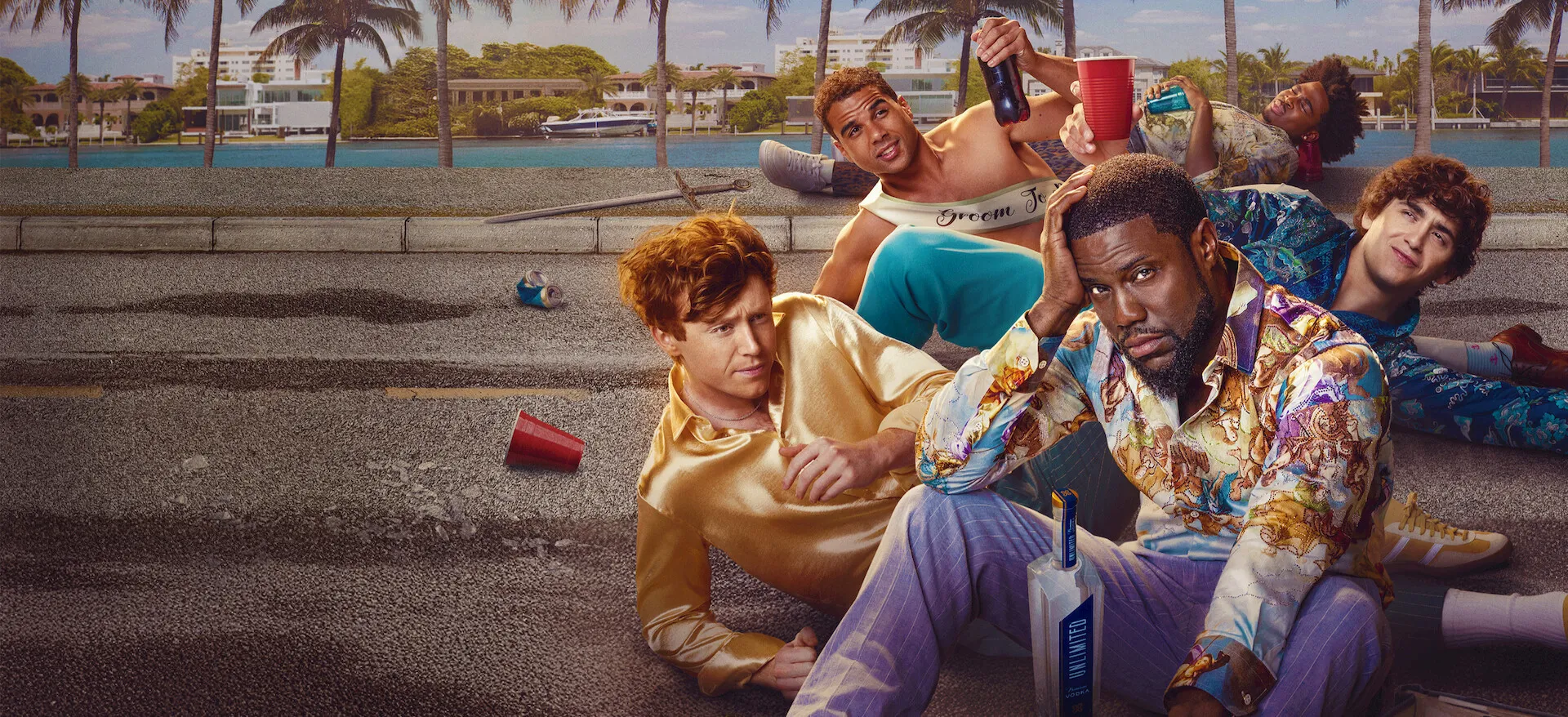
Joe Nixon (Kevin Hart), a 40‑year‑old ad exec feeling stuck in his career and personal life, is mistakenly added to a group chat for a bachelor party hosted by a bunch of twenty‑somethings. Seeing the Miami trip as a chance to reinvigorate his stalled prospects, Joe decides to tag along despite the age gap and his already‑fraying relationship with his girlfriend (Teyana Taylor). Once in Miami, the group’s night of drinking, questionable decisions, and spontaneous escapades quickly spirals into trouble when they attract the attention of a local criminal outfit. Joe’s attempt to prove himself becomes a wild ride of misplaced confidence, awkward moments, miscommunication, and a series of set pieces that echo familiar party‑comedy tropes without offering much new.
Performances
Kevin Hart brings his trademark rapid‑fire delivery and boundless energy to Joe, playing the confident underdog who constantly overestimates his ability to keep up with the younger crowd. While his enthusiasm fuels several moments, the reliance on his usual shtick begins to feel repetitive as the film progresses. Marcello Hernandez stands out as the sharpest comedic voice in the ensemble; his timing and willingness to riff on the absurd situations elevate scenes that would otherwise fall flat. Hernandez’s ability to extract humor from thin material hints at what the film could have achieved with a stronger script.
Supporting players Mason Gooding (the groom), Ben Marshall, and Kam Patterson provide competent but forgettable portrayals of the bachelor‑party crew. Their characters serve mainly as catalysts for Hart’s antics rather than fully realized individuals. Teyana Taylor offers a grounded counterpoint as Joe’s live‑in girlfriend; her restrained performance adds a touch of emotional weight amidst the chaos, showcasing a side of her talent that contrasts with her more flamboyant recent roles. Although her screen time is limited, Taylor’s presence leaves a noticeable impression, underscoring the missed opportunity to develop her character further.
Behind the Lens
Director Tim Story, following the critically panned The Pickup, attempts to blend the raucous energy of classic party comedies with a hint of action‑adventure flair. The result feels uneven: set pieces that aim for grandiose, WaterWorld‑scale spectacle often come across as ill‑judged and distracting rather than thrilling. Cinematography leans on bright Miami neon, but the visual style does little to compensate for the thin narrative.
The screenplay, credited to Kevin Burrows, Matt Mider, Hayden Schlossberg, and Jon Hurwitz, leans heavily on familiar beats—emotional check‑ins, “elder” jokes, and predictable drug‑smuggler chases—without injecting fresh perspective or inventive twists. Consequently, the comedy relies almost entirely on the performers’ delivery. Hart and Hernandez manage to land a few solid one‑liners, but the overall joke success rate remains low, leaving many scenes feeling like missed opportunities.
Final Verdict
72 Hours aspires to be a modern heir to The Hangover while borrowing occasional inspiration from action‑heavy franchises and sketch‑show humor. Unfortunately, it ends up as a derivative exercise that recycles the same party‑comedy formula without the inventive spark that made its predecessors memorable. The film’s strengths lie in the charismatic performances of Kevin Hart and Marcello Hernandez, who manage to extract laughs from a otherwise stale script. However, weak writing, uninspired set pieces, and a reliance on predictable tropes prevent the movie from rising above mediocrity.
For die‑hard Hart fans or viewers seeking a low‑stakes, mildly amusing romp, there are moments to enjoy. For anyone looking for a fresh, laugh‑packed comedy that genuinely pushes the genre forward, 72 Hours falls short. The most notable takeaway from the experience is the exposure it gives Marcello Hernandez—a talent worth watching in future projects.