

In an era where streaming platforms frequently abandon beloved series without resolution, Prime Video has taken a refreshingly Different approach with Good Omens. Rather than Letting the adaptation of Terry Pratchett and Neil Gaiman’s beloved novel fade Into oblivion, the streaming giant commissioned a proper conclusion that honors both the source material and the devoted fanbase who have championed Michael Sheen and David Tennant through multiple seasons. This decision speaks volumes about the platform’s commitment to quality storytelling, especially when contrasted with industry peers who routinely cancel shows at their narrative peak without offering closure.
The third season arrives not as a traditional multi-episode run, but as a singular ninety-minute cinematic experience that functions both as an extended episode and a proper series finale. This format choice serves the material remarkably well, allowing the story to breathe while maintaining the propulsive energy of a feature film. For longtime viewers, this feels less like a season premiere and more like a carefully wrapped gift, a reward for years of investment in this wonderfully weird corner of supernatural television.
What makes this finale particularly significant is its timing and context. After a extended production hiatus that left fans wondering whether they would ever see their favorite angel and demon pair again, the announcement of a concluding movie represented something of a miracle in itself. The series has always operated on its own peculiar wavelength, balancing cosmic stakes with intimate character moments, and this final chapter leans into that dual nature with remarkable success.
Story
The narrative picks up in the immediate aftermath of the previous season’s devastating cliffhanger, where decades of tension between Crowley and Aziraphale reached a painful breaking point. Gabriel’s unexpected departure from Heaven, abandoning his celestial duties to pursue a life with Beelzebub, sets off a chain of events that fundamentally alters the power structure of both realms. In the vacuum left behind, Aziraphale finds himself elevated to the role of archangel and placed in charge of the Second Coming, tasked with overseeing Christ’s return to Earth. This promotion, rather than representing triumph, becomes a source of profound conflict for a being who has long questioned the rigid hierarchies of Heaven.
Meanwhile, Crowley wanders the rain-slicked streets of Soho, heartbroken and alone, moving from pub to pub beneath neon lights that reflect the emptiness he feels. The visual poetry of this juxtaposition, with Aziraphale trapped in celestial bureaucracy while Crowley descends into earthly despair, sets the emotional stakes for everything that follows. The narrative makes clear that the real apocalypse at stake here is the destruction of a relationship that has weathered six thousand years of cosmic upheaval.
The plot introduces what can only be described as a divine cost-cutting initiative, a “DOGE”-styled restructuring effort that threatens to reduce angelic ranks and minimize celestial involvement in mortal affairs. This satirical element, while occasionally broad, serves as an effective metaphor for institutional dysfunction and the human tendency to prioritize efficiency over compassion. Against this backdrop, our protagonists must navigate not only the fate of existence but also the wreckage of their fractured friendship.
The thematic core revolves around free will, reconciliation, and the capacity for change even after millennia of established patterns. The story acknowledges its reliance on familiar tropes while finding fresh angles within them, particularly in its treatment of what it means for fundamentally different beings to choose each other despite every cosmic obstacle. The buddy dynamic between these two, characterized by complementary contradictions and long-accrued intimacy, remains the series’ most compelling element.
Performances
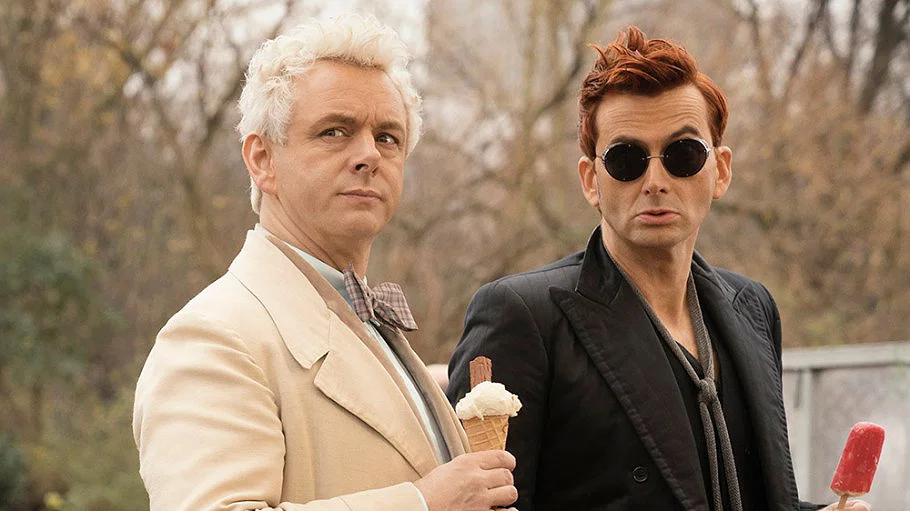
David Tennant and Michael Sheen have always shared a chemistry that transcends mere professional collaboration, and their work in this finale demonstrates exactly why Good Omens has remained appointment television despite irregular release schedules. Tennant’s Crowley operates as a masterclass in controlled chaos, conveying millennia of loneliness beneath a devil-may-care exterior while revealing new depths of vulnerability as the narrative demands. His physicality, vocal modulation, and ability to shift between comedic excess and genuine emotional devastation remain consistently impressive across the runtime.
Sheen’s Aziraphale continue to embody a particular kind of angelic fretfulness, forever caught between duty and desire, protocol and personal connection. The actor navigates the character’s elevation to archangel status with wonderful complexity, showing how this new position of power actually represents the most constraining development in Aziraphale’s existence. His scenes opposite Tennant crackle with the accumulated history of their fictional partnership, allowing audiences to feel the weight of every slight and sacrifice that has brought them to this moment.
The supporting cast delivers work that, while necessarily secondary, contributes significantly to the finale’s emotional landscape. The expanded roles for established characters allow for satisfying payoffs that reward dedicated viewers while remaining accessible to newcomers. The ensemble maintains the tonal balance that has defined the series, moving between absurdist comedy and genuine pathos with an ease that speaks to both cast and creators’ confidence in the material.
What elevates these performances beyond competent television acting is the obvious investment everyone brings to the material. This feels like a company of performers who genuinely care about where these characters end up, and that sincerity transmits through the screen. Even when the plot strains credibility or the satire grows heavy-handed, the core relationship anchors viewers in emotional authenticity.
Behind the Lens
Neil Gaiman’s involvement as showrunner has always represented a guarantee of certain aesthetic and tonal qualities, and this finale maintains those standards while pushing into new territory. The decision to structure the season as a single extended episode rather than splitting it across multiple installments demonstrates confidence in the story’s momentum and respect for the audience’s engagement. This approach, increasingly common in prestige television, pays off here by allowing the narrative to unfold without the artificial pauses that episodic structures sometimes impose.
Visually, the production embraces both its British sensibilities and its supernatural subject matter with appropriate enthusiasm. The contrast between the grimy reality of contemporary London and the ethereal splendor of celestial realms receives thoughtful treatment, with production design that communicates meaning beyond mere visual spectacle. Special effects, particularly in sequences depicting cosmic events and otherworldly dimensions, have grown increasingly sophisticated across the series’ run and reach an impressive peak here.
The writing, while primarily original material rather than direct adaptation of Pratchett’s novel, honors the source’s spirit while establishing its own narrative authority. References to the book exist for those who wish to seek them, but the story functions perfectly well as standalone mythology for newcomers. This balance between fidelity and innovation reflects the challenge of adapting beloved source material for the screen, a challenge the creative team has met with intelligence and affection.
The production timeline, with its notoriously long gaps between seasons, occasionally shows in the finale’s pacing. Moments of meandering and scenes that stretch beyond their necessary length suggest a project that, despite careful editing, could have benefited from more aggressive tightening. However, these lapses remain relatively minor against the overall success of the presentation.
Final Verdict
Good Omens Season 3’s finale accomplishes what few television conclusions manage: it provides genuine closure while preserving the essence that made the journey worthwhile. For ardent fans who have followed Crowley and Aziraphale through two seasons and years of uncertainty, this ninety-minute movie delivers the emotional resolution they deserve. The ending carries weight, lingering in the mind long after credits roll, supported by technical achievements that enhance rather than distract from the human drama at the core.
What makes this finale particularly successful is its accessibility to newcomers. A concise opening summary efficiently establishes the essential context, allowing viewers unfamiliar with the series to enter this story without feeling excluded. This generosity toward potential audiences reflects confidence in the material and ensures that the finale could theoretically serve as an entry point for future viewers discovering the series.
The irreverent humor, celestial and infernal hijinks, and chaotic energy that have defined the series throughout its run remain present and accounted for. The chemistry between its leads continues to elevate material that might otherwise collapse under its own ambition. While seasons past occasionally stumbled through overstuffed plotting and narrative excess, this finale finds a focused intensity that serves the story well.
In essence, the creators have demonstrated exactly how to generate divine returns from hellish premises, earning a heavenly payoff through six years of dedication to an unconventional story about an unconventional friendship. Prime Video’s decision to support this proper conclusion represents a model other streaming platforms would do well to emulate. For anyone seeking a satisfying end to a beloved series, one that treats its audience with respect while embracing the beautiful weirdness of its premise, Good Omens Season 3 delivers in spectacular fashion.