

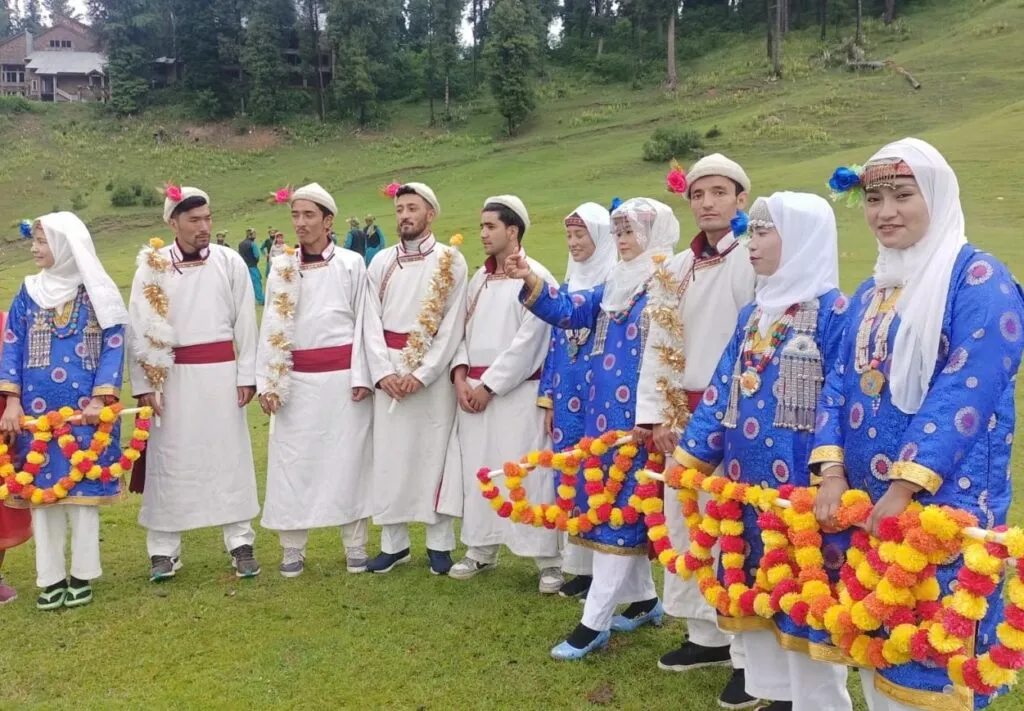
As spring thaw replaces the bitter winter frost in the high-altitude villages of Kargil, the melting snow uncovers more than just blooming apricot blossoms and rushing streams. It reveals a resilient cultural heartbeat that has echoed through the mountains for generations. In remote settlements like Hardas, where twilight turns the towering peaks a deep, contemplative blue, local wedding festivities stretch deep into the night. While elder community members sit shoulder-to-shoulder, preserving ancestral poetry purely through memory, curious teenagers capture the acoustic magic on their smartphones. This striking juxtaposition of ancient oral tradition and modern technology defines the current landscape of Balti music in Ladakh—a fragile yet enduring art form keeping a divided community emotionally connected.
The Geopolitical Fracture and the Birth of Trans-Border Longing
The unique sonic identity of this region is deeply rooted in historical geopolitics. The 1947 partition of British India and the subsequent armed conflicts over Jammu and Kashmir fundamentally reshaped the geography of daily life. By 1948, a ceasefire line sliced through the historic Ladakh territory. Baltistan fell under Pakistani administration, while Kargil remained within the Indian borders. Overnight, families, trading partners, and cultural kin found themselves separated by what would eventually solidify into the heavily militarised Line of Control.
Despite the near-impossibility of physical cross-border movement, culture refused to be contained by barbed wire and military checkpoints. Long before the era of high-speed internet and digital streaming, Balti folk music transcended geographical barriers naturally. Lyrics passed lovingly from grandparents to grandchildren, while melodies survived through sheer repetition and communal gatherings. These traditional songs—pre-dating the physical border itself—spoke universally of migration, harrowing mountain crossings, waiting families, and the heavy sorrow of separation. When the frontier was drawn, these timeless themes acquired a poignant, literal urgency, turning local rivers and snowy ridges into symbols of an agonizing familial divide.
The Transistor Era and the Oral Archives of Kargil
Before digital connectivity reached these secluded Himalayan terrain, the radio served as the primary cultural lifeline. For residents of Kargil, evening broadcasts from regional stations like Radio Skardu and Radio Pakistan acted as an emotional sanctuary.
Renowned cultural worker and vocalist Sibtan Hassan, widely known as Kaleem Balti, fondly remembers the communal radio-listening habits of the 1980s and 1990s. “People used to listen to Balti programmes every night,” he recalls. During festive periods like Ramadan, Muharram, and wedding seasons, entire neighborhoods would congregate around a single transistor. These broadcasts delivered Balti ghazals, folk tales, and verse directly into households, offering solace to communities physically cut off from their ancestral roots across the divide.
Similarly, singer Gulzar Hussain, performing under the stage name Zayan, notes that music historically functioned less as commercial entertainment and more as living cultural memory. Raised in a household where traditional poetry was taught orally without formal studio systems or complex instruments, Hussain emphasizes that early Balti artistry relied purely on human vocal power and simple, organic rhythms born directly from daily survival.
Navigating Modernity: The Tightrope Between Preservation and Adaptation
Today, the Balti music ecosystem faces a complex identity crisis. While older artists like Hassan warn that Western pop and Bollywood dominance threaten native dialects—estimating that only a fraction of traditional folklore remains active in daily youth culture—younger musicians are fighting back through creative reinvention.
Artists like Zahra Banoo, a 23-year-old rising star from Kargil, argue that language retention is directly tied to musical survival. “If we stop singing in Balti, people will eventually stop speaking it too,” she cautions. To combat this looming threat, contemporary performers are actively blending indigenous lyrics with modern studio production, synthesizers, and electronic arrangements.
This balancing act, however, sparks internal debate. While musicians like Faisal Ashoor experiment with contemporary soundscapes to capture younger demographics familiar with global pop, traditional purists worry that heavy digital production may strip away the raw, authentic soul of ancestral mountain ballads. Nevertheless, most agree that evolution is essential to prevent complete cultural erasure.
Digital Bridges Across the Line of Control
Paradoxically, modern technology has also breathed new life into cross-border cultural exchange. Social media platforms such as YouTube, Instagram, and TikTok allow Balti artists on both sides of the military frontier to instantly access, share, and appreciate each other’s creative works. Musicians in Ladakh openly acknowledge that communities in Baltistan have historically maintained written literature and archival records with exceptional dedication, helping preserve the core vocabulary more robustly.
Recent collaborative and independent releases—such as the widely acclaimed Kargil project ‘Yusha Inna’, which reimagines the classic tragic romance of Laila and Majnun through a distinct local mountain folk idiom—demonstrate the enduring power of these shared narratives. Featuring modern vocalists blending traditional sensibilities with sleek video production, such tracks strike an immediate chord with audiences intimately familiar with the pain of waiting and geographic separation.
As dusk settles over the valleys of Ladakh, the sonic landscape continues to transform. Bluetooth speakers sit alongside harmoniums, and Instagram reels document acoustic wedding jams. Yet, the core essence remains remarkably unaltered. Through memory, digital persistence, and artistic passion, the ancient songs of the Balti people continue their timeless journey across the mountains, proving triumphantly that no border can permanently silence a culture determined to sing.
Five Artists Keeping Balti Music Alive:
Kaleem Balti (Sibtan Hassan): A seasoned singer, broadcaster, and cultural organizer from Lato village, dedicated to preserving oral heritage through decades of regional radio programming.
Zahra Banoo: A 23-year-old contemporary voice bridging traditional folk storytelling with modern studio production for younger audiences.
Sadiq Ali Ashoor: A Leh-based musician integrating formal musical education with deep-rooted village gathering traditions and classical Balti ghazals.
Gulzar Hussain (Zayan): A dedicated archivist and performer specializing in re-recording older folk songs to highlight themes of migration and historical division.
Faisal Ashoor: A forward-thinking young artist experimenting with contemporary arrangements to keep traditional Balti verse relevant in a rapidly globalizing music scene.