

When a new Australian series lands on the small screen, it’s worth asking whether it simply recycles familiar detective tropes or manages to say something fresh about trauma, justice, and community. Dustfall—the six‑part adaptation of Vikki Petraitis’s novel The Unbelieved—premiered on ABC TV and ABC iview on 11 October 2026 and immediately sparked conversation. Directed by Emma Freeman and led by Anna Torv as the battle‑scarred Detective Tig Pollard, the show intertwines a gripping police investigation with a nuanced look at how survivors navigate disbelief, institutional bias, and personal wreckage. In this review we break down what makes Dustfall stand out, from its storytelling core to the performances that bring it to life, and we finish with a verdict on whether it deserves a spot on your watch‑list.
Synopsis
Set in the sun‑baked coastal town of North Gap, Queensland, Dustfall follows Detective Tig Pollard as she returns home after a bruising rape trial in Melbourne. She is quickly thrust into a fresh case: a series of sexual assaults that have shaken the local community. As Tig pieces together fragmented witness accounts, she uncovers a web of cover‑ups, reluctant testimonies, and long‑buried secrets that force her to confront her own painful past. The narrative balances procedural tension with intimate character moments, especially through the eyes of Edie, a young woman whose fragmented memory becomes the emotional heart of the investigation. Without revealing twists, the series explores how a community’s silence can both protect and punish, and how a determined investigator can push against entrenched attitudes while still being haunted by her own history.
Performances
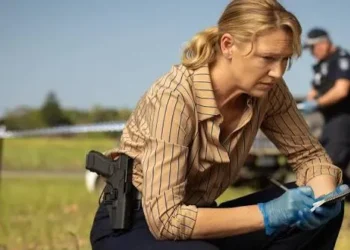
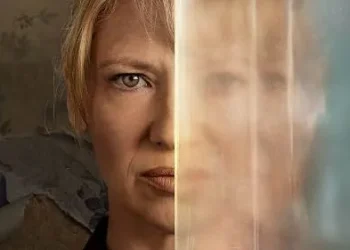
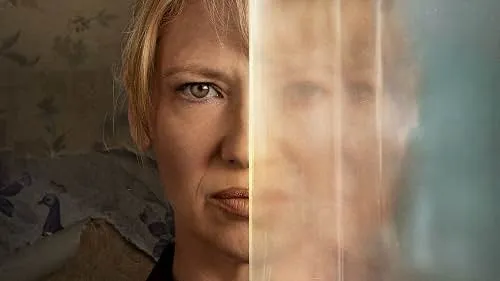
Anna Torv delivers a restrained yet powerful portrayal of Tig Pollard. She avoids the cliché of the hard‑boiled gumshoe, instead showing a detective whose empathy is as sharp as her intuition. Torv’s subtle facial shifts convey the weight of past failures without overt melodrama, making Tig’s moments of vulnerability feel earned.
Zoe Phillips, as Edie, carries the challenging task of portraying a survivor whose memory is patchy. Phillips lets confusion and fear surface naturally, allowing the audience to experience the disorientation that often follows trauma. Her interactions with Tig—particularly the hospital examination and police interview scenes—highlight a delicate power dynamic that feels authentic rather than exploitative.
The supporting cast adds texture: Bert LaBonté as Tig’s partner Remi offers a grounded counterpoint, questioning procedural blind spots with quiet conviction; Juliet Stevenson as Olivia, Tig’s mother, brings a fraught familial tension that mirrors the series’ larger themes of responsibility and memory; and Gemma Chua‑Tran’s Maya Luu provides a sobering subplot about the aftermath of speaking out, reinforcing the show’s commentary on institutional retaliation.
Overall, the ensemble avoids caricature, letting each performance serve the story’s moral complexity rather than merely moving the plot forward.
Behind the Lens
Director Emma Freeman’s visual language is deliberately austere. The dry, sun‑scorched landscapes and endless sugarcane fields create a sense of exposure that mirrors the characters’ emotional openness—or lack thereof. By keeping the actual assault off‑screen, Freeman shifts focus to the aftermath: the clinical hospital room, the tense interrogation, and the quiet domestic spaces where Tig grapples with personal demons.
The writing team—Beatrix Christian, Dianne Taylor, Belinda Chayko, and Stuart Page—crafts a script that balances procedural detail with social commentary. A standout moment is the lime‑and‑soda exchange in the police station, which deftly exposes gendered assumptions without resorting to heavy-handed dialogue.
Cinematography leans on natural light and muted palettes, reinforcing the show’s grounded tone. The recurring python motif, while intended to evoke unease, occasionally feels overstated; however, it does not detract from the series’ stronger suits: its trust in silence, its respect for procedural authenticity, and its willingness to let characters breathe rather than constantly drive the plot with melodramatic twists.
Final Verdict
Dustfall succeeds where many crime dramas falter: it places the survivor’s experience at the forefront while still delivering a satisfying investigative arc. Anna Torv’s nuanced lead performance, paired with Emma Freeman’s thoughtful direction, creates a series that feels both intellectually stimulating and emotionally resonant. The show’s willingness to interrogate police culture, community complicity, and the personal cost of seeking justice elevates it beyond a standard whodunit.
For viewers who appreciate crime narratives that challenge as much as they entertain, Dustfall is a compelling watch. Its strengths lie in character depth, atmospheric setting, and a commitment to treating trauma with the gravity it deserves. Minor stylistic hiccups—such as the somewhat heavy python symbolism—do not outweigh the series’ overall impact.
Dustfall is a must‑add to your watch‑list for anyone seeking a drama that lingers long after the final episode.
Also Read:
Sun, Secrets, and Suspects: How Anna Torv’s New Crime Drama “Dustfall” Delivers High-Stakes Mystery