

The highly anticipated second installment of Cyberpunk: Edgerunners lands on Netflix on October 20, 2026, bringing Studio Trigger and CD Projekt Red back to the neon‑lit streets of Night City. Rather than revisiting the rise of a lone mercenary, this season expands the anthology format to follow several disparate lives, each wrestling with technology, identity, and the price of autonomy. The result is a thoughtful, visually daring continuation that asks what it means to be human when the body can be rewritten at will.
Synopsis
Cyberpunk: Edgerunners 2 presents a collection of intertwined vignettes set in the same sprawling metropolis. A former mercenary grapples with the loss of his cybernetic edge, a young woman confronts the decay of her heavily modified form, and a teenage filmmaker navigates the murky waters of art versus exploitation. Their paths occasionally cross, revealing how personal struggles echo within Night City’s larger power struggles, all while the series retains its signature blend of high‑octane action and introspective storytelling.
Characters
- Weak Kingsley – Once a feared cyber‑enhanced operative, Weak now lives without the gear that defined him. His journey explores the fragility of reputation when the body that earned it is gone, and he finds new purpose protecting someone else’s vulnerable choices.
- Talia Yang – Talia’s extensive augmentations are beginning to fail, forcing her to renegotiate control over her own flesh. She balances corporate expectations, gang pressure, and her own desire for self‑determination, creating a tense portrait of autonomy in a world that commodifies the body.
- Roman Carax – A twelve‑year‑old aspiring director, Roman prefers crafted images over raw braindance recordings. His quest for a camera thrusts him into a transaction with the Maelstrom gang, positioning him as both observer and inadvertent catalyst in the lives of those around him.
- D – A netrunner seeking vengeance for his nomadic community’s destruction, D discovers that recorded footage can amplify his sense of power, yet also complicate his motivations as the line between retribution and spectacle blurs.
These figures are supported by a host of secondary players—including the enigmatic digital entity Capri—whose presence deepens the series’ exploration of consciousness, memory, and the cost of technological transcendence.
Behind the Lens
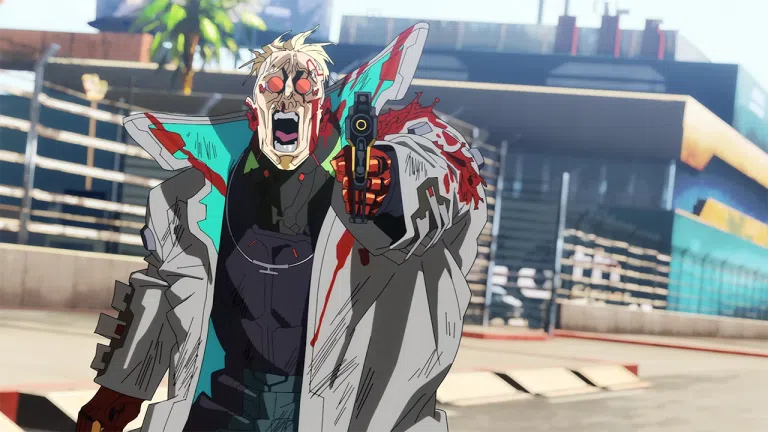
Directed by Kai Ikarashi, the season retains Trigger’s trademark kinetic animation while experimenting with shifting visual palettes that mirror each character’s internal state. Retro textures, sharp silhouettes, and moments of minimalist framing allow shadows and color to carry emotional weight, making Night City feel less like a fixed backdrop and more like a mutable canvas. The series cleverly uses visual style to underscore themes: when a protagonist’s perception fractures, the animation follows suit, whereas moments of clarity are rendered with crisp, cohesive lines. This approach elevates the narrative beyond mere spectacle, turning each frame into a commentary on how we see—and are seen—by others.
Final Verdict
Cyberpunk: Edgerunners 2 succeeds as an expansion of the franchise that refuses to simply replicate the original’s hero’s journey. By scattering its focus across multiple, deeply personal stories, the season examines dependence, bodily autonomy, and the power of images with nuance and tenderness.
The animation’s expressive versatility makes abstract concepts palpable, and the interconnected yet distinct plotlines keep viewers engaged without feeling rushed. While the later episodes occasionally sacrifice deeper character moments for escalating spectacle, the overall impact remains a thoughtful meditation on what it means to retain agency in a world where the self can be edited at will.
For both longtime fans of the Cyberpunk universe and newcomers intrigued by its aesthetic, this installment offers a compelling, visually rich experience that is well worth the watch.