

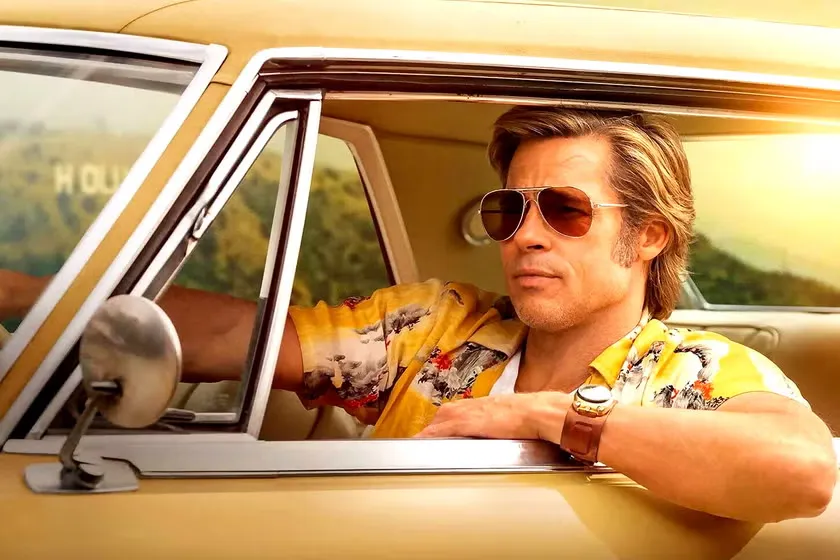
Brad Pitt returns as a Hollywood relic with a wink and a smirk, stepping into the director’s chair of David Fincher on a project that wears its cinematic lineage proudly. This installment revisits Cliff Booth, the enigmatic stuntman who earned Pitt an Oscar years ago, nine years after the events of Once Upon a Time in Hollywood. The film crafts a lush, glossy, new chapter that flirtatiously nods to Tarantino’s original screenplay while letting Fincher’s precise, shadow-drenched visual intuition cast its own electric spell. The result is a love letter to old-school Hollywood—its legends, its appetites, and its darker appetites—packaged as a contemporary noir-inflected character study.
Synopsis
In a world where Rick Dalton has moved on to a successful Australian television run and Booth operates in the margins, the fixer with a devilish charm navigates a spectrum of gigs that keep the lights on and the stories flowing. He runs the New Beverly Cinema, a nod to the era’s cinephile sanctum, and moonlights at will as a problem-solver for friends whose reputations—and livelihoods—hang by a thread. When Karen Crosby, a high-powered agent, lands on his radar with a client named Charlie Peters, Booth discovers that the real assignment is far more perilous than a routine cleanup. Charlie’s wife Toni is in jeopardy, threatened by twin Indonesian brothers whose reach extends far beyond their initial appearance. As Booth threads the needle between danger and desire, he juggles a growing attraction to Karen with the danger of his past catching up to him.
Performances
Pitt channels a roguish, old-Hollywood charm with an edge of danger that carries the story forward even when the plot meanders. His timing is a masterclass in controlled charisma: every line lands with a practiced ease, and every sardonic quip lands with an edge that suggests consequence. Debicki’s Karen is a gleam in the eyes and a question in the heart—ambitious, perceptive, and increasingly drawn to Booth’s paradoxical blend of warmth and menace.
Weller’s Gus, Booth’s stubborn father, offers a counterweight of dry humor and stern honesty that electrifies the film’s fabric whenever he appears. Abdul-Mateen II brings a kinetic vitality to ‘Hot Rod,’ a character who could have been a one-note foil but instead becomes a catalyst for tension and revelation. Gugino’s Toni is a magnetic, complicated presence whose fragility and resolve propel the story’s emotional core. Olyphant returns with a crisp, sly bite that reminds us of his range when material gives him room to improvise.
Across the board, the ensemble threads through a shared sense of cinephile reverence and ironclad conviction, delivering performances that feel both tossed-off and deeply considered. The film’s strongest moments arrive when the dialogue gives way to pure tonal chemistry—patter that doubles as character philosophy, and stillness that speaks volumes about loyalties, regrets, and the price of fame.
Behind the Lens
Fincher’s fingerprints are everywhere, from the lighting that drips with velvet dusk to the camera’s patient, almost predatory gaze on Booth’s world. The film’s texture borrows Tarantino’s affection for granular Hollywood detail and Fincher’s appetite for crisp, controlled tension, creating a hybrid canvas where nostalgia is a mood and danger is a motif.
The New Beverly setting becomes a character in its own right, a shrine where the past is archived in reels and reactions, and Booth’s vocation—both as a fixer and as something of a reluctant guardian of his era—finds its narrative engine. The action sequences, when they occur, are economical yet devastating, underscored by a sound design that makes every footstep and breath feel consequential. The screenplay’s tonal terrain—darkly funny, frequently virile, and morally murky—finds a steady rhythm through Pitt’s magnetic performance and the director’s unflinching eye for detail. Though some prestige-film bravura moments threaten to eclipse the film’s core humanity, the craft remains consistently high, and the atmosphere remains immersive from first frame to last.
The film’s texture summons an atmosphere where dialogue crackles with industry lore, and the emotional truth lives in Booth’s quiet, practiced menace as much as in his misdeeds. The path is paved with memorable vignettes: a jaw-dropping on-set moment, a late-night conversation that reveals Booth’s code, and a handful of scenes that test Pitt’s charisma against the film’s cooler, more calculating ambitions. The tone gracefully straddles Tarantino’s fascination with meticulous Hollywood minutiae and Fincher’s signature, almost clinical, mise-en-scène, yielding a viewing experience that is as stylish as it is morally ambiguous. Yet the insistence on reveling in booth’s legend sometimes dithers on the threshold of mythmaking rather than forging a fully realized character arc. The result is a stylish, frequently entertaining duet between performance and propulsive mood, with a finale that will divide audiences as sharply as Booth’s own choices divide the people who know him.
Final Verdict
The Further Mis-Adventures of Cliff Booth is a polished, intoxicating homage that earns its stripes through performance and mood even as it invites debate about its narrative ambitions. Pitt’s rendition of Booth is a tour de force—charming, dangerous, and undeniably charismatic—yet the film’s most thrilling triumphs hinge on the interplay between its beloved iconography and the new emotional threads that Fincher and Tarantino’s collaboration unfurls. It is not a flawless synthesis of Tarantino’s syntax and Fincher’s mechanism, but it is a richly satisfying promenade through a world where legends are still being whispered, rewritten, and tested under pressure. For cinephiles hungry for precision, character, and a dash of Hollywood fever, this title is a compulsive watch in immersive IMAX, with streaming arriving on Netflix on December 23.