


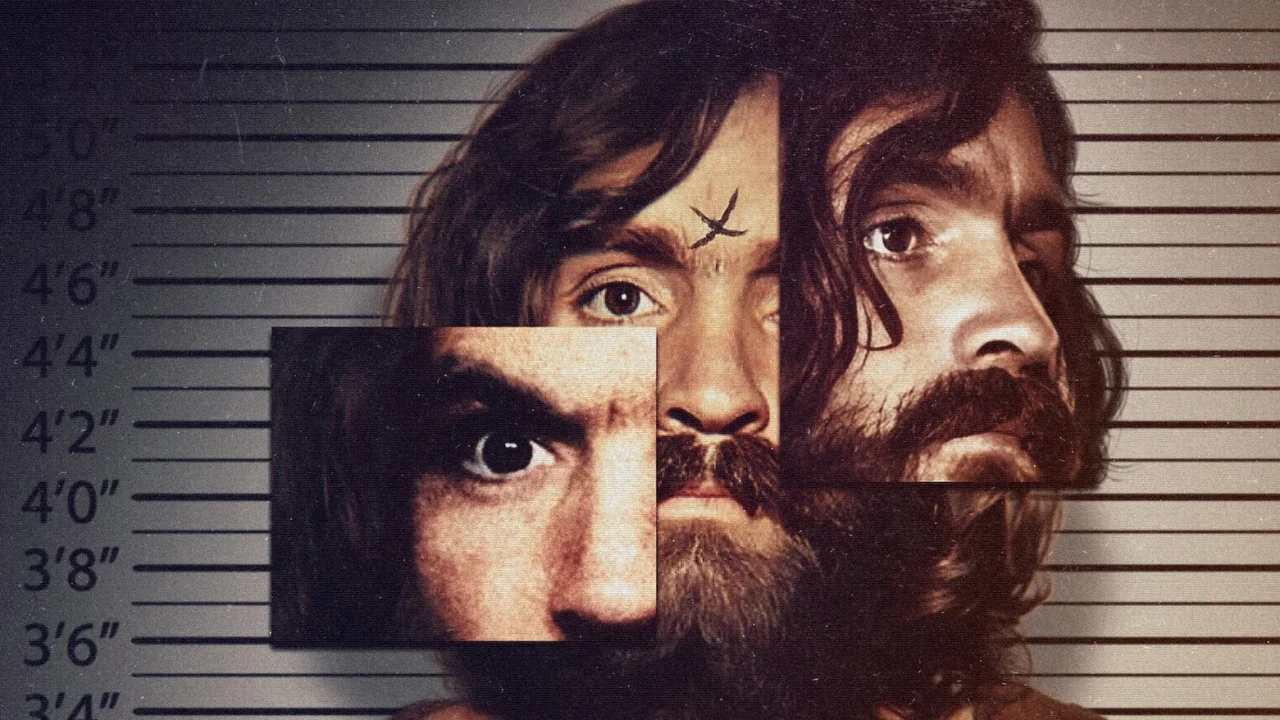
Despite being condemned to spend the rest of his life behind bars under consecutive life sentences, Charles Manson never truly faded into the background. For nearly half a century, he maintained an active presence through prison payphones, speaking to journalists, academic researchers, and anyone willing to record his voice. The surviving audio recordings are not confessions of guilt; instead, they serve as a chilling demonstration of his psychological machinery. In these recordings, listeners can hear his manipulative tactics in real-time: the circular arguments that dodge direct questions, sudden bursts of charm, veiled threats hidden in spiritual language, and his ability to steer the dialogue entirely on his own terms.
In the three-part Netflix docuseries Conversations with a Killer: The Charles Manson Tapes, director Joe Berlinger utilizes these historic audio logs to construct a compelling narrative. Having spent years refining this specific archival format, Berlinger hands the microphone back to Manson for one final examination. This series does not seek to rehash the details of the Tate-LaBianca murders, which are already thoroughly documented in American history. Instead, the project focuses on the unresolved question of the 1970 trial: how an ordinary, pint-sized career criminal managed to convince a group of middle-class young people to execute strangers on his command.
Deconstructing the Cult Leader’s Spell
By focusing on this core question, Berlinger adopts a methodical approach reminiscent of his early work on Paradise Lost. He relies heavily on historical archives rather than dramatized reenactments. The series largely avoids the sensationalized music and dramatic recreations common in modern streaming documentaries. Instead, the narrative is driven by the prison recordings themselves, complemented by interviews with individuals who experienced the tragedy firsthand. This includes former members of the Manson Family, as well as the detectives and prosecutors who worked to build a legal case against Manson’s psychological influence. The sense of unease in the documentary is generated purely by the audio from the prison telephone, rather than artificial jump scares.
"The tension in the documentary is generated purely by the audio from the prison telephone, rather than artificial jump scares."
These audio files reveal Manson’s persuasive techniques with a clarity that a standard narrator could not achieve. Audiences can observe his shifting tone, his ability to flatter and threaten simultaneously, and the way he reframed his own contradictions as a form of higher logic. When contrasted with the testimonies of his former followers—who now express deep regret and embarrassment over how they once viewed his rhetoric as spiritual liberation—the documentary becomes a clinical study of manipulation. It avoids sensationalizing a monster, choosing instead to systematically show how his psychological tricks were performed.
Manson as the Original True Crime Brand
What elevates this docuseries is its historical perspective on Manson’s legacy. The project frames him as the first American criminal to successfully transform his identity into a media brand. His sensational trial in the early 1970s marked the moment true crime transitioned into mainstream entertainment. Manson understood the power of the media, carving a swastika into his forehead for the cameras and realizing that theatrical behavior would grant him a permanent place in the public eye. Long before the true-crime genre became a multi-million dollar industry, Manson recognized that the media would keep the spotlight on him if he continued to put on a show. These tapes represent the legacy of that agreement—decades of a criminal feeding an audience hungry for sensationalism.
The Capstone of Berlinger’s Anthology
This thematic focus reveals the grand design of the director’s anthology. After examining other high-profile criminals in The Ted Bundy Tapes, The John Wayne Gacy Tapes, The Jeffrey Dahmer Tapes, and The Son of Sam Tapes, Berlinger purposefully concludes his true-crime cycle with Manson. This final placement serves as a comparative study, positioning the final chapter alongside the historical figure from whom the others seem to descend.
| Killer | Weaponized Strategy |
|---|---|
| Ted Bundy | Charm and social respectability |
| John Wayne Gacy | Civic involvement and normality |
| Jeffrey Dahmer | Isolation and quiet detachment |
| Son of Sam | City-wide terror and panic |
| Charles Manson | Media manipulation and collective control |
Manson predated and embodied aspects of all these figures, proving that a criminal could become a recurring character in American culture. Ending the anthology with him allows the series to trace the roots of the entire genre back to its modern origin point.
Confronting Complicity and Human Loneliness
This approach also forces the docuseries to examine its own role in the true-crime ecosystem. While the legal system punished Manson’s actions, it could not halt the public’s morbid curiosity. Manson’s voice continued to attract attention long after he was imprisoned, and a documentary built around his voice inevitably feeds the very public appetite it seeks to analyze. While many true-crime productions ignore this ethical dilemma, Berlinger allows this discomfort to remain prominent, acknowledging the inherent tension of the medium.
Underneath the main narrative lies a quieter study of the young people who carried out the violence. The interviews and tapes frequently return to the unsettling reality that the Manson Family was not composed of natural-born killers. Instead, it was made up of runaway youths and spiritual seekers who, in an era of social upheaval, found a sense of belonging in a leader who promised absolute certainty. The series does not excuse their actions, nor do the surviving family members ask for forgiveness. However, it emphasizes that the true horror lies in how easily Manson’s manipulative techniques can be recognized, closely resembling other modern systems that demand conformity in exchange for community.
A Refined and Restrained Conclusion
The success of the series relies heavily on its restraint. Berlinger avoids the common pitfall of letting Manson’s chaotic charisma dominate the film. The editing consistently redirects the focus back to the victims and the investigators who dealt with the aftermath, ensuring Manson’s voice does not control the narrative. This is a delicate balance, as the very footage used to expose his manipulation also perpetuates his infamy.
Despite the familiarity of the subject matter, the series offers fresh insights by incorporating previously unreleased recordings. These audio files cover the decades following the trial, documenting parole hearings that served as media performances, his ongoing fan mail, and the interviews he granted to maintain his public profile. Hearing these later tapes reframes Manson not as a relic of 1969, but as an early manipulator of the modern media landscape. This aspect of his life, often omitted from courtroom summaries, justifies the project’s existence, showing how the Manson brand outlived the crimes through calculated effort.
Ultimately, Conversations with a Killer: The Charles Manson Tapes serves as a detailed study of influence, media sensationalism, and the enduring nature of public obsession. It leaves the audience to consider whether retold narratives of this nature offer closure, or simply keep the cycle of fascination alive.