


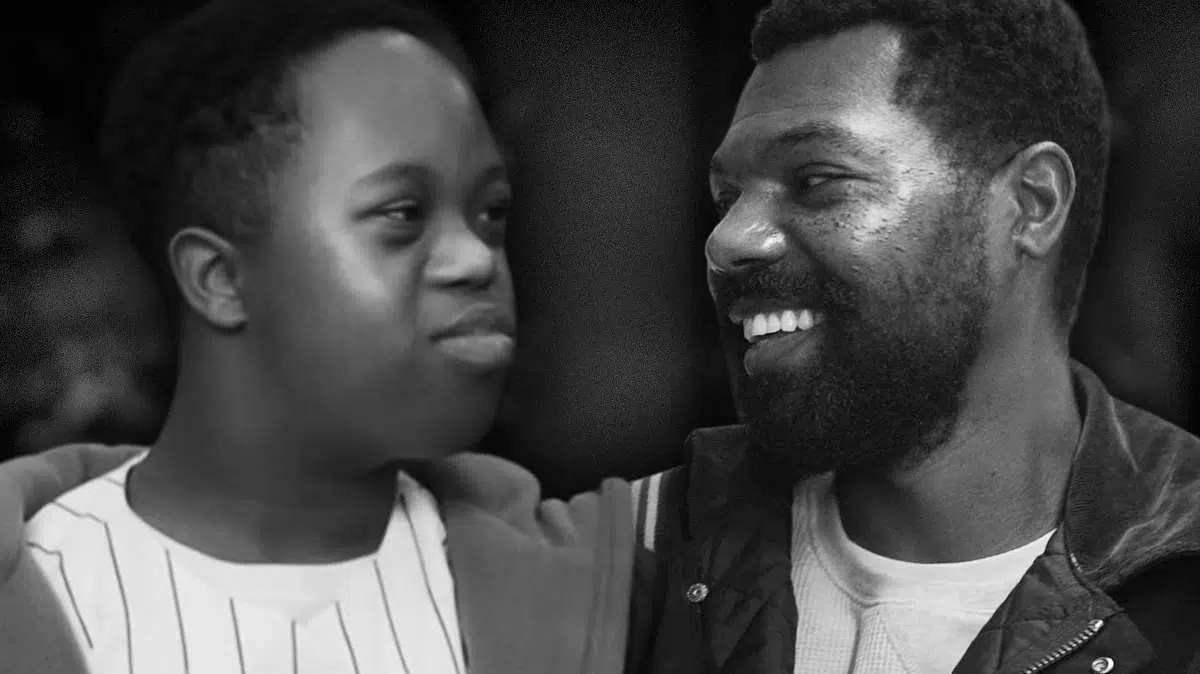
When a filmmaker wins a million‑dollar prize and the chance to bring a personal vision to the screen, the result can either feel forced or transform into pure cinema. For director David Fortune, that triumph manifested in Color Book, a striking black‑and‑white drama that landed on Netflix after winning a prestigious 2023 competition. This review explores why the film deserves a spot on every viewer’s watchlist, even though it says very little and shows everything in muted tones.
From the opening frame, the movie establishes a tone that is both restrained and emotionally resonant. The narrative unfolds over a single day, focusing on father Lucky and his son Mason, who has Down syndrome, as they embark on a simple yet profound outing: their first baseball game together. Despite its minimalist approach, the film resonates deeply, proving that storytelling does not require elaborate dialogue or flashy visuals to leave a lasting impression.
Synopsis
Color Book centers on Lucky (played by William Catlett) and his young son Mason (Jeremiah Alexander Daniels). The story opens with the pair grieving the recent loss of their mother—a loss that has reshaped their family dynamics and left both characters navigating grief in their own ways. The plot is deliberately narrow in scope, covering just one day as Mason insists on attending his inaugural baseball game, a request that forces Lucky to summon energy he barely possesses.
Throughout the day, Mason uses a coloring book as his primary means of expression, sketching memories, emotions, and moments that matter to him. This visual motif serves as both a narrative device and a metaphor for how individuals with limited verbal abilities can communicate through art. The film subtly weaves the father’s internal battle—balancing grief, fatigue, and the desire to give his son a memorable experience—against the backdrop of a bustling city and the excitement of a ballpark.
The pacing is deliberately slow, allowing each scene to breathe and the audience to absorb the weight of the characters’ emotional journeys. As the day progresses, the bond between Lucky and Mason deepens, illustrating how ordinary moments can become extraordinary when viewed through the lens of love and sacrifice.
Performances
William Catlett delivers a nuanced portrayal of a grieving father struggling to keep pace with his son’s aspirations. His performance captures the quiet determination and underlying vulnerability of a man who has been thrust into an unexpected parenting role. Catlett’s ability to convey emotion with minimal dialogue is commendable, making the audience feel every hesitation and every reassuring smile.
Jeremiah Alexander Daniels, a real‑life actor with Down syndrome, brings an authenticity that is both refreshing and heart‑warming. His portrayal of Mason is natural and unforced, demonstrating that casting actors who share the lived experience of the characters can elevate a film’s impact. Daniels’ expressive face and body language replace the need for extensive speech, allowing his character’s joy, curiosity, and occasional frustration to shine through.
The chemistry between Catlett and Daniels is palpable. Their interactions feel genuine, creating a sense of intimacy that draws viewers into their world. The duo’s ability to convey complex emotions without relying on verbose scripts underscores the strength of their performances and the effectiveness of restrained storytelling.
Behind the Lens
Director David Fortune’s vision for Color Book is evident in every frame. By choosing to shoot the entire film in black and white, Fortune creates a visual metaphor that mirrors the story’s themes of loss, memory, and simplicity. The monochromatic palette forces the audience to focus on character dynamics rather than distracting color cues, enhancing the film’s contemplative atmosphere.
Fortune’s direction is patient, allowing scenes to unfold organically. He understands that characters, especially those dealing with grief or disability, require space to exist authentically on screen. This approach results in a narrative that feels lived‑in, rather than staged for dramatic effect. The director’s decision to anchor the story in a single day also emphasizes the universality of everyday challenges faced by parents and caregivers.
The cinematography complements the narrative, with thoughtful framing that highlights both the vastness of the baseball stadium and the intimacy of quiet moments between father and son. The camera work is unobtrusive, yet it captures subtle gestures—a reassuring hand on a shoulder, a fleeting smile—that speak volumes.
Fortune also weaves in cultural nuance, integrating elements of Black American experiences and values without resorting to stereotypes. The film’s soundtrack, though minimal, provides emotional cues that reinforce the story’s pacing and tone.
Final Verdict
Color Book is a testament to the power of restrained cinema. While it may not reinvent the wheel in terms of narrative complexity, its strength lies in its honest portrayal of parenting, grief, and the quiet moments that define familial love. The film’s black‑and‑white aesthetic, far from being a gimmicky artistic choice, enhances its emotional resonance and underscores the universality of its themes.
The performances by Catlett and Daniels are outstanding, proving that authentic representation can elevate storytelling. Their ability to convey deep emotion with limited dialogue is a rare feat, making Color Book a standout in the realm of indie dramas.
Pacing could be a concern for viewers expecting fast‑paced action, but the film’s deliberate rhythm serves its narrative purpose. Every scene feels purposeful, and there is no moment that overstays its welcome.
In conclusion, Color Book is a moving, thought‑provoking drama that deserves recognition. It invites viewers to look beyond the surface and appreciate the beauty of simple, heartfelt storytelling. For anyone seeking a film that combines authentic representation, strong performances, and thoughtful direction, Color Book is a must‑watch.