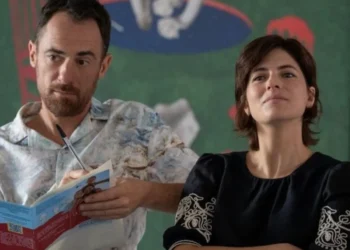



Collision Course—the latest addition to Netflix’s growing catalogue of international thrillers—delivers a bold narrative experiment that challenges conventional linear storytelling. Directed by Daniel Sánchez Arévalo and co‑written with Ramón Campos, the film blends tension‑filled heist action with a fragmented structure that forces viewers to piece together cause and effect across parallel possibilities. For fans of smart, character‑driven mysteries, Collision Course offers plenty to dissect while still demanding a willingness to sit with ambiguity. Below is a comprehensive look at what works, what stumbles, and whether the experience merits your time.
Synopsis
When four strangers converge on a Madrid bank with a shared objective—to crack vault 34 and walk away with a cache of diamonds—their plan quickly spirals beyond a simple robbery. Instead of a single outcome, the story splinters into several alternate trajectories, each showing how the loss of one participant reshapes the lives of the remaining trio. The shifting scenarios explore themes of loyalty, desperation, and the ripple effects of split‑second decisions, all while maintaining a core mystery about why the heist was undertaken in the first place.
Performances
Álvaro Cervantes anchors the ensemble as Raúl, delivering a restrained intensity that hints at both vulnerability and concealed resolve. Karra Elejalde brings a gritty pragmatism to Pedro, making his moments of moral conflict feel earned. Tamar Novas portrays Tomás with a restless energy that oscillates between hope and recklessness, while Laia Costa’s Carla injects a sharp, almost feral determination that keeps the group’s dynamics volatile.
Supporting turns from Luis Zahera as the beleaguered bank manager Ernesto and the enigmatic investigator add layers of intrigue without overshadowing the central quartet. Collectively, the cast navigates the film’s shifting timelines with convincing nuance, allowing each alternate path to feel distinct yet rooted in the same emotional core.
Behind the Lens
Director Daniel Sánchez Arévalo opts for a deliberately fractured editing style, juxtaposing the divergent outcomes through visual motifs—subtle shifts in colour grading, recurring sound cues, and purposeful camera angles—that signal when the narrative has branched. Cinematography favors tight, claustrophobic interiors during the bank sequence, expanding to wider, more isolated frames as the characters disperse, visually echoing their internal isolation.
The score, minimal yet pulsating, underscores tension without dictating emotion, letting the audience draw conclusions from the characters’ choices alone. The screenplay’s decision to present multiple “what‑if” strands rather than a traditional time‑loop mechanic feels fresh; it invites viewers to treat each branch as a stand‑alone vignette while still sensing an underlying unity.
Final Verdict
Collision Course succeeds as an intriguing exercise in narrative form, offering a cerebral puzzle that rewards attentive viewing. Its strengths lie in the solid performances, inventive structural approach, and the compelling subplot involving the female police officer—a highlight that adds depth and emotional resonance. However, the film falters when it comes to fleshing out the protagonists’ motivations; the socioeconomic backdrop feels under‑explored, leaving some character drives feeling schematic rather than wholly sympathetic. Unanswered questions about secondary characters occasionally distract from the main thrust, and the desire for a darker, more conclusive ending lingers.
Overall, if you appreciate thrillers that challenge you to think about cause, consequence, and perspective—and you don’t mind a few loose ends—Collision Course is worth a watch. For those seeking tightly wound plots with exhaustive backstories, the experience may feel somewhat unsatisfying.