

Imagine a musical titan who blends the avant-garde edge of Gaga with the chart-topping charisma of Madonna. She is a figure of worship, a creator of anthems, and an icon whose aesthetic is as much a part of her religion as her melodies. This is the world of the titular character in Mother Mary, the latest feature from director David Lowery. Known for his atmospheric and deeply personal storytelling in films like A Ghost Story and The Green Knight, Lowery takes the high-glitz world of stadium pop and deconstructs it into a surreal, feverish nightmare. This is not your standard rags-to-riches musician biopic; it is a dense, psychological exploration of ego, betrayal, and the supernatural.
Story
The narrative finds global sensation Mary, played by Anne Hathaway, at a precarious crossroads. After a public meltdown during a concert goes viral, the singer is desperate for a reset. Her path to redemption leads her to the remote English countryside and the doorstep of Sam Anselm, portrayed by Michaela Coel. Years ago, Sam was the architect of Mary’s visual identity, but a bitter professional divorce left Sam heartbroken and isolated. Now, Mary needs a miracle in the form of a comeback gown for a high-stakes performance. Sam agrees, but her intentions are far from altruistic. She begins crafting a stage outfit that serves as a physical manifestation of her resentment—a hate dress. As the two women inhabit the same creative space, the film transitions from a biting fashion drama into something much more sinister, involving shared visions of a mysterious Red Woman and a literal struggle for Mary’s soul.
Performances
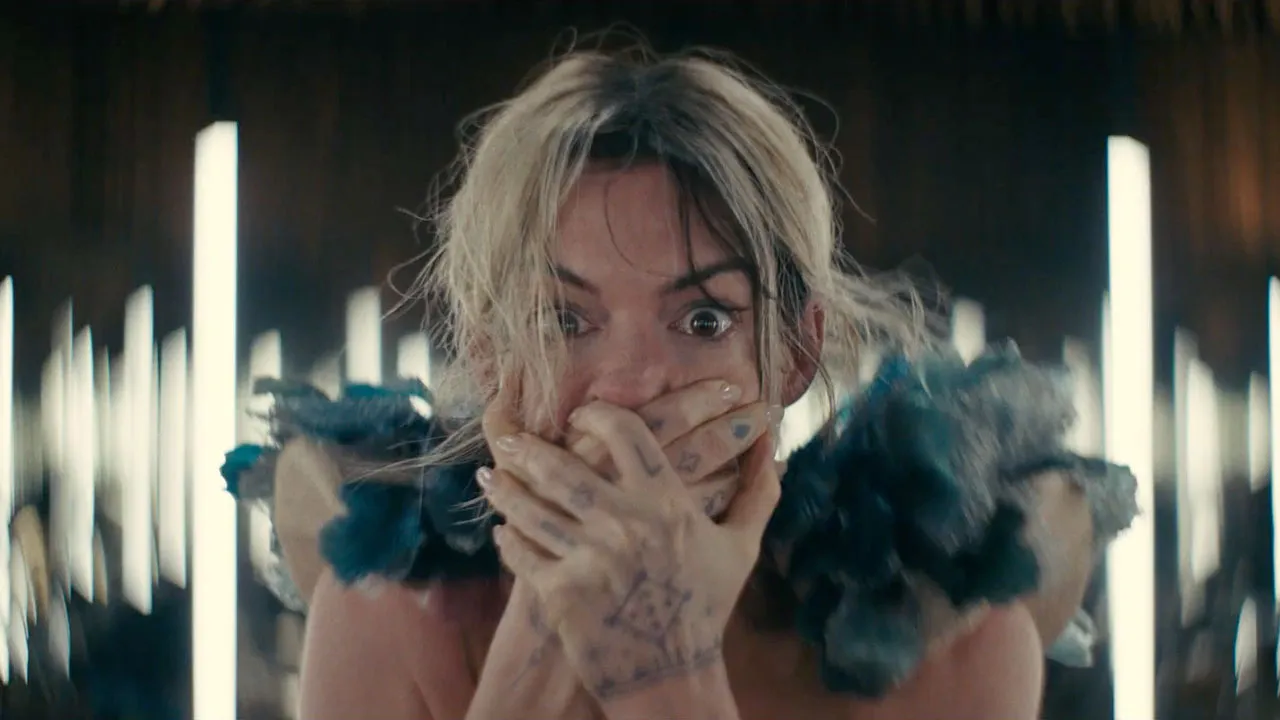
The chemistry between the two leads is the engine that drives the film’s tension. Michaela Coel is a force of nature as Sam, delivering dialogue that is simultaneously sophisticated and lethal. She portrays a woman whose creative genius is inseparable from her grudge, utilizing passive-aggressive barbs that hit like physical blows. Opposite her, Anne Hathaway delivers a remarkably vulnerable and kinetic performance. She captures the frantic energy of a star who is losing her grip on reality, most notably in a sequence where she must perform a wordless dance to a song she is forbidden from singing. The supporting cast, including Hunter Schafer and Kaia Gerber, adds layers to the chaotic celebrity entourage, while FKA Twigs appears in a pivotal, haunting role that bridges the gap between the music world and the occult.
Behind the Lens
Lowery avoids the campy tropes often associated with diva-centric dramas. Instead, he leans into a Giallo-inspired aesthetic that prioritizes mood and dread. The technical craftsmanship is top-tier, particularly the work of costume designer Bina Daigeler, whose creations are central to the plot. The auditory landscape is equally haunting, featuring original tracks written by Jack Antonoff, Charli XCX, and FKA Twigs. Songs such as “Spooky Action” do not sound like radio hits; they sound like distorted transmissions from a haunted dance floor. Lowery utilizes the barn-turned-studio setting to create a claustrophobic atmosphere, eventually pushing the film into a hallucinatory final act that challenges the audience’s perception of what is real.
Final Verdict
Mother Mary is a challenging, gorgeous, and intentionally eccentric piece of cinema. It is a film that demands a leap of faith from its audience, moving away from traditional narrative structures toward something more primal and expressionistic. While it may be too abstract for those seeking a straightforward pop-star chronicle, it is a rewarding experience for viewers who appreciate the intersection of high fashion and psychological horror. It captures the transcendent, almost religious high of a great pop anthem and pairs it with the crushing weight of public expectation. By the time the credits roll, you realize you haven’t just watched a movie; you have survived a beautiful, terrifying exorcism of the celebrity machine.