

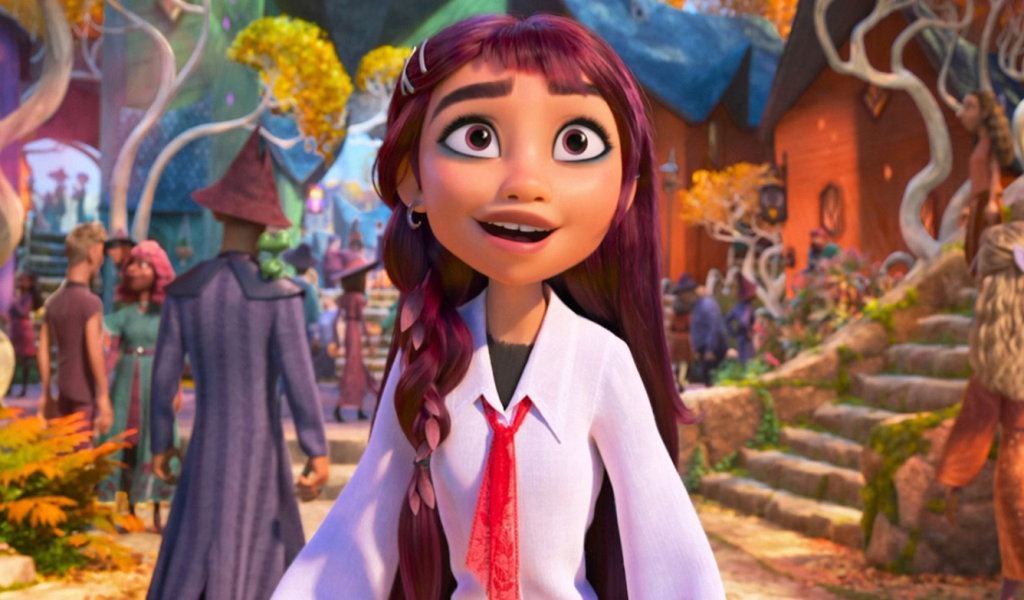
Hexed creates a warm, honeyed glow of old-school Disney charm while threading in contemporary energy and a few bold, new ideas. It feels like a love letter to the studio’s storied past—an animated journey that doesn’t pretend to reinvent the wheel, but excels at polishing its familiar gears into something brisk, bright, and entertaining. With a glittering voice cast led by Hailee Steinfeld and a roster that includes Jodie Foster, Walton Goggins, Rashida Jones, Stephen Fry, and Dan Stevens, the film crafts a vivid portal to a realm where witches, wizards, and whimsy intermingle with the trials of adolescence. The result is a commendable balance of enchantment, humor, heart, and spectacle that will likely delight families while offering enough sophistication to satisfy older viewers.
Synopsis
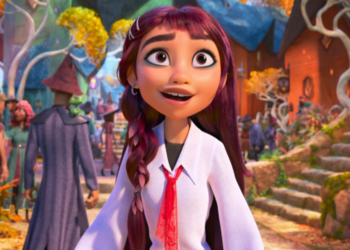
Billie Doe, a creatively inclined teenager with a stubborn streak, discovers she has latent magical abilities. A surge of power pulls her, along with her mother, Alice, into Hexe, a secluded world inhabited by witches, wizards, and a mosaic of fantastical creatures. As Billie grapples with her new gifts, she and Alice must navigate perilous politics, hidden histories, and a looming threat to the realm’s fragile balance. Guided by Beef Roger Crummchuk—a peculiar three-eyed creature who provides comic relief and occasional wisdom—the pair confront Queen Celeste, a formidable tyrant who wields power with a gloved, theatrical hand. The story threads a classic coming-of-age arc with a high-stakes fantasy plot, delivering a journey that tests family bonds, trust, and the courage to own one’s identity. The adventure culminates in a resonant moment of growth for Billie and a deeper understanding between mother and daughter, all within a world that feels both wondrously strange and warmly, humanly relatable.
Characters
- Billie Doe emerges as a flawed but fascinating protagonist. She embodies the delightful imperfections of adolescence—impulsiveness, bravado, and a fierce sense of independence that can lead her into trouble as readily as it sparks growth. This isn’t a perfectly polished heroine; she’s a believable teen who often learns by trial, error, and the messy, unglamorous process of maturing. Her relationship with her mother, Alice, anchors the story in emotional truth. Billie’s evolving sense of self doesn’t happen in a vacuum; it’s tethered to a family dynamic that is on the cusp of transformation, making her victories feel earned and her missteps feel human rather than scripted.
- Alice represents the film’s emotional backbone. Her bond with Billie is grounded in care, fear, and a respectful willingness to let her daughter chart her own course—while being ready to intervene when necessary. Alice’s own vulnerabilities surface gradually, enriching the narrative with a mature perspective on parenting, courage, and the complexity of letting go without abandoning one’s child to danger.
- Beef Roger Crummchuk steals many scenes with a distinctive personality that is equal parts mischief and wisdom. This three-eyed, cat-like creature delivers a steady stream of offbeat humor, but also punctures through with surprising hints of deeper, protective instinct. Walton Goggins embraces the oddball role with a performance that is equal parts Southern charm and sly menace, ensuring Beef remains both endearing and memorable long after the first laugh.
- Queen Celeste, voiced with aristocratic menace by Jodie Foster, is a villain who relishes her own authority and the theater of power. Her presence looms large, aligning menace with glamour in a way that befits Disney’s tradition of larger-than-life antagonists. Foster’s portrayal lands a confident blend of charisma and threat, never tipping into caricature while keeping Celeste firmly on the audience’s radar as a credible obstacle.
- The supporting ensemble—Rashida Jones as Alice’s counterpoint, Stephen Fry as a wry guide through Hexe, and Dan Stevens contributing a refined edge—enriches the texture of the world. Their performances provide the film with a measured maturity that balances the whimsy with a more grounded emotional through-line, ensuring the story isn’t all spectacle but a well-rounded adventure with real stakes.
Behind the Scenes
The movie’s tonal blend is evident from the outset. It has the warmth and innocence of classic family fantasies, tempered by a sharper, wittier sensibility that modern audiences expect from a starry ensemble. The visual design leans into the hand-drawn lineage that Disney fans cherish, while the world-building embraces vivid color palettes and a gravity-defying sense of wonder. This is a film that understands the magic of its own setting, Hexe, a realm where lore is not merely decorative but foundational—to its rules, its conflicts, and its daily routines. The result is a work that feels both timeless and timely, a quality that helps Hexed stand out without jarring against Disney’s broader catalog.
Hexed stands out for leveraging a design philosophy that leans into traditional animation cues while embracing modern production values. The decision to foreground hand-drawn-inspired animation creates a tactile sense of artistry that makes Hexe feel like a living, breathing manuscript rather than a purely synthetic fantasy. The textures, line work, and subtle quirks in character movement give the realm a distinct personality, inviting viewers to linger on the screen and soak in the world’s quirks and rules. This stylistic choice also serves to elevate the film’s magical logic, allowing spellcasting and creature design to feel intentional and cohesive rather than arbitrary flourishes.
The film also benefits from a score that threads musical mood with narrative tempo. While Hexed contains pop songs woven into its fabric, these selections never overwhelm the story; instead, they act as sonic punctuation that punctuates character moments and magical breakthroughs. The occasional pull of familiar tracks can feel uneven—some choices integrate well with the emotional cadence of a scene, while others land less effectively, tugging audiences out of immersion momentarily. The balance between original scoring and established songs is delicate, and Hexed generally finds the right cadence, leaning into the right moments to heighten wonder without tipping into jingle-like distraction.
Casting remains a critical engine of Hexed’s appeal. Hailee Steinfeld brings a bright, impulsive energy to Billie, infusing the character with a fearless curiosity that invites audiences to root for her growth from the inside out. Her performance forms the emotional throughline of the story, guiding viewers through the realm’s wonders and perils with a believable blend of enthusiasm and vulnerability. Foster’s Celeste and Goggins’s Beef provide counterweights—one a regal, intimidating force, the other a chaotic, endearing catalyst—that keep the tonal scales in check and ensure the film maintains momentum even during slower, character-focused passages.
In terms of script and pacing, Hexed occasionally indulges in familiar beats that feel both comforting and a touch predictable. Some plot turns come a touch too easily, and a handful of resolutions rely on well-trodden mechanics rather than earned character development. Yet the writing demonstrates a confident sense of rhythm as the second half unfolds, gathering emotional threads and fantastical beats into a more cohesive, satisfying whole. The screenplay’s greatest strength lies in its heart—the dynamic between Billie and Alice is treated with honesty, warmth, and a willingness to let the family bond evolve in the face of extraordinary circumstance.
Behind the camera, the production team demonstrates a clear affection for Disney’s long tradition of fantasy adventures while pushing outward with a few fresh, personal flourishes. The world-building effort is thorough, with Hexe anchored by its own mythology, politics, and social structures. The result is a realm that feels lived-in, where magical rules have consequences and every creature has a backstory worth teasing out. The film’s visually rich design, combined with a smart, character-driven script, positions Hexed as a film that’s both comforting in its familiarity and intriguing enough to reward repeat viewings.
Final Verdict
Hexed is not trying to reinvent the wheel; it’s here to remind audiences why these magical journeys have endured in the first place. It taps into the same well of wonder that defined beloved classics, while layering in contemporary sensibilities that make the experience feel relevant to today’s moviegoers. The film’s dialogue, imagery, and situation-comedies—balanced against higher-stakes fantasy plotlines—capture a vitality that makes the experience feel both intimate and expansive.
The strongest moments are anchored in character: the quiet, heartfelt exchanges between Billie and Alice provide emotional ballast for the more dazzling, high-energy set pieces. Walton Goggins’s Beef is a scene-stealer in the best possible sense, enlivening even the film’s slower lulls with a blend of charm and mischief that never feels gimmicky. Foster’s Celeste, meanwhile, is a robust villain whose presence is felt even in the gaps between scenes, a reminder that power dynamics can be as gripping as any chase or spell-casting sequence.
There are a few missteps worth noting. The soundtrack’s reliance on well-known pop tracks, while entertaining in the moment, often distracts from the story’s emotional core or the magical world’s own rules. Billie’s choices can feel impulsive to a fault, occasionally testing the audience’s patience as the plot moves forward. And a handful of resolutions feel comfortably familiar, as if the film is leaning on established clichés rather than pushing its own narrative boundaries. These are not fatal flaws, but they do dampen the film’s momentum at select intervals and remind viewers that Hexed occasionally sacrifices originality for the pleasure of nostalgia.
Despite these hiccups, Hexed grows more assured as it progresses. The latter portions knit together the competing strands of its fantasy scaffolding—character arcs, family dynamics, and the sprawling spectacle of Hexe—into a more cohesive and emotionally satisfying arc. The film’s core promise—to explore how a family negotiates change while supporting a young person stepping into her identity—lands with a sincerity that resonates. The vivid visuals, engaging characters, and a finale that blends wonder with warmth contribute to a sense of Disney magic that feels authentic rather than contrived. This is not the studio’s most groundbreaking outing, but it stands as a confident, well-crafted entry in the enchanted canon that honors its roots while confidently offering a few new facets of its own.
In summary, Hexed is a welcome addition to Disney’s animated lineup. It celebrates the familiar pleasures of fantasy adventures—friendship, courage, and the discovery of one’s place in a larger world—while introducing fresh textures that keep the experience lively and engaging. It may not ascend to the legendary heights of The Lion King, Frozen, or Zootopia, but it proves that Disney remains a master of family animation, capable of delivering enchantment without abandoning the emotional honesty that has long defined its best work. For viewers seeking a bright, character-driven journey that blends nostalgia with new ideas, Hexed offers a satisfying, heartwarming, and visually appealing ride.
The film opens in theaters on Wednesday, November 25, backed by Disney’s enduring faith in animated storytelling.