

French television continues to push boundaries in the realm of genre-blending storytelling, and The Sentinels stands as a prime example of this ambitious approach. This eight-episode series weaves together World War I drama, superhero mythology, espionage thrillers, and industrial gothic aesthetics into a compelling narrative that challenges viewers to consider the true price of survival on the battlefield. Adapted from graphic novels by Xavier Dorison and Enrique Breccia, the series emerges as a thought-provoking exploration of bodily autonomy, state control, and the transformation of humanity into weaponry.
Created by Guillaume Lemans and Xabi Molia, The Sentinels delivers a grim meditation on how military institutions reshape individuals for purposes that extend far beyond conventional warfare. The series premiered as a French production that demands attention from audiences interested in mature, morally complex television that refuses to offer easy answers.
Synopsis
The Sentinels follows Gabriel Ferraud, a French infantryman severely wounded after stepping on a landmine during World War I. Pulled from the mud by military operatives, Gabriel becomes the subject of a classified research program led by Colonel Mirreau. The experimental serum called Dyxénal repairs damaged tissue and enhances physical capabilities, transforming dying soldiers into powerful super-soldiers. However, the treatment comes with devastating consequences: seizures, mental instability, and complete dependence on continued doses.
Gabriel finds himself caught in a web of espionage, illegal weapon development, and psychological warfare. The state grants him survival only through surrendering ownership of his body, creating a system where obedience is literally injected into his bloodstream. While Gabriel undergoes this transformation, his wife Irène searches for answers about his disappearance, refusing to accept the official story of his death. Meanwhile, in Paris, a separate storyline introduces mysterious figures including The Baron and a psychic medium named Gisèle, adding layers of conspiracy that extend far beyond the trenches.
Performances
Louis Peres delivers a grounded portrayal of Gabriel Ferraud, deliberately resisting the posture of a conventional superhero. During his initial training sequences, Peres movements reflect tense caution, as if testing each burst of enhanced strength belongs to someone else entirely. His guarded expressions when fellow Sentinels explain that losing control is normal transforms the transformation into something frighteningly practical rather than heroic. This restrained approach makes Gabriel’s journey deeply human and troubling.
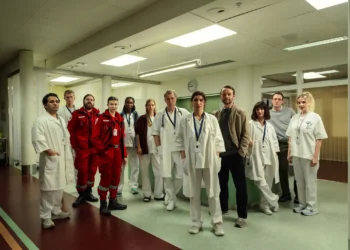
Thibaut Evrard brings blunt authority to Djibouti, establishing him as the unit’s natural center. The ensemble cast including De Clermont and Armand effectively portrays men attempting to normalize terror through routine barracks exchanges. Pauline Étienne offers sharper tension as Marthe, the scientist monitoring Gabriel’s mutations. Her restrained reactions to his seizures reveal genuine concern before any dialogue acknowledges it, and her eventual ethical dilemma regarding experimentation on condemned women places the series’ moral arguments within concrete, disturbing choices.
Olivia Ross provides the strongest material outside the laboratory as Irène, avoiding large emotional displays while letting persistence communicate profound grief. Her investigation into military records and contradictions within Mirreau’s account provides a civilian perspective that reminds audiences Gabriel’s disappearance affects far more than just the front lines.
Behind the Lens
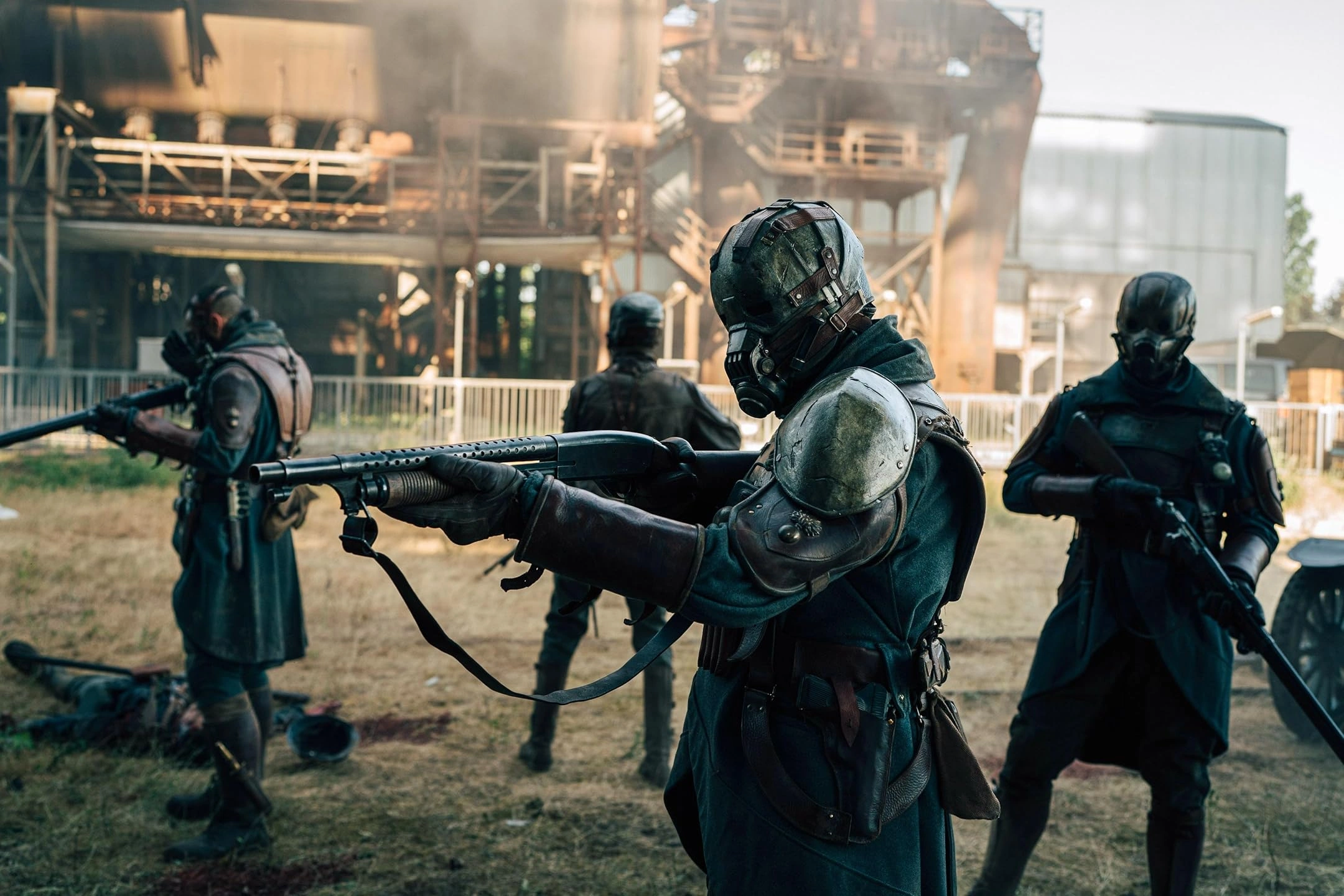
Thierry Poiraud’s direction creates an atmosphere of suffocating industrial decay through production design that emphasizes muddy trenches, narrow corridors, and dim laboratories where machinery appears to consume every available space. The Sentinels‘ heavy armor and exposed mechanisms project a handmade, dangerous aesthetic that suggests equipment built by people who fully expect it to fail, possibly while someone remains inside.
Thomas Couzinier and Frédéric Kooshmanian’s musical score combines orchestral weight with metallic percussion and synthetic pulses, creating an audio landscape where acoustic sounds represent the period while electronic textures suggest a forced future. The score at its best makes Gabriel’s altered body sound like machinery under severe strain, though at its loudest moments, it threatens to flatten dialogue and emotional nuance.
The action cinematography works most effectively when cameras remain close to bodies, particularly during the laboratory assault where tight framing and abrupt edits make enhanced strength feel brutal rather than graceful. Later battlefield sequences lose clarity when gunfire, slow motion, and impact shots dominate, resembling video game cinematics where spectacle replaces tactical information.
Final Verdict
The Sentinels transforms its super-soldier premise into a grim study of bodies claimed by war. Gabriel’s seizures, Marthe’s experiments, and Irène’s search provide the spectacle with human pulse, while muddy trenches, metallic score, and brutal laboratory sequences sell its industrial-gothic world effectively. The season weakens when multiple storylines including Project Atlas, Gisèle’s psychic abilities, the Paris underworld, and the German enhanced soldier compete for limited narrative space.
The production achieves its most profound impact when examining how military institutions justify abuse in pursuit of victory. The brutal final scene denies Gabriel an easy reunion and transforms survival into another form of imprisonment. The war may conclude, but his dosage never will. Despite narrative congestion in its later episodes, the series’ craft and moral tension carry it through, offering viewers a mature examination of sacrifice, control, and the dehumanizing machinery of modern warfare.
The Sentinels is now streaming on Lionsgate Play (India), Canal+ VOD platform in France and through Studiocanal in other countries.