


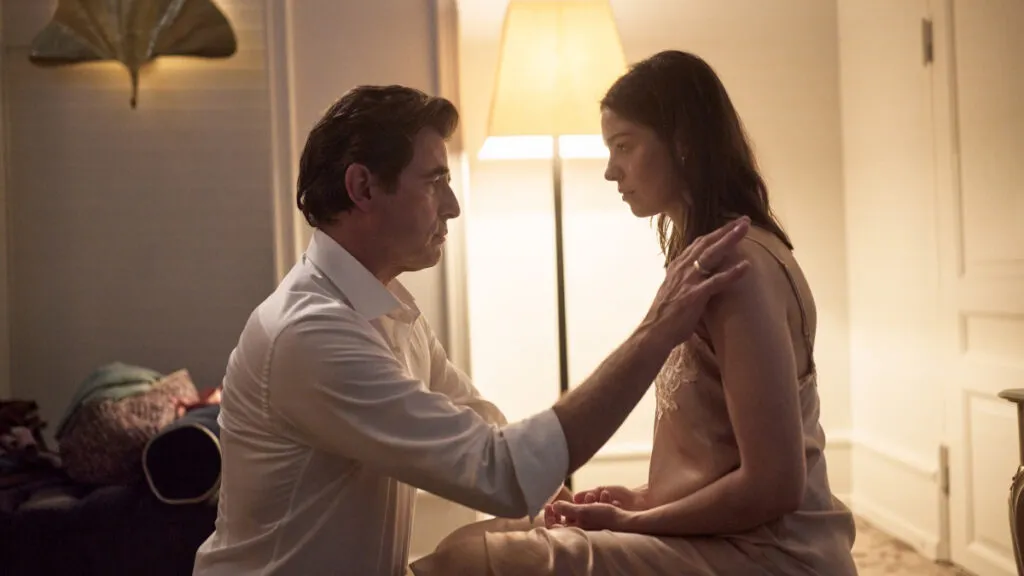
Netflix’s latest Scandinavian offering, The Secret Woman, arrives with a premise that feels tailor‑made for a psychological puzzle: a woman living a seemingly perfect life on a remote Norwegian island is confronted with the shocking claim that she is actually a missing Danish citizen with a husband and child she cannot recall. Directed by Barbara Topsøe‑Rothenborg and adapted from Anna Ekberg’s novel, the film promises a deep dive into questions of self, memory, and the malleability of identity. While the concept sparkles, the execution often leans on plot‑convenient revelations that dilute the tension. This review unpacks what works, what falters, and whether the movie ultimately satisfies fans of the genre.
Synopsis
Louise Andersen enjoys a tranquil existence running a café on Hidra island alongside her boyfriend, Joachim. Her world shatters when a stranger insists she is Helene Söderberg—a Danish woman who vanished years ago. A DNA test confirms the claim, thrusting Louise into a past she cannot remember, complete with a husband named Edmund and a son called Alexander. Determined to uncover why she abandoned that life, she travels to Denmark, where fragmented memories and family secrets begin to surface. The narrative follows Louise’s quest to reconcile two selves while navigating a web of suspicion, manipulation, and looming danger.
Performances
Natalie Madueño carries the film with a nuanced portrayal of Louise/Helene. She conveys vulnerability and determination in equal measure, making the character’s internal conflict palpable. Her chemistry with Pål Sverre Hagen’s Joachim feels genuine, providing an emotional anchor amid the unfolding mystery.
Claes Bang steps into the role of Edmund, the enigmatic husband whose motives remain murky. Bang’s natural intensity lends an undercurrent of menace, though the script limits his complexity, reducing him to a fairly predictable antagonist. Stina Ekblad as Caroline, Edmund’s mother, adds a gothic flavor that occasionally verges on caricature, while Ingrid Bolsø Berdal’s Iben Rask and Lars Simonsen’s Aksel Söderberg fill out the supporting cast without leaving a lasting imprint.
Overall, the ensemble delivers competent performances, but only Madueño truly elevates the material beyond its schematic constraints.
Behind the Lens
Director Barbara Topsøe‑Rothenborg adopts a restrained visual style, favoring muted palettes and lingering close‑ups that mirror Louise’s disorientation. The cinematography captures the stark beauty of the Norwegian archipelago and the claustrophobic interiors of the Söderberg estate, effectively contrasting Louise’s two worlds.
The screenplay, co‑written by Anders August, attempts to weave a layered mystery but frequently leans on exposition that feels timed to the plot’s convenience. Key revelations surface precisely when needed, undermining the sense of organic discovery. The pacing suffers in the middle act, where lengthy investigative sequences linger without adding fresh insight, making the near‑two‑hour runtime feel overextended.
Sound design and score are subtle, underscoring moments of unease without overwhelming the narrative. While the film hints at a deeper commentary on human trafficking—a potentially rich thematic vein—it never fully explores the issue, leaving it as a backdrop rather than a driving force.
Final Verdict
The Secret Woman begins with an irresistible hook: what happens when the world knows who you are, but you no longer recognize yourself? Natalie Madueño’s compelling performance keeps that question alive, and the film’s atmospheric setting adds a layer of intrigue. However, the reliance on convenient plot devices, underdeveloped antagonists, and a missed opportunity to delve into its darker thematic potentials prevent the thriller from reaching its full promise.
For viewers who appreciate character‑driven mysteries anchored by a strong lead, the movie offers enough merit to warrant a watch. Those seeking a tightly wound, unpredictable psychological puzzle may find the resolution too tidy and the twists overly telegraphed. In short, The Secret Woman is a promising identity drama that falters in execution—worth a glance, but not a must‑see addition to the genre.