

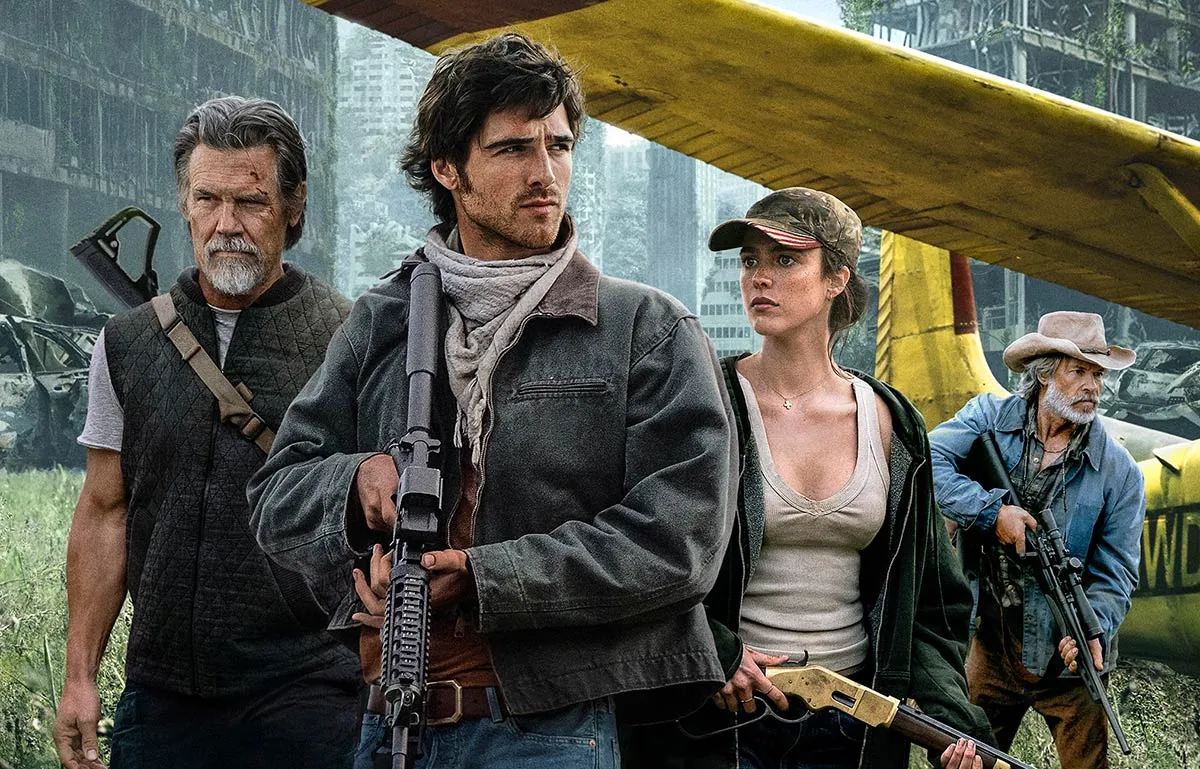
Ridley Scott returns to the director’s chair with The Dog Stars, a post‑apocalyptic sci‑fi drama that premiered in theatres on August 28, 2026. Adapted by Mark L. Smith from Peter Heller’s 2012 novel, the film transports viewers to 2035, a world still reeling from a lethal influenza outbreak. Starring Jacob Elordi as the solitary Hig, Josh Brolin as the paranoid veteran Bangley, and featuring supporting turns from Guy Pearce, Margaret Qualley, and Allison Janney, the picture blends stark visual storytelling with a philosophical inquiry into trust, isolation, and what it means to truly live after civilization collapses.
Synopsis
In the wake of a devastating pandemic, Hig ekes out a precarious existence on an abandoned Colorado airfield alongside his loyal dog Jasper and the heavily armed Bangley. While Bangley champions extreme isolation and constant vigilance as the only viable survival tactics, Hig clings to the belief that human connection and compassion remain essential. Their opposing worldviews are tested when Jasper’s death pushes Hig to follow a mysterious radio signal, leading him to a remote ranch inhabited by Pops and his resilient daughter Cima. As Hig and Cima forge a bond rooted in shared loss, the narrative escalates toward a confrontation with a ruthless raider faction known as the Reapers. Throughout, the film asks how much safety one must sacrifice in a shattered world before mere survival evolves back into genuine living.
Performances
Jacob Elordi delivers a nuanced portrayal of Hig, balancing quiet vulnerability with a steely resolve that keeps the audience invested in his internal tug‑of‑war. Josh Brolin’s Bangley is a study in restrained intensity; his paranoia feels both justified and unsettling, providing a compelling counterpoint to Elordi’s earnestness. Guy Pearce brings a weathered gravitas to Pops, while Margaret Qualley shines as Cima, imbuing her character with a resilient warmth that avoids falling into cliché. Allison Janney’s Darlene adds an eerie layer of manufactured nostalgia, embodying the film’s critique of societies that trade freedom for the illusion of order. Even the canine companion Jasper, though non‑verbal, leaves a palpable emotional imprint that drives Hig’s subsequent choices.
Behind the Lens
Visually, Erik Messerschmidt’s cinematography captures the desolate beauty of the American West—wide‑open skies, overgrown runways, and rust‑streaked aircraft—reinforcing the sense of a world abandoned by technology. Harry Gregson‑Williams’ folk‑tinged score underscores the film’s melancholic tone, swelling during flight sequences and receding during intimate moments. Ridley Scott’s signature attention to practical detail is evident in the meticulously designed airfield set and the lived‑in feel of the ranch, grounding the speculative elements in tangible reality. While some visual effects falter in tighter action beats, the overall aesthetic remains cohesive, allowing the narrative’s ethical questions to resonate without distraction.
Final Verdict
The Dog Stars succeeds as a meditation on survival ethics rather than a conventional action romp. Its strengths lie in the lead performances, atmospheric world‑building, and Scott’s sincere exploration of what it means to retain humanity amid barricades. The film stumbles occasionally with underdeveloped relationships, a rushed middle act, and antagonists that veer toward caricature, which unintentionally bolsters Bangley’s paranoid worldview. Nevertheless, the film leaves viewers contemplating a pressing dilemma: how much of our compassion are we willing to relinquish for safety, and at what point does survival cease to be living? For audiences seeking a thought‑provoking, visually striking sci‑fi drama, The Dog Stars is a worthwhile watch—flawed but fundamentally humane.