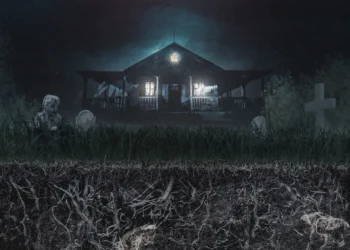



When director Lee Eung‑bok stepped away from the sweeping romance of Descendants of the Sun and the mythic grandeur of Goblin, he chose an unexpected arena for his next project: a cramped apartment complex teeming with monsters. The result, Sweet Home, premiered on Netflix in December 2020 and quickly grew from a 10‑episode confined thriller into a three‑season saga that concluded in July 2024. This article traces the series’ evolution, highlights its cast, and examines why it stands out among the platform’s Korean‑language offerings.
Sweet Home at a Glance
- Premiere Date: December 18 2020 (Season 1)
- Total Episodes: 26 across three seasons (10 + 8 + 8)
- Platform: Netflix (global streaming)
- Original Source: Popular Korean webtoon by Carnby Kim and Hwang Young‑chan (2017‑2020)
The show instantly captured attention by turning the mundane setting of Green Home Apartments into a hotbed of terror, where residents transform into grotesque creatures. What began as an intimate horror story later broadened its scope to include neohumans and larger societal conflicts, giving the series a runtime arc rarely seen in streaming dramas.
Plot Overview: Survival Inside Green Home
The narrative centers on Cha Hyun‑su, a reclusive teen who relocates to Green Home after a personal tragedy. His initial isolation quickly shatters when the building’s occupants begin mutating into nightmarish monsters. The first season stays claustrophobic—confined to hallways, stairwells, and the building’s rooftop—creating a tense, survival‑focused atmosphere.
As the story progresses into Seasons 2 and 3, the conflict spills beyond the apartment’s walls, introducing new threats such as evolved neohumans and external human factions. This expansion transforms the series from a contained horror piece into a broader battle for humanity’s future, while still preserving the core character dynamics that anchored the initial run.
Cast & Characters
- Song Kang portrays Cha Hyun‑su, the protagonist who evolves from a withdrawn newcomer to a resilient leader throughout the three seasons.
- Lee Jin‑wook returns as the hardened security chief Pyeon Sang‑wook, providing a stoic counterweight to the chaos.
- Lee Si‑young debuts as Seo Yi‑kyung, a character created specifically for the live‑action adaptation to heighten dramatic tension.
Later seasons welcome fresh talent: Go Min‑si, Yoo Oh‑seong, Jinyoung, Oh Jung‑se, and Kim Moo‑yeol, each adding depth to the expanding ensemble. Lee Do‑Hyun also appears among the original announced cast, reinforcing the series’ star‑studded lineup.
The decision to introduce Seo Yi‑kyung—a role absent from the comic—allowed the writers to weave additional suspense and align the pacing with the serialized format demanded by Netflix’s binge‑friendly model.
Production Background
Adaptation & Writing
Writers Hong So‑ri, Kim Hyung‑min, and Park So‑jung took the source webtoon (which ran for over 140 chapters between 2017 and July 2020) and retooled its narrative for a live‑action audience. Their primary challenge was translating the visual intensity of the comic while accommodating the episodic structure. By adding Seo Yi‑kyung, they crafted a character whose motivations drive tension across multiple episodes, ensuring the story remains compelling beyond the original source’s conclusion.
Direction & Vision
Lee Eung‑bok directed the first season and continued overseeing the project through Seasons 2 and 3, collaborating with co‑directors to maintain creative consistency. His transition from large‑scale romantic dramas (Descendants of the Sun, Mr. Sunshine) to claustrophobic horror marks a deliberate shift in thematic focus, yet the series retains his signature emphasis on ensemble dynamics and escalating stakes.
Visual Effects & Sound Design
The production blended practical effects with CGI creature work, a choice that paid homage to the comic’s grotesque imagery while keeping the visual language accessible to international viewers. Layered sound design—from distant growls to frantic footsteps—enhanced the tension, creating an immersive horror atmosphere that persisted from the first trailer to the series finale.
Season‑by‑Season Breakdown
| Season | Release Date | Episodes | Core Setting | Key Development |
|---|---|---|---|---|
| 1 | Dec 18 2020 | 10 | Green Home Apartments (outbreak) | Survival inside the building; first monster transformations. |
| 2 | Dec 2023 | 8 | Expanded cityscape | Introduction of neohumans; conflict with external factions. |
| 3 | July 2024 | 8 | City‑wide battle | Final showdown; resolution of larger societal crisis. |
Each season enlarged its battlefield, moving from a single building to a city‑wide conflict, yet the series never abandoned its root character arcs.
Critical Reception & Ratings
- IMDb Score: 7.2 / 10 (based on >42,000 user reviews)
- Audience Notes: Viewers praised the show’s willingness to escalate beyond the initial apartment premise while preserving core character journeys.
The rating places Sweet Home among Netflix’s longer‑running Korean horror titles, highlighting its durability and consistent viewership across three years.
Source Material & Adaptation Choices
The original webtoon, Sweet Home, amassed a dedicated fanbase during its run from 2017 to mid‑2020. The live‑action adaptation elected to extend the storyline beyond the comic’s conclusion, a strategic move that allowed Netflix to develop a multi‑season commitment. Director Lee Eung‑bok noted early that the platform’s different tone requirements demanded adjustments in pacing and visual intensity, enabling the series to conclude on its own terms in 2024.
Director’s Journey: From Romance to Horror
Lee Eung‑bok’s career trajectory—Descendants of the Sun (a massive romance), Goblin (fantasy romance), Mr. Sunshine (historical drama)—illustrates his versatility. With Sweet Home, he pivoted to horror, leveraging his talent for high‑stakes, character‑driven spectacle. The shift from sweeping love stories to claustrophobic monster narratives demonstrates his willingness to challenge creative boundaries while maintaining focus on emotional depth.
Compelling Case Study
Sweet Home stands as a compelling case study of how a single‑season premise can evolve into a multi‑year streaming commitment. Fans who first tuned in because of Lee Eung‑bok’s earlier work discovered a markedly different tone—one that still honored ensemble dynamics and rising tension. With its blend of intimate survival horror and broader societal conflict, the series solidifies its place as a landmark title in Netflix’s Korean‑language catalog.