


A Fresh Take on the Time-Travel Romance Genre
The time-travel romance genre in Korean television has become increasingly saturated, with numerous productions exploring the concept of characters crossing through different eras. Yet, Netflix’s My Royal Nemesis manages to distinguish itself through exceptional execution, compelling performances, and a story that balances historical intrigue with contemporary humor in ways that feel remarkably fresh. This series brings together the elegance of 14th-century Joseon Korea with the fast-paced energy of modern-day Seoul, creating a narrative tapestry that appeals to both history enthusiasts and fans of love stories.
What sets My Royal Nemesis apart from its contemporaries is not merely its premise—characters traveling between eras is nothing new in the K-drama landscape—but rather how thoughtfully the writers and directors execute this concept. The drama doesn’t rely solely on the novelty of its time-travel mechanism; instead, it uses this fantastical element as a springboard to explore themes of identity, adaptation, and the timeless nature of human connection. From the very first episode, viewers are drawn into a world where past and present collide in unexpected ways, setting the stage for a saga that promises both emotional depth and entertainment value.
The series has quickly carved out a dedicated audience among K-drama enthusiasts, and for good reason. It delivers the perfect combination of elements that fans of the genre crave: a strong-willed protagonist, a compelling love interest with obvious flaws, historical mystery, and enough comedic moments to lighten the tension without undermining the drama’s emotional stakes. As we delve deeper into what makes My Royal Nemesis worth watching, it becomes clear that this production represents a significant achievement in the time-travel romance genre.
Story: When History Collides With the Future
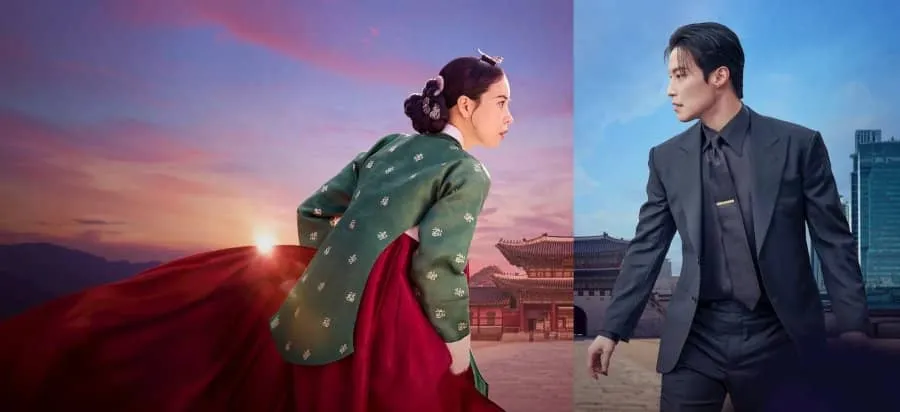
The narrative of My Royal Nemesis centers on Lady Kang Dan-shim, a formidable figure in 14th-century Joseon Korea who finds herself facing execution under accusations of attempting to harm the queen and the crown prince. Despite her low birth, Lady Kang has risen to become the King’s favorite mistress—a testament to her intelligence, beauty, and remarkable political acumen. She is portrayed as bold, unapologetic, and fiercely defiant, refusing to accept her fate passively even when presented with the poisoned chalice that would end her life.
The drama opens with this intense sequence of events, immediately establishing Lady Kang as a character who refuses to be victimized by circumstances beyond her control. Her defiance in the face of death serves as a window into her resilient character, one that will prove essential for her survival in the modern world she is about to enter. The moment of her death becomes shrouded in supernatural significance when an inexplicable summer snowfall begins—a phenomenon that hints at the mystical forces at work behind her fate.
A shaman, operating as a prophet-witch figure deeply rooted in Asian folklore, has anticipated this moment for years. Through carefully constructed flashbacks, the series reveals that Lady Kang’s death is not an ending but a transformation. The mystical logic of this world dictates that she must die in the Joseon era for her spirit to find rebirth in a new body in modern-day Korea. This supernatural framework provides the foundation for the time-travel plot that drives the entire narrative.
Upon awakening in contemporary Seoul, Lady Kang finds herself inhabiting the body of Shin Seo-ri, a struggling actress navigating the challenges of the entertainment industry. The contrast between her royal origins and the bewildering modern world creates some of the series’ most memorable comedic moments. Her first encounter with modern technology, vehicles, and the general chaos of 21st-century life results in sequences that are genuinely hilarious. From her confusion at seeing her reflection in mirrors for what must feel like the first time to her assumption that the cars rushing past on busy streets must indicate she has arrived in some version of hell, the drama mines considerable comedy from culture shock.
This comedic foundation is balanced by the arrival of Cha Se-gye, played by Heo Nam-jun, who represents everything Lady Kang despises about the modern world. He is a wealthy businessman whose arrogance and sense of entitlement make him the perfect foil for our time-displaced protagonist. Their first meeting, which occurs when a confused Lady Kang runs into his car while fleeing from the sensory overload of modern traffic, sets the tone for their tumultuous relationship. Se-gye is accustomed to getting exactly what he wants through manipulation and wealth, making Lady Kang’s immediate defiance of him—and her memorable slap when he speaks disrespectfully to her—absolutely delicious viewing.
The dynamic between these two characters evolves in fascinating ways throughout the first episode and beyond. Lady Kang recognizes in Se-gye a reflection of her own intensity and ambition, albeit expressed through modern means. Meanwhile, Se-gye finds himself genuinely subjugated by someone for the first time in his life, leading him to leave his business card and promise to cover any medical expenses that might result from their collision. This sets up the unlikely alliance that will develop between them as the season progresses.
Performances: Bringing Complex Characters to Life
The success of My Royal Nemesis rests heavily on the shoulders of its two leads, Lim Ji-yeon and Heo Nam-jun, both of whom deliver performances that elevate the material beyond what might otherwise be a standard time-travel romance. Lim Ji-yeon, in particular, faces the challenging task of portraying two distinct personas within the same physical body—the regal, commanding Lady Kang of the Joseon era and the confused, fish-out-of-water Shin Seo-ri of contemporary Korea.
Her portrayal of Lady Kang in the opening sequences establishes a character who radiates authority and fierce independence. Even in the face of death, she projects a presence that commands respect and suggests depths of strength that will prove essential to her survival in the modern world. The physicality of her performance—the way she carries herself, the cutting precision of her gaze, the steel in her voice—all communicate a woman who has fought hard for every inch of power she possesses and refuses to surrender any of it willingly.
In contrast, her performance as Shin Seo-ri in the modern era showcases remarkable comedic timing and physical comedy skills that might surprise viewers who only know her from more serious dramatic roles. The confusion and disorientation she experiences upon arriving in a world completely alien to her is conveyed through subtle physical cues and expressions that build gradually rather than relying on broad, over-the-top reactions. Watching her navigate the gap between centuries is genuinely entertaining, and her performance ensures that viewers remain sympathetic to a character who could easily become grating in less skilled hands.
Heo Nam-jun’s portrayal of Cha Se-gye provides another highlight of the series. The character could easily have become a one-dimensional villain—the stereotypical wealthy, entitled businessman who needs to be taught a lesson—but Heo Nam-jun infuses him with a vulnerability beneath the arrogant exterior that makes his transformation genuinely compelling. His performance captures the moment when someone who has always held all the power suddenly finds themselves off-balance, and the genuine confusion and attraction he feels toward Lady Kang/Seo-ri feels earned rather than forced.
The supporting cast also deserves recognition for their contributions to the drama’s atmosphere. Various characters throughout the Joseon era sequences and the modern-day storyline help ground the fantastical elements in recognizable emotional territory, ensuring that viewers can connect with the human stakes at the heart of the narrative.
Behind the Lens: Crafting a World Spanning Centuries
The production values of My Royal Nemesis reflect the significant investment Netflix has made in Korean content, with careful attention paid to both the historical and contemporary elements of the story. The Joseon-era sequences are rendered with visual richness, capturing the aesthetics of the period while also conveying the restrictive social structures that Lady Kang navigated with such difficulty. Costume design plays a particularly important role in establishing character and theme, with Lady Kang’s elaborate garments serving as both markers of her status and visual representation of the weight of history she carries with her.
The contrast between these historical elements and the contemporary setting is handled with sophistication, using cinematography to highlight the jarring nature of Lady Kang’s transition between eras. The sequence in which she awakens at Geunjeongmun Gate—a real historical monument that has survived into modern times—perfectly captures the disorientation of her situation. The production design team deserves credit for creating visual environments that feel authentic to both time periods while allowing for the comedic juxtaposition that drives much of the early episodes.
The decision to film at actual historical locations, such as the gates and palaces that have survived from the Joseon era, adds a layer of verisimilitude that purely studio-based productions often lack. When Lady Kang finds herself at locations that existed during her original lifetime, the visual continuity creates an additional emotional resonance that enhances the narrative’s thematic concerns about time, memory, and the persistence of the past.
From a technical perspective, the series handles its time-travel elements with relative clarity, avoiding the confusion that can sometimes plague narratives involving characters from different eras interacting. The rules governing Lady Kang’s transformation are established early and generally followed consistently, allowing viewers to focus on character development and plot progression rather than trying to track the mechanics of the supernatural premise.
Final Verdict: A Must-Watch for K-Drama Enthusiasts
My Royal Nemesis successfully navigates the challenges of the time-travel romance genre by combining strong performances, thoughtful writing, and solid production values into a package that offers genuine entertainment value. While the premise may be familiar to experienced K-drama viewers, the execution elevates the material significantly, creating a viewing experience that satisfies on multiple levels.
The chemistry between Lim Ji-yeon and Heo Nam-jun forms the emotional core of the series, and their performances ensure that the enemies-to-lovers progression feels earned rather than rushed. The comedy elements are well-integrated into the narrative rather than feeling like tonal disruptions, and the historical elements provide sufficient intrigue to maintain viewer engagement between romantic developments.
For newcomers to the K-drama genre, My Royal Nemesis serves as an accessible entry point that showcases many of the elements that have made Korean television increasingly popular internationally. For longtime fans, it offers a fresh perspective on familiar tropes, proving that even well-worn territory can yield satisfying results when approached with care and creativity.
New episodes of My Royal Nemesis continue to drop on Netflix every Friday and Saturday, providing regular installments that maintain momentum while leaving sufficient room for character development and plot elaboration. Whether you’re drawn to the historical elements, the romantic progression, or simply looking for entertaining television that doesn’t require a massive time investment, this series deserves a place on your watchlist.
Also Read:
“My Royal Nemesis” OTT Release: Lim Ji-yeon Returns in a Riveting Fantasy K-Drama