

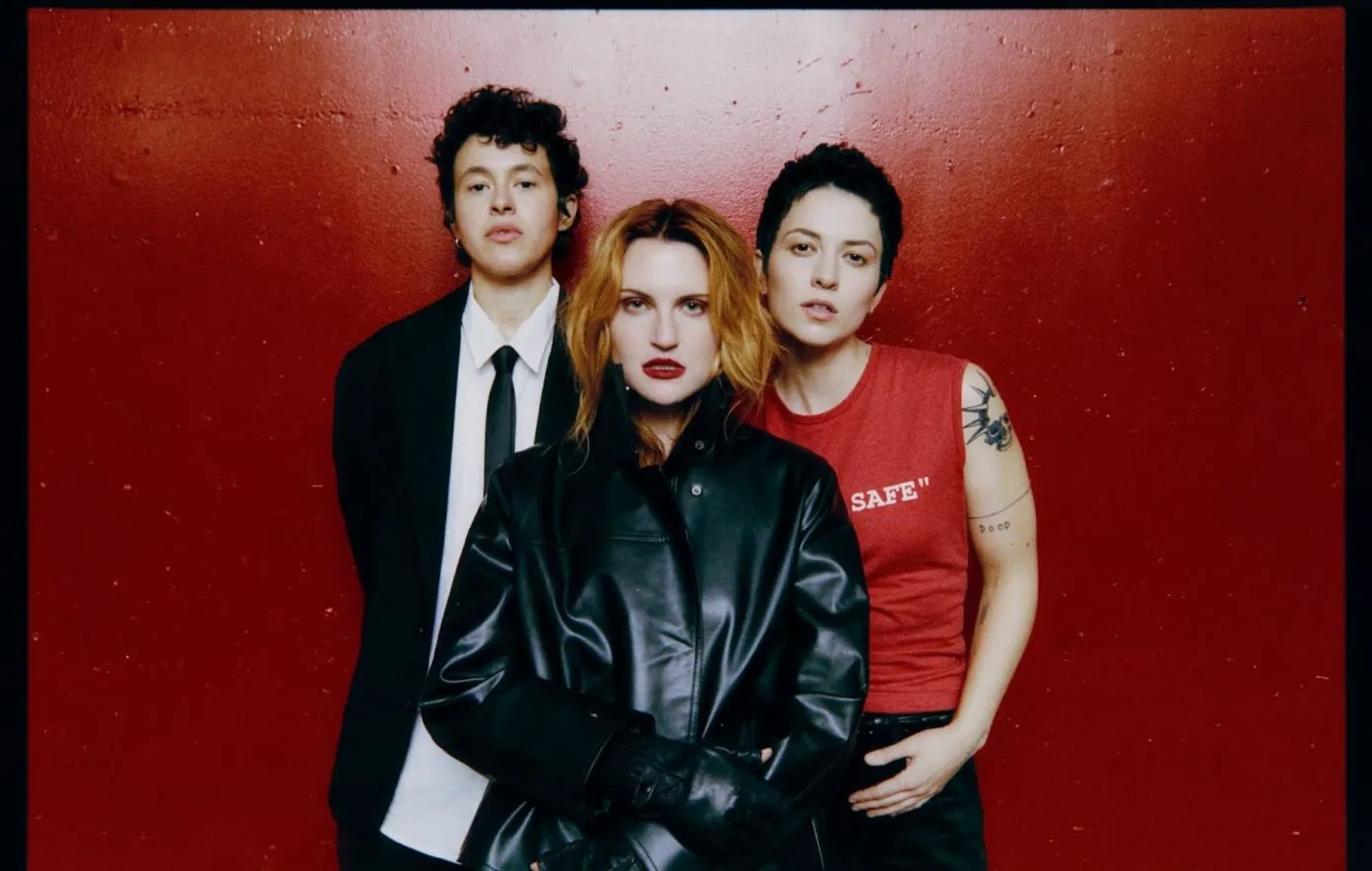
The Los Angeles-based trio MUNA has built their reputation on a fascinating duality. Those familiar with their work know that while the group can deliver irresistibly light, bubbly compositions like the charming “Silk Chiffon,” their most compelling material explores heartbreak, uncomfortable tensions, and shadowy undercurrents that linger just beyond the frame. This tension between brightness and darkness defines their artistic identity, and on their fourth studio effort, they lean into this contrast more fully than ever before.
The band’s ability to craft anthems that simultaneously celebrate and mourn has been evident throughout their discography. One of their most powerful tracks, “I Know A Place” from 2017, emerged in the wake of the Pulse nightclub shooting and captures the fragile nature of queer spaces even as it celebrates the euphoria and safety they provide. Similarly, “Stayaway” offers no mercy to those navigating heartbreak, with lead vocalist Katie Gavin delivering the gut-wrenching observation that leaving was never meant to be the simple part, only to discover that staying away proves even harder.
Their latest album, “Dancing On The Wall,” which the band produced themselves through member Naomi McPherson, arrives at a particularly turbulent moment in cultural and political discourse. This timing influences the record significantly, infusing its fourteen tracks with a restless energy and spikier edges compared to their earlier releases. The musical palette expands beyond their signature saturated 80s synthpop sounds, incorporating flashes of glam rock and alternative indie textures that add depth and variety to their established formula.
The album maintains MUNA’s gift for creating an atmosphere where even seemingly carefree moments carry an undercurrent of unease. Take “It Gets So Hot,” for instance. At first listen, the track appear to celebrate all-consuming desire, yet the Los Angeles heat described becomes suffocating rather than liberating, humid and oppressive in ways that transform romantic longing into something more claustrophobic. Similarly, “Mary Jane” bops along with infectious energy while alluding to a relationship destroyed by substance dependency, demonstrating the band’s skill at masking difficult subject matter within undeniably catchy arrangements.
Then there’s the deliciously delusional “So What,” which attempts to mask genuine heartbreak behind free drinks at upscale gatherings and an outward display of confidence. The facade proves unsustainable, however, as Gavin eventually confronts the hollowness beneath her boasts about the acclaim coming from strangers who claim to love her without truly knowing her. The irony cuts deep as she claims this represents their finest work without acknowledging what—or who—has been left behind.
What makes “Dancing On The Wall” particularly noteworthy is its willingness to address political realities directly rather than dancing around uncomfortable truths. The track “Big Stick” paints a portrait of an anonymous suburban mother accumulating wealth without questioning where it originates, paying taxes to fund conflicts in pursuit of her own comfortable life. Gavin’s vocals adopt a chillingly calm tone during the chorus, channeling dystopian authority figures who maintain order through soothing broadcasts. The bridge pulls back this veneer entirely, delivering unflinching criticism of American foreign policy with lines about arming dictators in apartheid states and the devastating psychological impact inflicted on children in Palestine. Such bluntness feels almost revolutionary in mainstream pop music, where explicit political statements remain relatively rare, particularly regarding ongoing humanitarian crises.
Throughout these more politically charged moments, the album never abandons the hyper-saturated synthpop sound that has defined MUNA since their debut. They prove that artists need not constantly reinvent themselves to remain compelling. Their precise, unwavering consistency across releases has built a devoted following precisely because listeners know exactly what quality they will receive—melodic perfection paired with thoughtful, emotionally resonant lyricism. While “Dancing On The Wall” does explore new lyrical territory and occasionally experiments with heavier rock-influenced production elements, it remains fundamentally rooted in the sound that has become their trademark.
This is an album that rewards repeated listens, revealing additional layers with each playthrough. It captures a specific cultural moment while transcending it, offering both escape and confrontation in equal measure. For longtime fans, it confirms everything they’ve come to love about MUNA. For newcomers, it serves as an ideal entry point into a band that understands pop music’s unique power to communicate difficult truths through irresistible hooks.
“Dancing on the Wall,” studio album is releasing on May 8, 2026, through Saddest Factory Records.