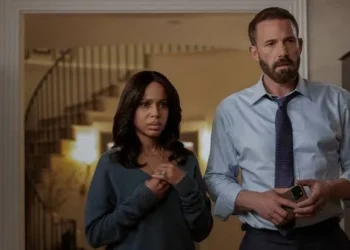



The Polish biopic Less of a Stranger arrives on Netflix with the promise of a gritty, music‑driven chronicle of Jan Borysewicz, the guitarist‑composer who helped shape the iconic rock outfit Lady Pank. Directed by Kristoffer Rus, the film oscillates between the heady rise of a rebellious artist and the personal turmoil that shadows his success. While the movie captures the electrifying spirit of 1980s Polish underground rock, it also stumbles when it tries to dig deeper into the protagonist’s psyche. This review unpacks the story, highlights the performances, examines the filmmaking choices, and delivers a final verdict for readers who love music‑centric dramas.
Synopsis
Set against the backdrop of martial‑law Poland, Less of a Stranger follows Jan from his troubled childhood—marked by an ailing mother, a distant father, and a fierce bond with his brother—to the formation of Lady Pank and the subsequent clash with state authorities over the provocative anthem “Less Than Zero.” The narrative intertwines Jan’s musical ambition with his struggles against addiction, familial conflict, and the oppressive political climate, showing how each pressure fuels both his creativity and his self‑destruction. The film refrains from presenting a straightforward success tale; instead, it portrays a talented artist whose greatest obstacles often lie within himself.
Performances
Mikołaj Bukrewicz embodies the younger Jan with raw, uncontrolled anger that gradually gives way to a desperate search for identity. His portrayal feels authentic, especially in scenes where Jan first discovers the guitar as an escape. Mikołaj Matczak takes on the older Jan, delivering a nuanced shift from youthful idealism to world‑weariness, effectively conveying how fame and personal demons reshape the musician over time.
Patryk Pietrzak shines as Andrzej Mogielnicki, the lyricist whose unwavering belief in Jan’s talent anchors the early part of the story. Their on‑screen chemistry makes the eventual rift between them feel both inevitable and heartbreaking. Hubert Miłkowski, Krzysztof Oleksyn, and the supporting cast provide solid, though less conspicuous, contributions that help flesh out the world surrounding Jan’s turbulent journey.
Together, the leads avoid the cliché of the stereotypical rebellious rock star, instead presenting a multidimensional figure whose brilliance is inseparable from his flaws.
Behind the Lens
Director Kristoffer Rus opts for a gritty, handheld aesthetic that mirrors the underground vibe of 1980s Polish rock. The cinematography shifts between dimly lit rehearsal spaces and stark, oppressive streets under martial law, reinforcing the sense that Jan’s music is both a refuge and a weapon. The soundtrack, featuring re‑imagined renditions of Lady Pank classics, serves as the film’s emotional backbone, allowing viewers to feel the pulse of the era.
However, the script occasionally leans on exposition rather than showing the evolution of Jan’s inner conflicts. Key themes—such as his strained relationship with religion and the impact of substance abuse—are introduced but not fully explored, leaving certain character motivations feeling surface‑level. The pacing, while energetic in the concert sequences, sometimes rushes through pivotal moments that deserved more contemplative treatment.
Final Verdict
Less of a Stranger succeeds as an engaging music‑centric biopic that introduces international audiences to a pivotal figure in Polish rock history. The film’s strengths lie in its passionate lead performances, evocative period atmosphere, and a soundtrack that captures the defiant spirit of the time. Yet, it falls short of becoming a definitive portrait because it skims over several psychological and societal layers that could have elevated the narrative from entertaining to truly insightful.
For viewers who crave a solid, music‑driven story with strong acting and a authentic 80s Polish backdrop, the film is worth a watch. Those hoping for a deep dive into the protagonist’s psyche and the socio‑political forces shaping his art may find the experience somewhat lacking. In short, Less of a Stranger is a commendable effort that hits many right notes but leaves a few chords unresolved.