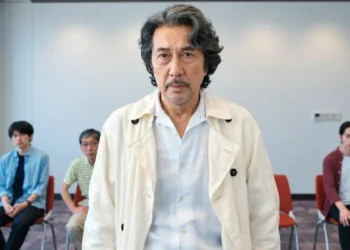



A Beloved Hollywood Story Gets a Korean Twist
The much‑anticipated Korean version of The Intern has officially dropped its first poster and teaser, instantly capturing the attention of movie lovers nationwide. Adapted from the internationally praised Hollywood hit that originally featured Robert De Niro and Anne Hathaway, the new production promises to blend the original’s heart‑warming premise with distinctly Korean humor and cultural nuance. Since the announcement of its leading cast, the project has been a hot topic among Korean audiences eager to see how the classic tale will be reimagined.
Star Power: Choi Min‑Sik and Han So Hee Take Center Stage
Choi Min‑Sik – A Pillar of Korean Film
Veteran actor Choi Min‑Sik headlines the remake as the seasoned intern. Widely celebrated as one of South Korea’s most accomplished performers, Choi’s career spans several decades across both the silver screen and television. His trophy cabinet includes two Baeksang Arts Awards, three Blue Dragon Film Awards, and four Grand Bell Awards for Best Actor, underscoring his reputation for delivering nuanced, unforgettable characters.
Han So Hee – The New Face of Elegance
Opposite Choi, rising star Han So Hee portrays the ambitious young CEO. Frequently compared to Anne Hathaway for her graceful poise and striking looks, Han has become a fashion icon and has repeatedly appeared on global “most beautiful faces” lists. Beyond her visual appeal, she has earned critical acclaim for her roles in The World of the Married, My Name, and Soundtrack #1. Her performance in My Name secured a Best Actress nomination at the Baeksang Arts Awards, confirming her status as a versatile talent.
First Glimpse: What the Teaser Reveals
The debut teaser sets the tone for a comedy‑drama that balances witty generational clashes with heartfelt moments. It follows Choi’s character, Gi Ho, as he steps into his first day at the trendy fashion startup Wootutu. Dressed in a crisp suit and carrying a leather briefcase, Gi Ho arranges his desk with personal touches—a slice of cake, traditional snacks, a water bottle, a desk clock, a pencil case, and an ink bottle—immediately distinguishing himself from the much younger staff.
During an interview with Vice President Young Hwan, Gi Ho humorously answers the classic “strengths and weaknesses” question: “My greatest strength is my experience; my greatest weakness is that I’m quite old.” The witty reply lands him the intern position, setting up a series of comedic scenarios as he navigates the fast‑paced, slang‑filled world of Generation MZ.
The teaser also highlights Han So Hee’s portrayal of Seon Woo, the driven CEO who initially appears skeptical of Gi Ho’s relevance. Their early tension hints at an evolving relationship that mirrors the original film’s journey from mutual irritation to unexpected mentorship.
Cultural Adaptation: From Hollywood to Seoul
While the core storyline remains faithful—a retired professional re‑entering the workforce and forming a bond with a youthful boss—the Korean version injects local flavor. Expect references to Korean office etiquette, contemporary Seoul fashion trends, and the unique challenges of a multigenerational workplace in a high‑tech startup environment. The film aims to resonate with both fans of the original and viewers seeking a fresh, culturally specific perspective.
Anticipated Release and Audience Reception
Industry insiders predict the remake will dominate the 2024 box office, given the combined draw of Choi Min‑Sik’s seasoned fan base and Han So Hee’s rapidly growing popularity. Early social‑media reactions to the teaser have been overwhelmingly positive, with many praising the chemistry between the leads and the clever adaptation of iconic scenes.
A Must‑Watch Reinterpretation
The Korean remake of The Intern stands out as one of the year’s most exciting cinematic projects. With a compelling cast, a thoughtfully crafted teaser, and a storyline that bridges generational gaps, the film promises to deliver both laughter and heartfelt moments. As the release date approaches, anticipation continues to build, positioning the movie as a potential cultural touchstone for Korean audiences and an intriguing case study for international viewers interested in cross‑cultural adaptations.