

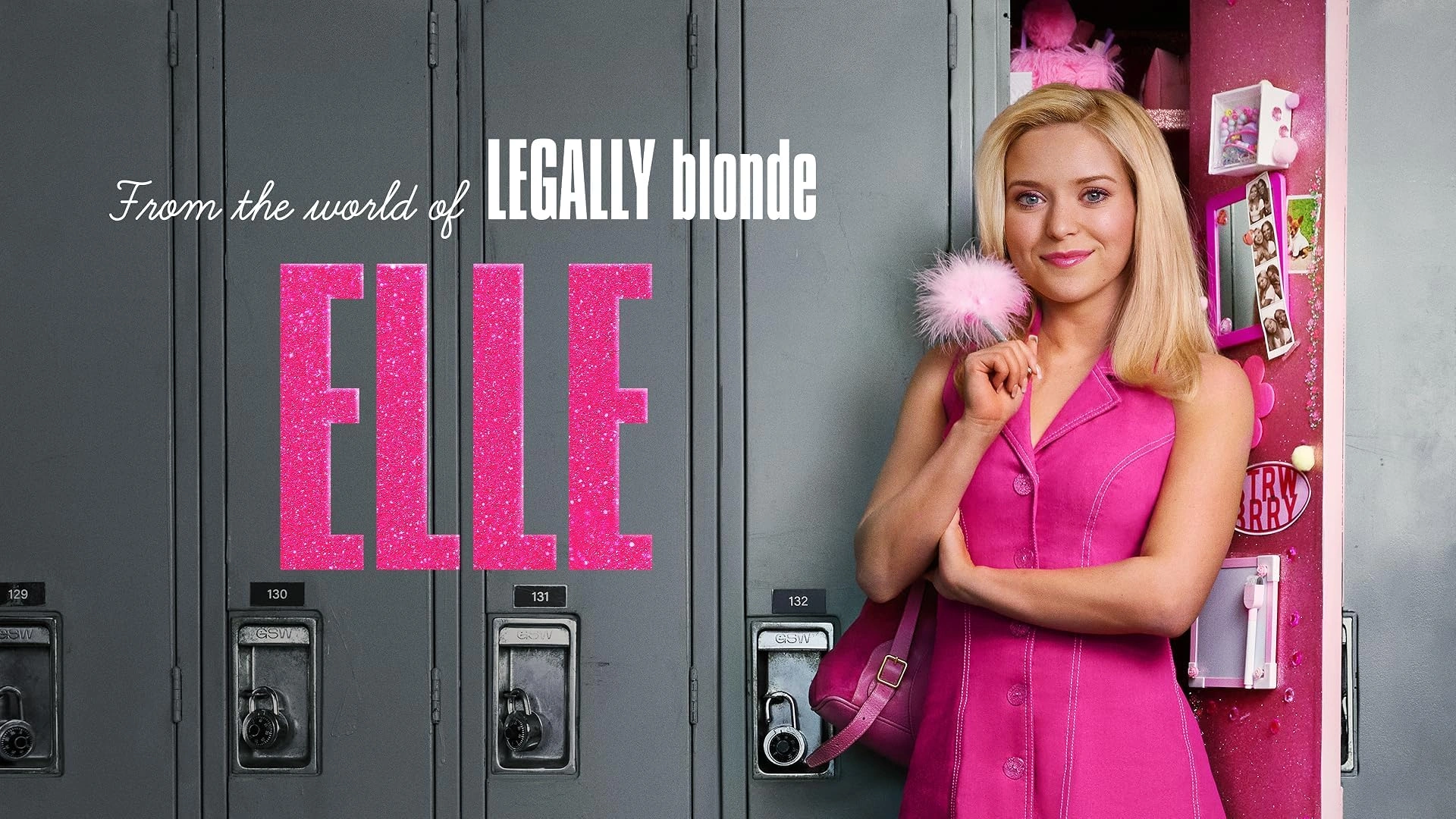
The iconic blonde ambition of Elle Woods is back, but this time, she’s trading the hallowed halls of Harvard for the rainy sidewalks of Seattle. Premiering globally on Prime Video, Elle serves as the official high school prequel to the beloved 2001 film Legally Blonde. Set in 1995, the series introduces us to a teenage Elle Woods (Lexi Minetree) just before she embarks on her journey to law school. With the backing of Reese Witherspoon and Amazon, the project promised a nostalgic dive into the character’s origins. However, does this expansion of the universe offer fresh insight, or does it simply recycle old tropes for a new generation?
Synopsis
In 1995, just years before her famous admission essay, Elle Woods is celebrating her Sweet 16 in Beverly Hills. Surrounded by luxury and planning the perfect senior year with her best friend Madison, Elle’s world is turned upside down when her father’s career takes a hit due to a botched cosmetic procedure. Forced to relocate across the country, Elle and her parents move to a gray, rainy Seattle high school.
Upon arrival, Elle faces a culture shock far more daunting than any exam: the cynical, grunge-obsessed environment of the Pacific Northwest. Clad in her signature Californian pink, she attempts to navigate a world where conformity is frowned upon and flannel is the uniform. As she tries to fit in with the “popular” crowd, a group of misfits, and the school’s apathetic elite, Elle stumbles upon a major conspiracy within the school walls. The synopsis sets the stage for a classic fish-out-of-water story, blending teen drama with a hint of mystery, but it largely plays out exactly as one might expect.
Performances
Lexi Minetree steps into the pink stilettos with a determination that is commendable. She brings a youthful energy and optimism to the role, attempting to capture the essence of the character without imitating Reese Witherspoon’s iconic performance. While she lacks the sharp comedic timing of her predecessor, Minetree provides the role with a heart and soul that suggests she understands the character’s depth beyond the fashion. She successfully avoids the “bimbo” trap, ensuring Elle remains relatable and intelligent.
The supporting cast offers stronger footholds. June Diane Raphael, playing Elle’s mother, delivers a nuanced and often hilarious performance, nearly stealing the entire family subplot. James Van Der Beek appears in a guest role, offering a nostalgic wink to Dawson’s Creek fans, though his presence feels somewhat bittersweet given recent real-life events. The ensemble works hard, but they are often fighting against a script that relies too heavily on broad stereotypes and lazy writing.
Behind the Lens
From a production standpoint, Elle is a mixed bag. The visual contrast between Beverly Hills pink and Seattle gray is striking and effectively used in the pilot. The costume design does heavy lifting to establish the 1990s aesthetic, and the inclusion of grunge music references (Nirvana, Sub Pop) is pervasive.
However, the direction struggles with tone. The “fish-out-of-water” comedy, which works beautifully in a 90-minute film, becomes tedious over eight episodes. By the third hour, the jokes about Elle’s bright wardrobe clashing with dark flannel feel exhausted. The writing team seems aware of this fatigue, as the series attempts to soften Elle’s outsider status halfway through the season, but the transition feels abrupt and unearned.
Furthermore, the series feels distinctly corporate. Announced shortly after Amazon’s acquisition of MGM, Elle often reads like a mandate to mine IP for content rather than a passion project. The references to 90s culture are dense—sometimes clever, sometimes clutter—but they rarely serve the story, feeling more like a checklist for Millennial nostalgia.
Final Verdict
Elle is a frustrating watch. It possesses the right aesthetic—the shoes fit perfectly—but it lacks the map to guide the story. While there are moments of genuine charm and the performances are solid enough to carry interest, the series collapses under the weight of its own references and formulaic plotting. It is a textbook example of a prequel that adds little to the legacy of its source material.
For die-hard Legally Blonde fans, there is a certain joy in seeing Elle’s origin, but for general viewers, the show offers little incentive to return week after week. It is pleasant, sometimes fun, and visually sharp, but ultimately, it is a hollow cash grab that prioritizes nostalgia over narrative substance.
Also Read:
The Origin Story: Prime Video Reveals First Look of “Legally Blonde” Prequel “Elle”