

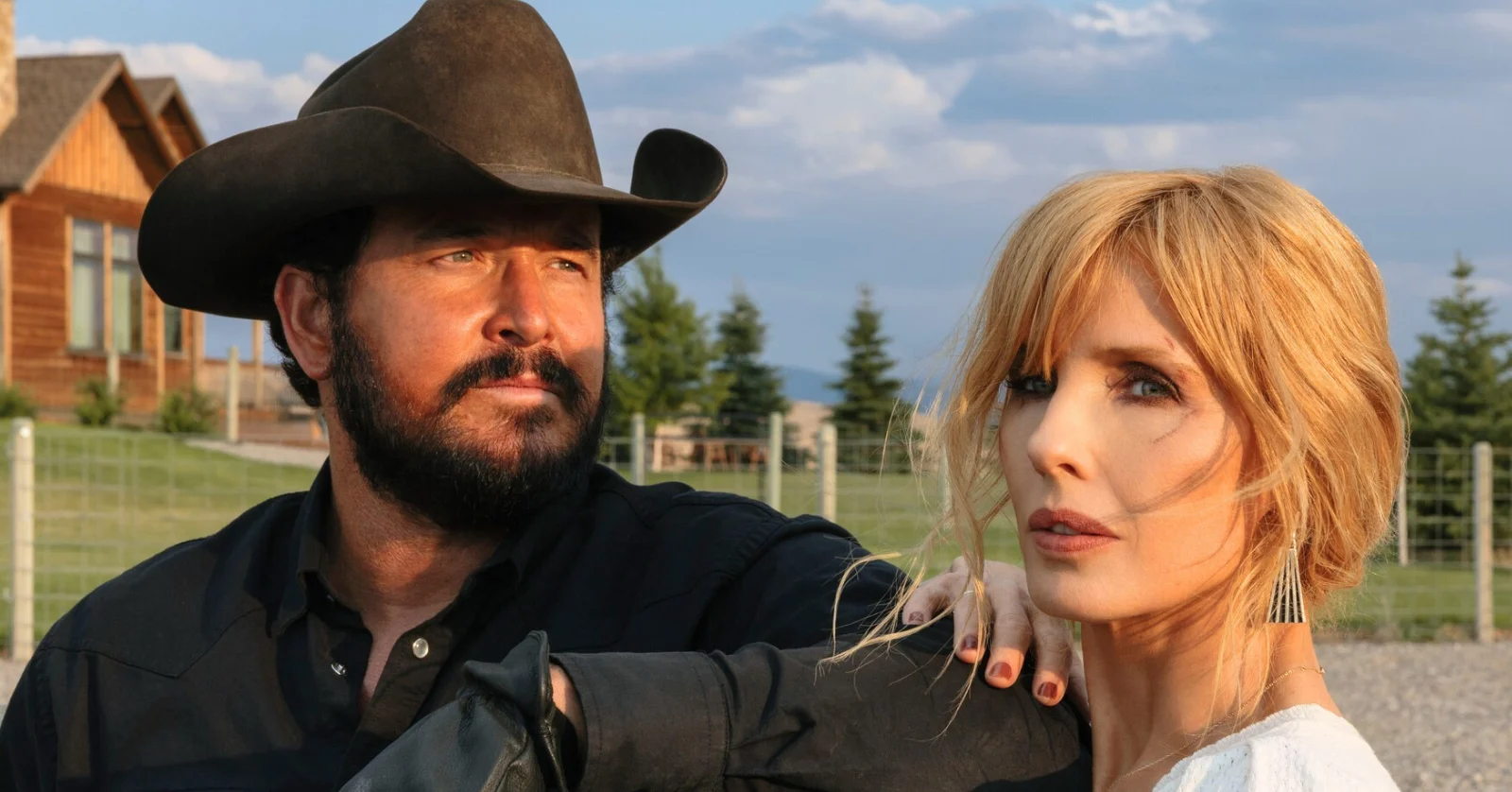
The Yellowstone universe continues to expand, and this time, Beth Dutton and Rip Wheeler are trading Montana’s majestic peaks for the sun-scorched plains of South Texas. The highly anticipated spin-off series Dutton Ranch officially premiered on May 15, 2026, bringing the beloved couple to a new frontier where their famous name means nothing and survival means everything. Created by Chad Feehan and directed by cinematographer Christina Voros, the nine-episode first season streams exclusively on Paramount+ while also broadcasting on the Paramount Network. The question on every Yellowstone fan’s mind: does this new chapter justify the journey, or is it merely coasting on the original’s considerable goodwill?
Synopsis
The premise is refreshingly direct. A devastating wildfire consumes the Duttons’ Montana homestead, forcing Beth and Rip to rebuild elsewhere. Their destination? A 7,000-acre property in Rio Paloma, a small South Texas town roughly an hour north of the Mexican border. The transition happens with the same blunt efficiency that defines much of the series—Montana closes, Texas opens, and the audience is expected to keep pace rather than dwell in transitional grief.
This accelerated storytelling represents both the show’s greatest strength and its most persistent weakness. The momentum is undeniably compelling; within twelve minutes of Episode 1, Beth delivers the season’s thesis statement, and the relocation narrative unfolds with decisive efficiency. The Edwards Ranch becomes Dutton Ranch almost imperceptibly, as if the show considers paperwork beneath dramatic consideration. Yet this compression comes at a cost. Viewers never receive adequate opportunity to emotionally process the loss of the Montana chapter before being thrust into entirely new conflicts with entirely new players.
The territorial framework follows familiar territory for franchise devotees. An established local power controls the land—the Jacksons of Rio Paloma, a ranching dynasty led by the formidable Beulah Jackson. Outsiders arrive and refuse to submit. A body appears before audiences have learned everyone’s name. Rob-Will Jackson, Beulah’s volatile son, deposits a murder victim on Dutton land as an opening gambit, and Rip’s response—a quietly efficient disposal rather than involvement from local authorities—establishes both his character and the show’s moral ambiguity.
Performances
Kelly Reilly’s Beth Dutton remains a force of nature, though notably tempered from her Yellowstone crescendo. She still reprimands disrespectful restaurant owners, treats extortion attempts with appropriate contempt, and delivers lines that make nearby characters visibly nervous. However, the punishing volatility that characterized her later interactions with Jamie has been significantly reined back. Reilly plays small moments—a quiet apology to Carter—with restraint that suggests an actress who has been waiting for the writing to provide room. This Beth feels more human, more accessible, and paradoxically more compelling for the moderation.
Cole Hauser’s Rip continues his tradition of communicating volumes through silences and occasional well-placed violence. His decision to handle the Jackson-arranged corpse without law enforcement involvement reflects deep conditioning rather than moral failure. In a world where police were never allies, repetition breeds instinct. His quietly desperate declaration that “this life here is gonna work” lands less as confidence than as prayer, revealing the vulnerability beneath the stoic exterior.
The most significant creative decision involves stripping both protagonists of their protective mythology. In Montana, the Dutton name commanded automatic respect and fear. In Rio Paloma, nobody has heard of them. Watching these powerhouses navigate civilian status proves genuinely disorienting—and genuinely engaging.
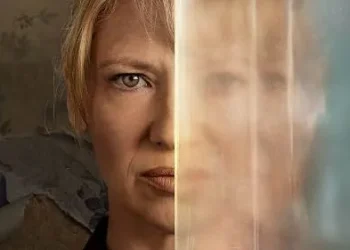
Annette Bening’s Beulah Jackson arrives like a force of nature, whiskey in hand and terms to dispense. Initially, she appears to be a straightforward antagonist, but the series quickly complicates that reading. Her ruthlessness coexists with exhaustion; her empire requires constant maintenance while her son treats it as personal demolition. Bening weaves between registers without announcing transitions, creating a villain who invites genuine sympathy alongside legitimate fear. Her scenes with Reilly crackle with the electricity of two dangerous individuals recognizing mutual threat without yet determining their next move.
Ed Harris brings quiet gravitas as Everett McKinney, a local veterinarian and Vietnam veteran who serves as the town’s institutional memory. His loyalty remains deliciously ambiguous—warm to the Duttons, connected to the Jacksons, apparently belonging to no faction obviously. Harris delivers every line as a considered decision rather than a scripted obligation, elevating even minor scenes through sheer presence.
The supporting cast offers genuine pleasures. J.R. Villarreal’s Azul injects needed lightness into potentially oppressive dynamics, while Marc Menchaca’s Zachariah earns the season’s most poignant moment—a wordless scene where a newly-released prisoner gazes at stars for the first time in years and manages nothing beyond a tearful “yeah.” It lands with devastating simplicity.
Finn Little’s Carter, now a young adult with his own romantic subplot involving Natalie Alyn Lind’s Oreana, occupies the weakest territory. His relationship follows a template so familiar it practically fills itself in, absorbing screen time that might have developed more interesting characters instead.
Behind the Lens
Director Christina Voros brings her characteristic visual sensitivity to the South Texas landscape, though the results prove slightly uneven. The palette—drier, browner, less mythological than Montana’s verdant exaggerations—requires adjustment from franchise viewers accustomed to nature-as-cinematic-poetry. Montages meant to replicate Yellowstone‘s sweeping labor-and-land poetry feel slightly rushed in this unfamiliar terrain, as if the show hasn’t yet earned the sacred status it clearly aspires to achieve.
The cinematography succeeds most in intimate character moments rather than panoramic statements. Voros’ sharp eye captures the specific quality of South Texas light, the way heat shapes daily rhythms, the visual language of border-adjacent ranching culture. When the camera lingers on weathered faces or the small gestures of cowboy life, the photography achieves distinction. The wider landscape shots carry less weight, suggesting that Texas remains spiritually uncharted compared to Montana’s thoroughly mythologized territory.
Chad Feehan’s creative vision, as completed before his reported departure ahead of the premiere, demonstrates coherent, if occasionally sluggish, execution. The pacing issues persist across the first four episodes, with considerable time devoted to orbiting conflict without actual collision. Carter’s romantic subplot absorbs real estate that might further develop Everett’s genuinely ambiguous position or the Jackson family’s internal dynamics. The show gestures toward depth repeatedly, sometimes relocating before delivery.
Final Verdict
Dutton Ranch represents the most successful Yellowstone spin-off to date, genuine belonging in the same conversation as its predecessor rather than distant imitation. Stripping Beth and Rip of their Montana mythology proves the series’ smartest creative decision, generating genuine dramatic tension where power fantasy once sufficed. The Jacksons represent a threat that cannot be dissolved through sheer ferocity, breaking the contract that made late Yellowstone feel immunized against actual stakes.
The underdog repositioning works precisely because power, on television, breeds dramatic immunization. When audiences know protagonists cannot truly lose, tension becomes theater. Dutton Ranch breaks that contract early, and the asymmetry between the Duttons’ capabilities and the Jacksons’ ignorance generates the show’s most compelling energy.
This isn’t the franchise’s finest hour—Y Yellowstone‘s peak remains unmatched—but it’s the first spin-off that earns its existence. Texas isn’t Montana yet, but with time, it might become something equally compelling in its own right.
Also Read:
“Dutton Ranch”: Beth and Rip Face New Perils in Texas, Unveiling a New ‘Train Station’