


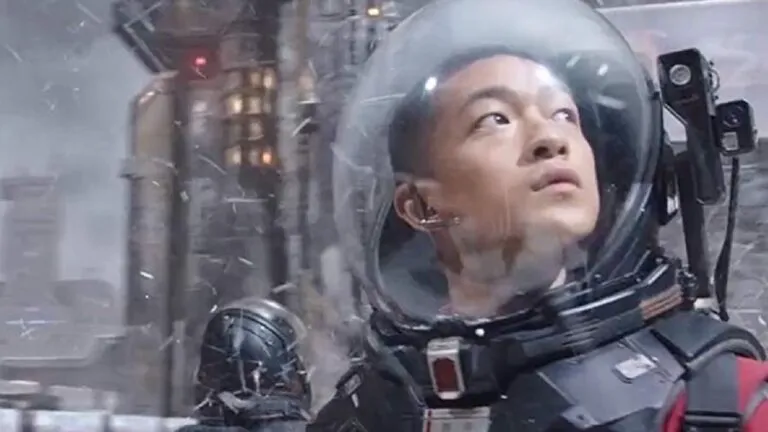
The landscape of modern science fiction has long been dominated by Western studios, but the 2019 release of The Wandering Earth marked a seismic shift in the industry. Currently available for global audiences on Netflix, this Chinese cinematic achievement serves as a masterclass in scale, ambition, and speculative storytelling. Directed by Frant Gwo and inspired by the acclaimed prose of Liu Cixin, the film is a testament to the surging power of international high-budget filmmaking.
An Audacious Premise for Humanity’s Future
Set in the year 2058, the narrative centers on a terrifying existential threat: our Sun is rapidly expanding into a red giant, destined to incinerate the solar system. In a desperate bid to preserve the species, Earth’s governing bodies orchestrate an unprecedented engineering project. They construct 12,000 massive fusion thrusters across the globe, effectively turning the planet into a massive vessel, with the goal of propelling humanity toward the Alpha Centauri star system.
The story follows Liu Peiqiang, an astronaut stationed on an orbital navigation platform, who must leave his young son, Liu Qi, under the care of his grandfather, Han Zi’ang. As the Earth begins its long migration, half of the population descends into subterranean cities, while those left on the surface face the harsh reality of extreme climate collapse. Years later, a rebellious Liu Qi breaks the rules to take his foster sister, Han Duoduo, to the surface. Their excursion is cut short when a gravitational anomaly near Jupiter sends our planet hurtling toward a catastrophic planetary collision, forcing a small band of survivors into a high-stakes race against time to save the world.
A Global Box Office Phenomenon
Upon its release, The Wandering Earth was nothing short of a cultural earthquake. During its inaugural Chinese New Year rollout, the film shattered records, grossing over two billion yuan in just six days and dominating the international box office within its opening weekend. By the conclusion of its theatrical venture, it had accumulated nearly $700 million globally. This success signaled to the world that narratives outside of Hollywood could command the same technical polish and emotional weight as traditional blockbuster fare.
Critics and audiences alike lauded the film’s meticulous production design and staggering visual effects. While some reviewers noted minor inconsistencies in character pacing, the overwhelming sentiment was one of awe regarding its sheer scope. Today, it remains a pillar of modern cinema, proving that high-concept science fiction resonates deeply across all borders.
A Legacy of Expansion
The massive success of the original production paved the way for the 2023 prequel, The Wandering Earth 2. This installment explores the frantic early days of the planetary engine project, documenting the Herculean efforts required to initiate the migration. The franchise has since become a cornerstone for fans of the genre, showcasing the rapid technological evolution of the Chinese film industry.
For those who have yet to experience this interstellar epic, The Wandering Earth is currently streaming on Netflix. It is more than just a movie; it is a vision of unity and survival that demands to be seen on the largest screen available.